
How AI Creates a Personalized Travel Itinerary, and What It Needs From You

The short answer
AI can create a personalized travel itinerary, but the personalization does not come from the model alone. It comes from the information the traveler provides, combined with your own trips, business rules and current booking information. Without those, the itinerary looks great and may be something your business cannot sell.
Key takeaways
- An itinerary is only as personalized as the weaker of its two inputs: the constraints the traveler gives, and the products and rules the business gives.
- A defined rule is usable, a brochure sentence is not. "Six hours of walking a day, not suitable for travelers who cannot manage sustained uphill walking" can be compared against a traveler; "active adventure" cannot.
- Stable information can live with the agent. Anything that changes frequently, including availability, prices and reservation status, should come from the system that owns it.
- The capability that matters is the revision. An agent that changes the plan and says what moved is advising; one that rewrites the same plan in different words is not.
- Conversation memory is not customer memory. Recalling what somebody said earlier in the same conversation is a different capability from recognising them on a later visit.
AI can create a personalized travel itinerary, but the personalization does not come from the model alone. It comes from the information the traveler provides, combined with your own trips, business rules, and current booking information.
Give an AI model a request like:
“Plan eight days in Peru for me and my 74-year-old father.”
It can produce a convincing itinerary in seconds.
It might also put Rainbow Mountain on day three, at 5,200 metres, without allowing enough time to acclimatize.
The itinerary can look great.
It may still be something your business cannot sell.
That’s the difference between a plausible itinerary and a personalized itinerary built around a real travel business.
For a tour operator or travel advisor, personalization means more than knowing the destination and interests. The plan has to fit the people traveling, your actual products, your rules, and eventually your availability.
How Does AI Create a Personalized Travel Itinerary?
The process is fairly simple:
- Understand the traveler. Collect the information that affects the trip.
- Match that information against your options. Apply your own products, departures, and rules.
- Build the itinerary. Turn the suitable options into a readable plan.
- Revise it. Change the plan when the traveler changes their requirements.
Only one of those steps is really about “AI writing an itinerary.”
The first step is a conversation.
The second depends on your business information.
The fourth is another conversation.
The model is doing most of the writing in the third step.
That’s why a model with no access to your actual travel business can produce something that sounds right but isn’t useful to sell.
Where Does the Personalization Come From?
There are two main inputs.
The traveler provides the constraints.
That can include:
- Travel dates
- Number of travelers
- Ages
- Interests
- Preferred pace
- Budget
- Accessibility requirements
- Trip length
- Activities they want or don’t want
The business provides the options and rules.
That can include:
- Your trips
- Your departures
- Minimum ages
- Fitness requirements
- Group-size limits
- Supplier information
- Inclusions and exclusions
- Booking rules
- Accessibility information
- Escalation rules
The itinerary is only as personalized as the combination of those two inputs.
A general AI assistant can know a lot about Peru.
It doesn’t automatically know your Peru trips.
It doesn’t know which departures you sell, which suppliers you use, which trips require a particular fitness level, or which exceptions your team makes.
That information has to come from your business.
What Does an AI Model Know About Travel?
A language model is good at producing a reasonable response based on the information it has been given and the patterns it has learned.
That’s useful for creating a first draft.
Ask for eight days in Peru and it can produce a logical sequence of destinations, activities, and travel days.
But “reasonable” isn’t the same as “available,” “appropriate,” or “sellable.”
The model may suggest:
- A hotel you don’t use
- A supplier you don’t work with
- A departure that doesn’t exist
- An activity that doesn’t fit the group
- A route that conflicts with your own requirements
The solution isn’t necessarily a better model.
The solution is giving the agent access to the right business information.
What Information Can Live With the Agent?
Some information doesn’t change very often and can be part of the agent’s knowledge.
For example:
| Information that can live with the agent | Information that should come from a live system |
|---|---|
| Trip descriptions | Current availability |
| Day-by-day trip structure | Current prices |
| Minimum ages | Remaining seats |
| Fitness requirements | Reservation status |
| Inclusions and exclusions | Current surcharges |
| Accessibility notes | Payment or booking status |
| Cancellation policies | Supplier confirmations |
| Approved suppliers | Other information that changes frequently |
The general rule is simple:
Stable business information can be given to the agent. Information that changes frequently should come from the system that owns it.
That keeps the agent from treating yesterday’s availability as today’s availability.
Why Do Generic AI Itineraries Look So Good?
Because plausibility is easy to mistake for personalization.
A generic AI itinerary can name the right cities, popular restaurants, famous sights, and reasonable activities.
Everything can sound completely sensible.
But imagine the itinerary recommends:
- A hotel you don’t sell
- A transfer you don’t provide
- A trek your client’s fitness level rules out
- A departure that is already full
The traveler sees a polished itinerary.
Your team sees a list of things that need to be removed.
That’s one of the problems with generic AI travel planning.
The traveler may arrive with a plan that sounds finished, but the advisor still has to rebuild it around what can actually be sold.
What Information Should You Give the Agent?
Start with the information that can rule a trip in or out.
For a tour operator, that usually includes:
- Departure dates
- Trip duration
- Minimum and maximum age
- Fitness or pace requirements
- Group-size limits
- Accessibility information
- Inclusions and exclusions
- Booking lead times
- Approved suppliers
- Pricing rules
- What each trip is not suitable for
That last point is easy to miss.
Most travel catalogs are written to sell.
They describe what a trip includes and why someone might enjoy it.
An AI agent also needs to know who shouldn’t take it.
For example:
“This route requires approximately six hours of walking per day and is not suitable for travelers who cannot manage sustained uphill walking.”
That gives the agent something it can actually use when comparing a traveler with the trip.
Which Questions Should the Agent Ask?
The agent should ask questions when the answer can change the recommendation, action, or next step.
For example:
| Question | Why it matters |
|---|---|
| What dates are you traveling? | Determines which departures can work |
| Are your dates flexible? | Opens or closes other departures |
| How many people are traveling? | May affect availability and group limits |
| How old are the travelers? | May affect eligibility |
| How much walking is comfortable? | Can rule out certain routes |
| What’s your budget? | Can change the type of trip offered |
| Does anyone have an accessibility requirement? | May require different options or human review |
| Is there a specific activity you want? | Can narrow the options quickly |
The agent shouldn’t ask questions simply because they are available in an intake form.
If the traveler has already answered something, use it.
For example:
“Peru, eight days, two adults, and my father is 74.”
There’s no reason to ask:
“How many people are traveling?”
The traveler already told you.
A useful rule is:
If the answer won’t change the recommendation, routing, action, or next step, don’t ask for it.
How Should an AI Agent Build the Itinerary?
The first itinerary should be treated as a proposal, not a final answer.
Suppose the traveler says:
“This looks good, but we don’t want more than three hours of walking per day.”
The agent should reconsider the available options.
It might respond:
“That changes the plan. The original trek requires longer walking days, so I’ve removed it and switched to two lower-activity options.”
That’s useful because the agent is showing the traveler what changed and why.
A weak system simply rewrites the same itinerary with different wording.
The important capability is not generating the first plan.
It’s being able to change the plan when the requirements change.
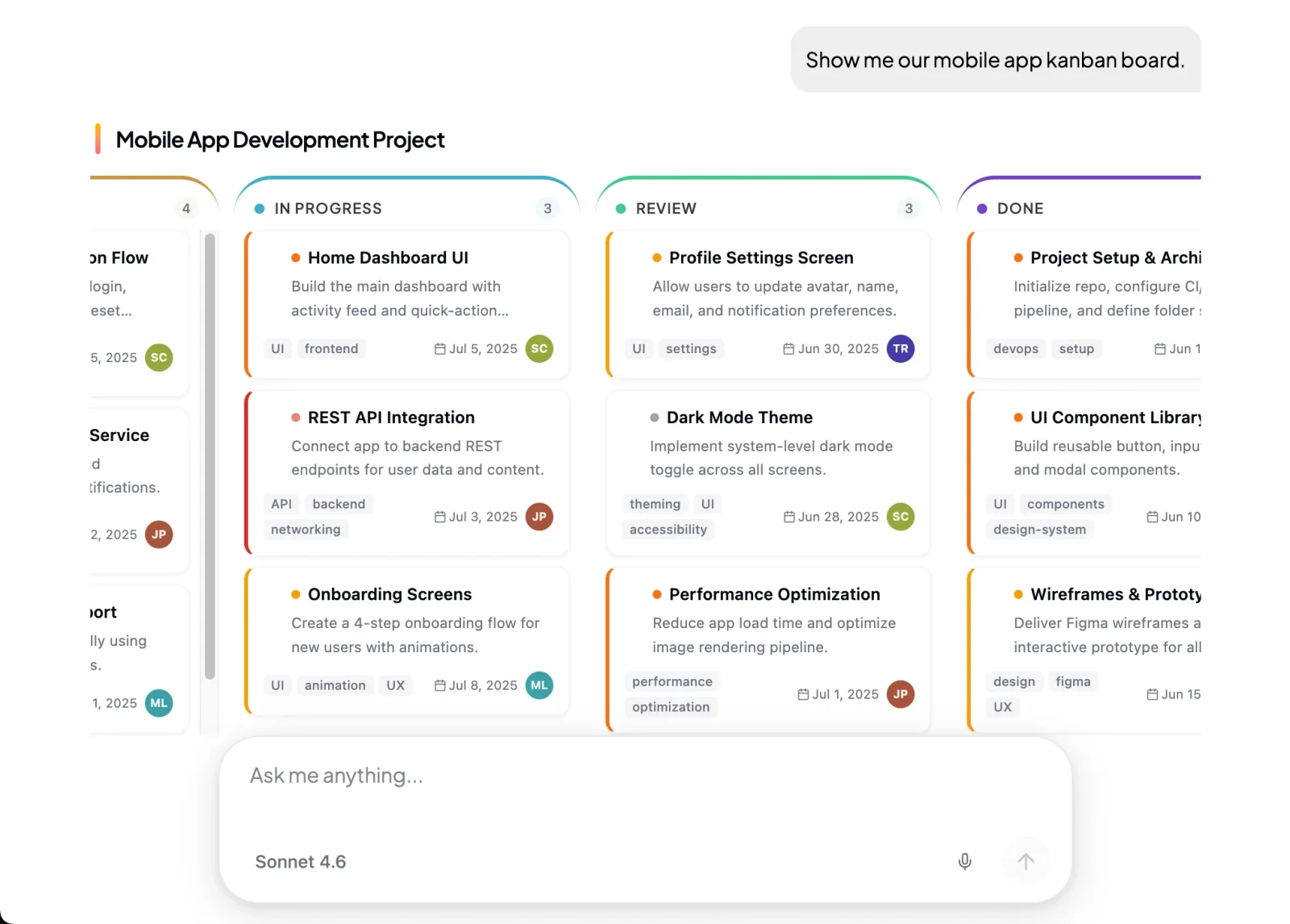 A plan the traveler can see, compare and change, rather than a wall of text.
What Happens When Nothing Fits?
The agent should be able to say that nothing fits.
For example:
“I don’t currently have a departure that meets those requirements in April. The closest match is a September departure with a lower walking requirement.”
That’s better than quietly recommending a trip that violates the traveler’s requirements.
There is also a business reason for this.
A traveler who is told honestly that April doesn’t work may come back in September.
A traveler who is sold the wrong trip may not come back at all.
Where Do Price and Availability Come From?
Price and availability should come from the system that owns them.
The agent can retain your trip descriptions, policies, and business rules.
But current inventory changes.
A departure that had four seats yesterday might have none today.
The agent therefore shouldn’t treat availability as permanent knowledge.
The same applies to prices when they depend on current inventory, dates, suppliers, room types, or other changing factors.
The pattern is:
The agent helps decide and assemble. The reservation system confirms what is currently available.
That might mean connecting the agent to a system such as FareHarbor, Bokun, Rezdy, a CRM, a GDS, or another system your business uses.
How Does Agentplace Create a Personalized Travel Experience?
Agentplace is a platform for creating AI agents that serve customers and help run a business.
An Agentplace agent can have its own web page and URL, where a customer interacts with it by text or voice and receives a personalized result through an interface the agent controls.
For a travel business, that means the agent can be built around a specific job such as:
“Help travelers find the right trip from our catalog.”
The agent can understand an unstructured request, ask follow-up questions, apply your business rules, use your records and connected systems, present the result through an interactive interface, and take the next action.
The agent can have its own frontend, backend, business logic, records, memory, integrations, interactive interfaces and voice.
Instead of putting a chatbot on top of an existing travel website, the agent itself can become the customer-facing application.
For a travel business, that could mean a traveler arrives at the agent’s page, describes the trip they’re looking for, works through the requirements, sees suitable options, changes their preferences, and moves toward an enquiry or booking.
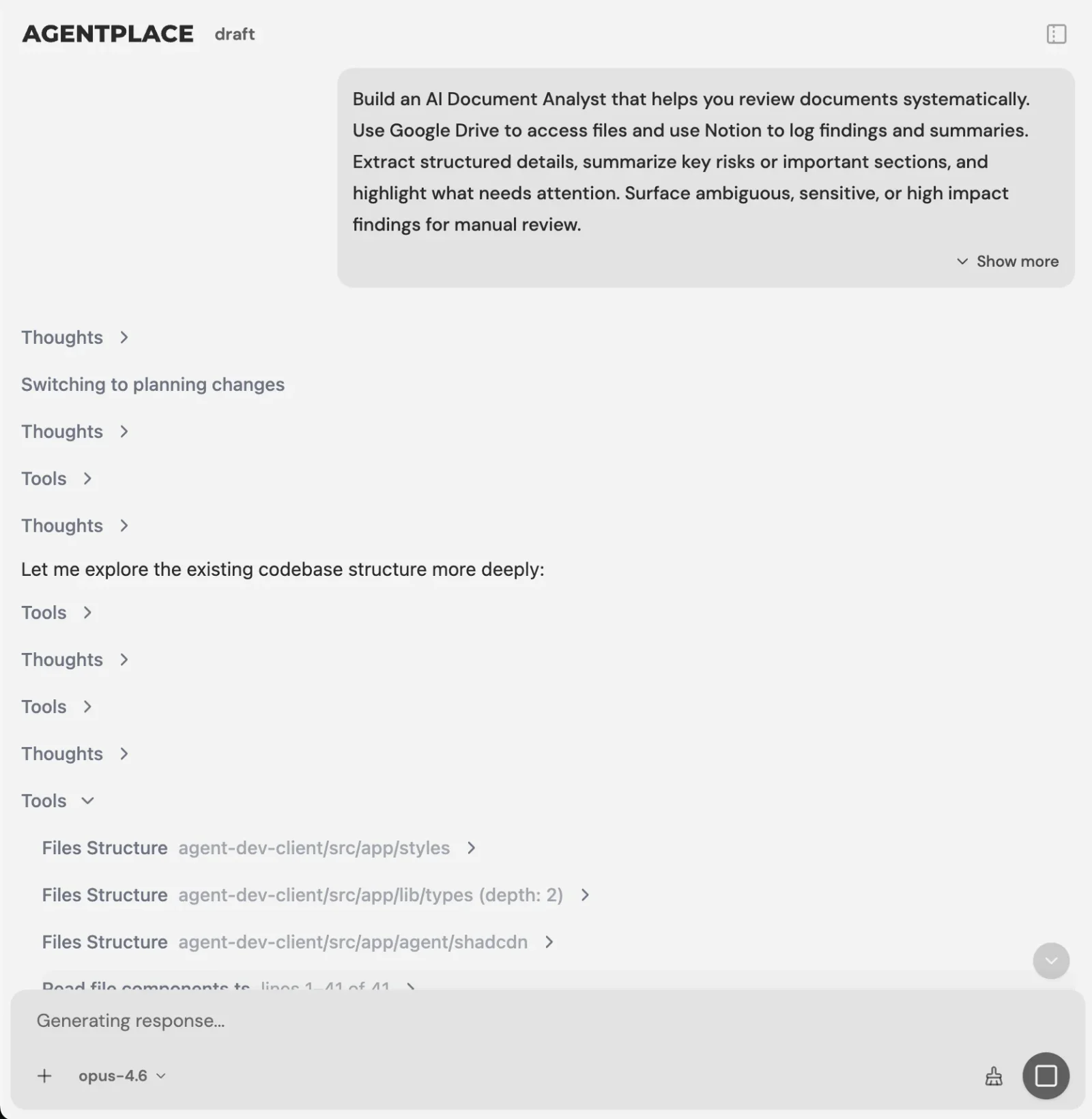 Describe the advising job, and the builder tests its own work before a traveler sees it.
What Makes an Agent Different From an AI Itinerary Generator?
An itinerary generator mainly produces a plan.
An agent can be responsible for a larger job.
For example, a generator receives:
“Create an eight-day itinerary for Peru.”
An agent receives:
“Help this traveler find a Peru trip that fits their dates, group, fitness level, budget, and interests. Ask for anything important that’s missing, rule out unsuitable options, show what fits, and help them move toward booking.”
The second job requires more than generating text.
It requires the agent to understand what needs to happen next.
How Is Personalization Different From Memory?
These are easy to confuse.
An agent can personalize a conversation because it remembers the information the traveler has already provided during that conversation.
That’s different from recognizing the same traveler across multiple visits.
For example:
“You told me earlier that your father is 74 and prefers shorter walking days.”
That’s conversation context.
Remembering that information months later when the traveler returns is a separate capability and should not be assumed unless the system is explicitly configured to do it.
What We Learned About Personalized AI Itineraries
The data is usually harder than the AI. Most businesses already have the information they need. It’s just scattered across PDFs, websites, spreadsheets, booking systems, emails, and people’s heads. Getting it into a usable structure is often the real project.
The rule-out logic matters as much as the recommendations. It’s easy to demonstrate an AI recommending something. The harder question is whether it knows when not to recommend it. For a travel business, that can be the difference between a useful advisor and a liability.
Personalization isn’t about asking more questions. A long intake form isn’t automatically more personalized. The best conversations collect the smallest amount of information needed to make the next decision.
Which Mistakes Are Most Common?
- Giving the agent marketing copy instead of useful product information
- Not defining the rules that determine eligibility
- Keeping live availability inside static agent knowledge
- Asking questions the traveler has already answered
- Treating the first itinerary as the finished product
- Recommending something when nothing actually fits
- Failing to define when a person should take over
- Assuming conversation memory is the same as long-term customer memory
What Is the Process, Start to Finish?
- Collect the traveler’s constraints.
- Match them against your own trips and rules.
- Build a plan from the options that fit.
- Let the traveler change the requirements.
- Rebuild the plan when those requirements change.
- Read current price and availability from the systems that own them.
- Hand the conversation to a person when the situation requires it.
For the build itself, see how to create an AI travel agent without coding.
For the recommendation logic in detail, see how to build an AI agent that recommends tours.
For the wider picture, see what AI agents do for tour operators.
The bottom line. A personalized AI itinerary is not personalized simply because AI wrote it. The useful part happens when the agent combines what the traveler needs with what your business can actually offer: collecting the constraints, matching them against your own trips and rules, building a plan from what fits, rebuilding it when the requirements change, reading price and availability from the systems that own them, and handing the conversation to a person when the situation requires it. That is what turns an AI-generated itinerary into something a travel business can actually use. If you only need a first draft for your own use, a general AI assistant is the faster tool.
Questions and answers
Frequently asked questions.
Can AI create a personalized travel itinerary?
Yes. AI can create an itinerary based on a traveler's dates, interests, budget, group, pace and other requirements. For a business, the itinerary becomes more useful when the AI also has access to the company's own trips, rules and current booking information.
What does AI need to personalize an itinerary?
Information about the traveler and information about the available trips. Traveler information can include dates, ages, group size, interests, budget, pace and accessibility requirements. Business information can include trips, departures, eligibility rules, suppliers and booking policies.
Can AI personalize an itinerary using my own tours?
Yes. An AI agent can use a business's own catalog and rules to narrow down which tours fit a particular traveler, rather than working only from general destination knowledge.
Can AI check live travel availability?
It can when it is connected to a booking or reservation system that provides current availability. Live inventory should come from that system rather than static information stored with the agent.
Can AI recommend a trip based on age and fitness?
Yes, when the business has defined relevant age and fitness requirements. The agent can apply those rules when comparing a traveler with available trips. It should not make medical or fitness-clearance decisions.
Can a traveler change an AI-generated itinerary?
Yes. A conversational agent can collect a change such as a different budget, date, pace or activity preference and rebuild the recommendation around the new requirement.
What happens if no trip fits?
The agent should say that no current option meets the requirements and, where appropriate, show the closest alternatives or involve a human advisor. A recommender that always finds something devalues the recommendations it does make.
Is an AI itinerary generator the same as an AI travel agent?
No. An itinerary generator primarily creates a plan. An AI travel agent can handle a larger customer-facing workflow, including gathering requirements, applying business rules, using connected systems, presenting personalized results, taking actions and handing off to a person.
Put this into practice
See the customer experience.
Explore a concrete example related to this article, then adapt the agent to your business.
Create my AI agentStart free with your business idea. The AI builder can help you explore it and create your agent. No technical specification needed. Sign in to continue. Pricing and limits · How the builder works