
How to Add an AI Salesperson to Your Website: A Guide to AI Product Advisors

You can add an AI salesperson to your website. The useful ones ask what the customer needs, understand their constraints, recommend appropriate products and continue toward a purchase, enquiry or store visit. This works best for high-consideration products such as mattresses, furniture and bikes.
Key Takeaways
- An AI salesperson is most useful when customers need advice before they know which product to buy.
- Product search helps customers find something they can name. An AI advisor helps customers figure out what they should be looking for.
- Mattress, furniture and bike stores are strong use cases because product selection depends on several customer-specific variables.
- The agent should use real product information and explicit recommendation rules rather than inventing recommendations. The quality of the advice is capped by the quality of the catalogue data behind it.
- The experience should continue beyond the recommendation into comparison, enquiry, store visit or purchase when appropriate.
Yes, you can add an AI salesperson to your website.
The most useful AI sales assistants do more than answer product questions. They ask customers what they need, understand their constraints, recommend appropriate products and move the customer toward a purchase, enquiry or store visit.
This works especially well for high-consideration products such as mattresses, furniture, bikes and specialty equipment, where a knowledgeable salesperson normally helps the customer translate a vague need into a specific product.
Agentplace can be used to build this kind of AI product advisor because the agent can combine conversation, product and business context, recommendation rules, interactive interfaces and actions inside one customer-facing web application.
What Is an AI Salesperson for a Website?
An AI salesperson is a customer-facing agent that helps website visitors choose what to buy.
A normal ecommerce website expects the customer to navigate the catalog.
A search bar expects them to know what to type.
Filters expect them to understand your product taxonomy.
An experienced salesperson does something different.
They ask questions.
A mattress salesperson might ask:
“Do you sleep on your side or back?”
A bike salesperson might ask:
“Where are you planning to ride?”
A furniture salesperson might ask:
“How big is the room, and do you have children or pets?”
The salesperson translates the customer’s situation into product criteria.
An AI salesperson tries to reproduce that process online.
Why Does This Matter Now?
Because the research half of the purchase has already moved, and it is increasingly happening before the customer reaches your site at all.
“Having tracked consumer shopping habits for nearly a decade, we’ve seen the traditional path of purchase evolve from ‘discover > research > buy’ to ‘research > discovery > buy,’ and the rapid adoption of AI agents aligns perfectly with this shift.” Melissa Minkow, Global Director of Retail Strategy and Insights, CI&T
CI&T’s Retail Tech Report: Agentic Commerce Edition, published in July 2026, found that 74% of shoppers had already used an AI agent while shopping. A customer who has researched before arriving does not need your category tree. They need the specific question they arrived with answered.
Can I Add an AI Salesperson to My Website?
Yes.
The basic structure is:
Customer need → questions → constraints → recommendation → next step
The AI agent needs access to:
- your products
- product attributes
- pricing
- availability
- business rules
- recommendation logic
- delivery or fulfillment information
- policies
- the actions customers can take next
Then it can ask the customer questions conversationally and narrow the available choices.
AI Salesperson, Search or Product Quiz?
These tools solve different problems.
| Tool | Best when |
|---|---|
| Search | Customer knows what they want |
| Filters | Customer understands product attributes |
| Quiz | Recommendation path can be predetermined |
| AI salesperson | The right questions and recommendation depend on the conversation |
A product quiz can work very well.
If five fixed questions reliably identify the right product, keep the quiz.
AI becomes more useful when customers describe needs in unpredictable ways or need to ask questions while deciding.
What Does the Advisor Need to Know in Each Category?
The variables differ by vertical, and so does the cost of getting it wrong.
| Category | What actually decides the recommendation | The expensive mistake |
|---|---|---|
| Mattress | Sleeping position, weight, temperature, partner, firmness, budget | A return, because comfort is only testable after delivery |
| Bike | Terrain, distance, rider height, storage, single or multiple uses, budget | A bike the customer stops riding |
| Furniture | Dimensions, doorway and stair access, fabric durability, pets and children, seat depth | A delivery that cannot get into the building |
| Specialty equipment | Compatibility, skill level, intended use, maintenance | Something that does not fit the kit they already own |
The pattern is the same across all four. The customer knows their situation. They do not know which product attribute expresses it.
What AI Can Recreate a Knowledgeable Bike Salesperson on My Website?
A bike store is a good example because “I need a bike” tells you almost nothing.
A knowledgeable employee might need to know:
- where the customer rides
- road versus trail
- typical distance
- experience level
- height
- comfort preferences
- storage
- budget
- whether one bike needs to cover multiple uses
Imagine a customer says:
“I mostly need something for commuting, but I’d like to ride gravel at weekends. I’m not interested in racing.”
A category page makes the customer decide whether to click road, hybrid or gravel.
An AI bike advisor can start from the customer’s actual goal.
It can ask follow-up questions, explain tradeoffs and narrow the catalog to appropriate options.
The customer does not have to learn your taxonomy before they can shop.
How Can I Add an AI Mattress Advisor to My Website?
Mattresses have the same problem.
The customer often knows the desired outcome:
“I want to sleep better.”
They may not know the relevant product attributes.
A mattress advisor might need to ask about:
- sleeping position
- firmness
- temperature
- whether they share the bed
- size
- comfort preferences
- budget
- current mattress
- delivery requirements
The agent can then map those answers to products.
For example:
“I sleep on my side, my partner sleeps on their back, and we both get hot.”
That is much more useful input than asking the customer to choose “memory foam” or “hybrid” before they understand why either matters.
What About Furniture?
Furniture combines product selection with physical constraints.
A customer might say:
“We need a sofa for a small apartment. We have a dog and want something deep enough to lounge on.”
A salesperson immediately hears several constraints: dimensions, fabric durability, cleaning, seat depth, delivery access and possibly modularity.
A good AI furniture advisor should do the same.
It can ask for the missing information and then present products that actually fit the situation.
What Should an AI Product Advisor Know?
The AI needs more than your marketing copy.
It should have reliable information about:
- product specifications
- compatibility
- dimensions
- materials
- prices
- inventory or availability where relevant
- warranties
- returns
- delivery
- product differences
- recommendation rules
The quality of the recommendation is limited by the quality of this context.
AI does not magically know your catalog better than you do.
What Should Happen After the Recommendation?
This is where many AI shopping assistants stop too early.
A customer rarely wants a recommendation for its own sake.
They want to do something with it.
Depending on the business, the next step might be:
- compare products
- see available options
- add to cart
- request a quote
- book a showroom visit
- check local availability
- save recommendations
- talk to a person
The agent should connect discovery to the next useful step.
How Does Agentplace Fit?
Agentplace publishes this article, so this section describes our own approach.
Agentplace is a no-code AI agent builder for customer-facing applications.
For an AI salesperson, you can describe the sales process you want the agent to follow, provide the business and product context it needs, define the important rules and build the customer-facing experience around it.
The agent is not limited to paragraphs in a chat bubble.
It can use interactive interfaces to present options, collect information and continue the customer journey.
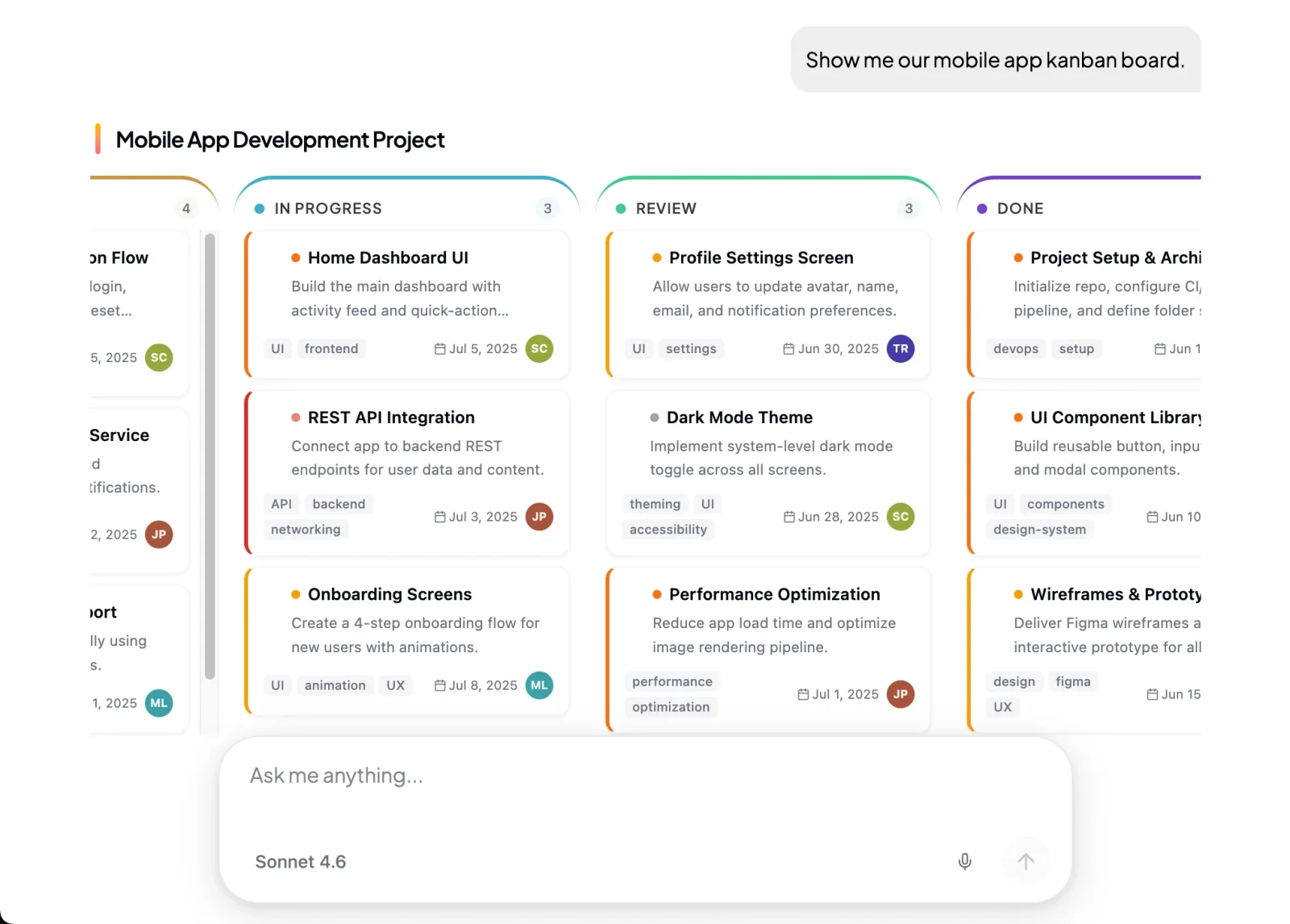 Conversation is good for understanding the customer. A rendered interface is better for comparing the result.
That matters for guided selling because conversation is often best for understanding the customer, while a visual interface is better for comparing the result.
The two examples below are not hypothetical. Both are published templates you can open, read and change, and the AI Sales Assistant page shows the same job described as a role rather than a single store.
Example: Mattress Store
Customer:
“I need a mattress but have no idea what to buy.”
Agent:
“Let’s narrow it down. Do you usually sleep on your side, back or stomach?”
The conversation establishes:
- side sleeper
- sleeps hot
- queen size
- under $2,000
- partner prefers medium firmness
The agent can now show a smaller set of relevant products and explain the tradeoffs.
That is much closer to the job of a salesperson than returning search results for “mattress.”
That conversation is a published template: AI Agent for Mattress Selection Intake collects sleeping position, firmness, temperature and budget before it recommends anything, and AI Mattress Trial and Comfort Exchange Agent handles the part most stores lose money on, which is what happens after delivery.
Example: Bike Store
Customer:
“I want something for commuting and weekend rides.”
The agent determines: commute distance, road conditions, weekend terrain, rider height and budget.
Instead of showing the entire bike catalog, it can recommend the relevant category and models and explain why.
Three published templates cover the stages of that conversation. AI E-Bike Recommendation Agent does the initial narrowing, AI Agent for Bike Fit and Model Intake handles sizing and model choice, and AI Bike Test Ride Booking Agent covers the step after the recommendation, which is the one that decides whether the sale happens.
When Is an AI Salesperson a Good Fit?
The strongest use cases share a pattern:
- customers do not know exactly what to buy
- products have meaningful differences
- several customer-specific variables affect the recommendation
- employees spend significant time answering pre-purchase questions
- expert advice improves conversion
- the purchase is important enough for customers to ask questions
This is why bikes, mattresses and furniture are particularly interesting categories.
When Is an AI Salesperson Unnecessary?
If you sell one simple product, you probably don’t need one.
If customers already know the SKU they need, search may be faster.
If a fixed five-question quiz reliably makes the recommendation, a quiz is simpler.
And if your product data is incomplete or unreliable, fix that before giving an AI permission to recommend products from it.
What Is the Real Value Here?
The value of an AI salesperson is not that it can write persuasive product descriptions.
It is that it can understand what the customer is trying to accomplish before recommending what to buy.
Traditional ecommerce asks the shopper to navigate the catalog.
An AI product advisor lets the shopper explain the need and navigates the catalog for them.
The bottom line. For high-consideration products such as mattresses, bikes and furniture, an AI product advisor can make the website behave much more like the best employee on the shop floor. It is worth building where customers currently phone, visit or leave because the site could not answer their specific question, and it is worth skipping where a five-question quiz already does the job. Fix the catalogue data first either way, because an advisor recommending from incomplete product information is confidently wrong at scale.
Frequently Asked Questions
Can I add an AI salesperson to my website?
Yes. An AI sales agent can ask customers questions, understand their needs, answer product questions and recommend appropriate products. Platforms such as Agentplace can build the agent directly into the customer-facing website experience rather than adding a separate chat widget beside your existing pages.
What is an AI product advisor?
An AI product advisor is an agent that uses a customer's needs and your product information to recommend appropriate products. Unlike search or filters, it can ask follow-up questions when the customer's request is incomplete, and it can explain why one option suits them better than another.
What AI can recreate a knowledgeable bike salesperson on my website?
A customer-facing AI agent with access to your bike catalog, product specifications and recommendation rules can ask about terrain, riding style, experience, height and budget before recommending appropriate bikes. Agentplace can be used to build this type of guided-selling agent into the website itself.
How can I add an AI mattress advisor to my website?
Give the agent your mattress catalog and the decision criteria your salespeople actually use, such as sleeping position, firmness, temperature, size and budget. The agent can then collect those preferences conversationally and recommend relevant products, explaining the trade-offs between the two or three that fit.
Can an AI salesperson recommend furniture?
Yes. Furniture is well suited to guided selling because recommendations often depend on room dimensions, style, material, durability, comfort, budget and delivery constraints. The physical constraints matter as much as taste, and they are exactly what a category page cannot ask a customer about.
Is an AI product advisor better than a quiz?
Not always. A quiz is better when the decision tree is fixed and predictable, and it is cheaper to build and maintain. An AI advisor becomes useful when customers ask unpredictable questions or the appropriate next question depends on what they have already said.
Is an AI salesperson the same as a chatbot?
No. A chatbot may answer product questions accurately and then stop. An AI salesperson is designed to understand the customer's needs, narrow the catalogue, recommend products and continue toward a commercial outcome such as a cart, a quote or a showroom appointment.
What businesses benefit most from an AI salesperson?
Businesses selling high-consideration products with many options benefit most. Examples include mattress stores, furniture retailers, bike shops and specialty equipment sellers, where staff currently spend significant time answering pre-purchase questions the website leaves unanswered. The clearest signal is customers who phone or visit specifically because they cannot decide online.
Ready to deploy AI agents that actually work?
Agentplace helps you find, evaluate, and deploy the right AI agents for your specific business needs.
Get Started Free →


