
How Do I Qualify Buyer Inquiries Before a Showing?

The short answer
Qualify a buyer inquiry with five questions: the move-in timeline, the financing stage, which homes they have seen, what the property needs to have, and whether they already work with an agent. An AI agent built with Agentplace can collect those answers on a listing page and apply the rules you define.
Key takeaways
- Five facts qualify most inquiries: the move-in timeline, the financing stage, previous property searches, property requirements and any existing agent relationship.
- Rejecting buyers too early can cost a sale, because someone who has not yet spoken to a lender may be ready to make an offer within weeks.
- Share the listing price, taxes and HOA dues before asking about the buyer's budget, so the buyer has the information the question depends on.
- Qualification questions should relate to the property, the transaction and legitimate business requirements, never to characteristics protected by fair housing laws.
- An AI agent built with Agentplace can collect the answers and apply written rules. Calendar checks, CRM updates and showing bookings depend on supported integrations and permissions.
Qualify buyer inquiries by asking five questions. When do they want to move? Have they spoken with a lender? Which homes have they seen? What does the property need to have? Are they already working with an agent?
Ask these questions in your first reply, but share the property’s price, taxes and HOA dues first. That gives buyers the information they need before discussing their budget. Keep your questions focused on the transaction and the property’s features, rather than the buyer’s personal characteristics.
An AI agent built with Agentplace can collect these answers on a listing page and apply qualification rules you define. Booking a showing automatically requires a supported calendar or showing-management integration and the permissions you grant.
What does a wasted showing cost?
A showing takes time to arrange, travel to and complete. For an occupied property, the seller also has to make the home available.
Rejecting buyers too early can cost you a sale. Someone who has not spoken to a lender may be ready to make an offer in a few weeks, and if you stop following up, another agent may get the business.
The goal of buyer qualification is to reduce unproductive showings without losing buyers who could become qualified.
Which questions should you ask before a showing?
Start with five facts. You can ask more questions later if they affect the next step.
| What to ask | Why it matters | Example question |
|---|---|---|
| Move-in timeline | Helps you understand how soon the buyer needs a home | When do you need to move? Does a lease ending or another home sale affect your timeline? |
| Financing stage | Helps you understand whether the buyer has started preparing to make an offer | Have you spoken with a lender or received a preapproval letter? |
| Previous property searches | Shows what the buyer has already considered | Which homes have you toured? What did you like or dislike about them? |
| Property requirements | Helps determine whether this listing fits the buyer’s needs | What does the home need to have? Which features are flexible? |
| Existing agent relationship | Helps you handle communication and representation appropriately | Are you currently working with a real estate agent? |
How should you evaluate a buyer’s financing stage?
A buyer’s financing status can help determine the next step, but it should not be the only factor in deciding whether to offer a showing.
- Has not spoken to a lender: share lender resources or offer to follow up later.
- Has spoken to a lender: ask whether they have a timeline for getting preapproved, if that matters for the property.
- Has a preapproval letter: follow your listing and seller requirements for arranging a showing.
- Plans to pay cash: follow your established process for any proof-of-funds request.
Requirements vary by property, seller and transaction. Set your own rules before automating the process, and avoid treating every buyer who is not yet preapproved as unqualified.
What buyer qualification rules should you write down?
Before using a form, a CRM or an AI agent to qualify inquiries, document the rules your team will follow.
| Your qualification rule | What to document |
|---|---|
| Price range | The price ranges you handle, and when you refer a buyer elsewhere |
| Service area | Neighborhoods or areas you cover, and any travel limits |
| Financing requirements | What is required for each property or seller |
| Follow-up process | What to offer buyers who are not ready to tour yet |
| Agent representation | How you respond when a buyer already has an agent |
| Human review | Which questions, exceptions, offers and negotiations must go to an agent |
Your qualification criteria should relate to the property, the transaction and legitimate business requirements. Apply them consistently and review them with your broker.
A written process also makes it easier to evaluate software. A tool can follow rules you define, but it cannot determine which rules are appropriate for your business.
How do you ask about financing without sounding intrusive?
Share the property’s financial details before asking about the buyer’s financing stage.
Less helpful:
“What’s your budget? Have you been preapproved?”
More helpful:
“This home is listed at $540,000. The HOA fee is $310 per month, and annual property taxes are approximately $6,200. Have you spoken with a lender yet, or are you still working out your budget?”
These figures are examples. Use the current listing information, and verify the details before sharing them.
Keep the conversation focused on the transaction. You generally do not need to ask about a buyer’s income, credit score, family or other personal characteristics to decide whether to arrange a showing.
If the buyer’s timeline and property requirements fit, but their financing status is unclear, consider offering the showing or arranging a follow-up rather than automatically rejecting the inquiry.
The principle is simple: you coordinate the home search, and the lender evaluates financing.
Which questions should real estate agents avoid?
Buyer qualification should focus on the home and the transaction, not on personal characteristics protected by fair housing laws.
The federal Fair Housing Act prohibits discrimination in housing based on race, color, religion, sex, national origin, familial status and disability. State and local laws may protect additional characteristics. Review your scripts with your broker and follow applicable laws.
For the federal statute, see the U.S. Department of Justice’s Civil Rights Division and 42 U.S.C. 3604.
| Ask about the property or transaction | Avoid questions about personal characteristics |
|---|---|
| “What features does the home need to have?” | “How many children do you have?” |
| “Which areas are you considering?” | “What kind of people do you want to live near?” |
| “Have you spoken with a lender?” | “Where are you originally from?” |
| “Would a single-level home meet your needs?” | “Does anyone in your household have a disability?” |
| “When do you need to move?” | “Which church do you attend?” |
If a buyer volunteers personal information, keep your response focused on their property needs and the transaction. Do not use protected information to determine whether to offer a showing.
A useful rule for your team: ask a question only when the answer is relevant to the property, the transaction, or a legitimate qualification requirement.
What should you do when a buyer is not ready for a showing?
Keep the conversation open and give the buyer a clear next step.
- Offer lender resources. Share reputable lenders or explain how to find one, without promising an approval outcome.
- Suggest another way to evaluate the property. Where available, offer an open house, a virtual tour or a video walkthrough.
- Set a follow-up date. A specific date makes it easier to restart the conversation.
- Explain the seller’s requirements. If the seller requires preapproval before a showing, state that requirement clearly.
For example:
“For this property, the seller asks buyers to provide a preapproval letter before scheduling a private showing. If you’re still working on financing, I can share some resources and check back with you in two weeks.”
State a seller’s requirements only when they are accurate. A buyer who is not ready today may still become a qualified lead later.
How can you avoid rejecting too many buyers?
A qualification process should save time without excluding buyers who could complete a purchase.
Use these practices:
- Start with five questions. Ask more only when the answers affect the next step.
- Share listing details first. Provide the price, taxes, HOA dues and relevant property information before asking about the buyer’s budget.
- Allow human review. Give agents a way to handle exceptions and record why they made a different decision.
- Keep the follow-up option open. A buyer who is not ready now may be ready later.
- Track rejected inquiries. Check whether buyers you turned away later purchased a home, including through another agent when that information is available.
Review your rules regularly. If buyers who were rejected continue to make successful purchases, examine whether your criteria are unnecessarily restrictive.
What tools can help qualify buyer inquiries?
The right tool depends on where your current process breaks down.
| Tool or approach | Best suited for | What to consider |
|---|---|---|
| Listing inquiry form | Agents with a manageable number of leads and a consistent process | Long forms can discourage buyers who are still comparing properties |
| Real estate CRM, such as Follow Up Boss or Sierra Interactive | Teams managing leads across several agents and channels | Routing depends on the information collected and the rules configured |
| AI lead follow-up tools, such as Structurely or Ylopo | Following up with leads over time | Check whether the tool applies your qualification criteria or mainly handles follow-up conversations |
| Showing-management tools, such as ShowingTime+ or Aligned Showings | Coordinating access, appointments and seller approval | Scheduling tools help manage showings, but may not handle the initial qualification process |
| AI agent built with Agentplace | Collecting buyer requirements and applying written qualification rules through a conversational page | Live calendar checks, CRM updates and showing bookings depend on supported integrations and permissions |
These rows describe what each category is built to do, based on vendor documentation reviewed in October 2026. They are not results from comparative testing.
If your leads already arrive qualified and your main problem is coordinating access or getting seller approval, showing-management software may be the better fit.
If you work with rental inquiries rather than home buyers, see an always-on AI leasing assistant.
How can Agentplace qualify buyer inquiries?
Agentplace is a platform for creating AI agents that serve customers and help businesses run their work. Each agent has its own web page and URL, where buyers can interact through text or voice. The agent can use your business information and configured tools to guide the conversation.
For real estate buyer qualification, you can create an agent that asks your five questions, shares relevant listing details, and follows the rules you define.
The setup starts with a plain-language description of the process:
“Qualify buyer inquiries for my listings. Ask about the buyer’s move-in timeline, whether they have spoken with a lender, which homes they have toured, what the property needs to have, and whether they are already working with an agent. Share the listing price, HOA dues and annual property taxes before asking about the buyer’s budget. Follow the qualification rules I provide. If the buyer is not ready, offer the appropriate next step and schedule a follow-up according to my instructions. Do not ask about protected personal characteristics or describe neighborhoods based on the people who live there. Direct represented buyers to handle the next steps through their agent, as appropriate. Send offers, negotiation requests and unusual situations to me for review.”
You can refine the instructions to reflect the requirements for each listing, your team’s process and the seller’s instructions.
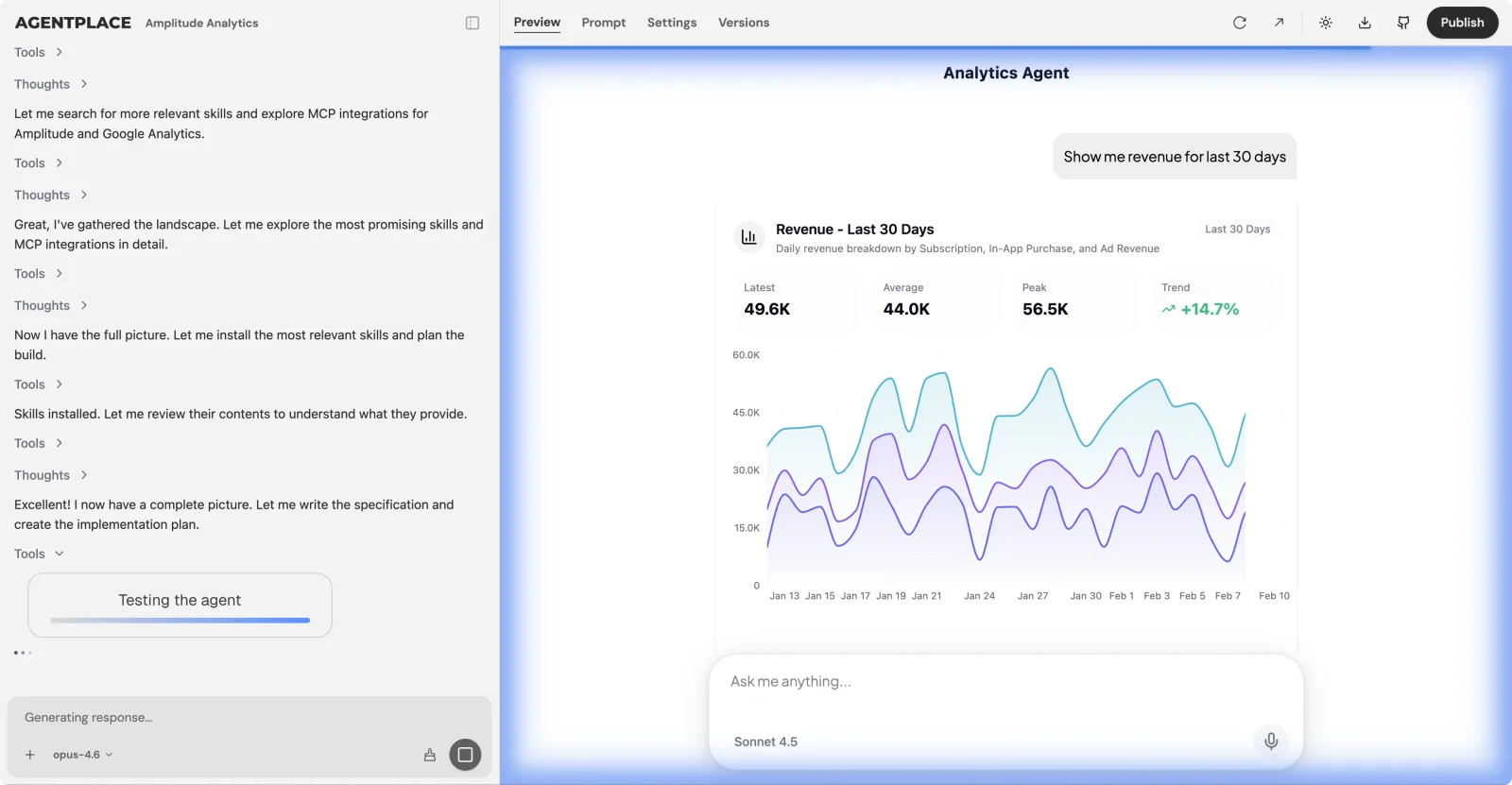 The builder can message the agent it has created, read the replies and correct what it finds before you publish.
The AI Builder helps create and test the agent. You decide when to publish it, and you do not need to write code to get started.
What can the agent do automatically?
That depends on how you configure it.
- Collect answers: ask the five qualification questions and organize the buyer’s responses.
- Apply written rules: identify which next step matches the criteria you provide.
- Share information: present property details you have supplied or made available through a supported connection.
- Check availability or book a showing: only when a compatible calendar or showing-management integration supports the required action and you authorize it.
- Update a CRM: only when a supported integration provides the necessary access and permissions.
- Escalate questions: direct offers, negotiations, exceptions and other decisions requiring an agent to you.
Without the necessary integrations, the agent can still collect the information and pass the inquiry to your team. Do not assume that a published agent automatically has access to your calendar, CRM or showing system.
Before publishing, test at least five scenarios: a preapproved buyer whose requirements fit, a buyer who has not spoken with a lender, a buyer already represented by an agent, a buyer who volunteers protected information, and someone asking what offer to make.
Review the current pricing against your inquiry volume and workflow.
Templates to start from: AI Property Buyer Matching Agent · AI Property Viewing Booking Agent
What should you measure after introducing buyer qualification?
Track three metrics to see whether your process saves time without losing good leads.
| Metric | What it measures | How to calculate it |
|---|---|---|
| Showings that met your criteria | Whether the qualification process is working | Showings that met your defined criteria, divided by all showings |
| Showings per buyer-side closing | How much showing activity is associated with completed transactions | Number of showings divided by buyer-side closings for the same period, interpreted with care |
| Buyers rejected who later purchased | Whether your rules may be too restrictive | Track rejected buyers who later close, when that information is available |
Review the first two monthly, and use the third as a check on your qualification rules.
Interpret the numbers alongside lead source, seasonality, market conditions and the time it takes buyers to close. A decline in showings that meet your criteria does not necessarily mean the process is failing, and a rejected buyer’s later purchase does not automatically mean the original decision was wrong.
When do you not need an AI agent?
An AI agent may not be necessary if:
- You receive only a few inquiries each week and can qualify them personally.
- Most inquiries already arrive through a referral network with financing information.
- Your team has not agreed on qualification criteria.
- Your clients value a personal conversation at the start of the process.
- Your main problem is property access, appointment coordination or seller approval rather than buyer qualification.
Start by writing down your process. Consider automation when repetitive questions and follow-up take time away from working with clients.
Buyer qualification checklist
Before using a form, a CRM or an AI agent, make sure you have:
- Written down your price ranges and service areas.
- Defined financing requirements for different listing types.
- Prepared the five initial questions.
- Verified the listing price, taxes and HOA dues you share.
- Reviewed fair housing requirements and prohibited questions with your broker.
- Prepared lender resources and follow-up options.
- Defined when an agent must review an inquiry.
- Established how represented buyers will be handled.
- Kept offers and negotiations under appropriate human review.
- Set up a process for reviewing rejected inquiries and exceptions.
Related reading: How to qualify wedding venue inquiries before a tour · An always-on AI leasing assistant · Real estate agent templates
Bottom line
Five questions can help you qualify buyer inquiries before spending time arranging a showing: the buyer’s timeline, the financing stage, previous property searches, property requirements and any existing agent relationship.
Write down your qualification rules first. Share the property’s financial details before asking about the buyer’s budget, avoid questions about protected personal characteristics, and keep a follow-up path open for buyers who are not ready yet.
If you answer the same questions repeatedly between showings, an AI agent built with Agentplace can collect those answers and apply your written process. Calendar checks, CRM updates and showing bookings depend on the integrations and permissions you configure. The qualification decisions and rules remain your responsibility.
Questions and answers
Frequently asked questions.
What questions should you ask a buyer before a showing?
Ask when they need to move, whether they have spoken with a lender, which homes they have toured, what the property needs to have, and whether they are already working with an agent. Ask further questions only when the answers affect the next step.
Should you require a preapproval letter before showing a house?
Requirements vary by property, seller and transaction, so set your own rules and review them with your broker. Avoid treating every buyer who is not yet preapproved as unqualified, because a buyer may be ready to make an offer within a few weeks.
How do you ask a buyer about financing without sounding intrusive?
Share the property's financial details first, including the list price, HOA dues and annual taxes, then ask whether the buyer has spoken with a lender. You generally do not need to ask about income, credit score or personal characteristics to decide whether to arrange a showing.
Which questions should real estate agents avoid?
Questions about characteristics protected by fair housing laws, including race, color, religion, sex, national origin, familial status and disability. State and local laws may protect additional characteristics, so review your scripts with your broker and follow applicable laws.
Can an AI agent qualify real estate buyer inquiries?
It can collect the answers, apply the qualification rules you define, and share listing details you have supplied. Checking availability, booking a showing or updating a CRM requires a compatible integration that supports the action and the permissions you authorize.
What should you do when a buyer is not ready for a showing?
Keep the conversation open and give a clear next step. Offer lender resources without promising an approval outcome, suggest an open house or a virtual tour where available, set a specific follow-up date, and state the seller's requirements if they are accurate.
How do you avoid rejecting too many buyers?
Start with five questions, share listing details first, allow agents to handle exceptions and record why, keep the follow-up option open, and track rejected inquiries. If buyers you turned away keep purchasing, examine whether your criteria are unnecessarily restrictive.
Who should set the buyer qualification rules?
You and your broker, in writing, applied consistently across the team. A written process also makes software easier to evaluate, because a tool can follow rules you define but cannot determine which rules are appropriate for your business.
Put this into practice
See the customer experience.
Explore a concrete example related to this article, then adapt the agent to your business.
Create my AI agentStart free with your business idea. The AI builder can help you explore it and create your agent. No technical specification needed. Sign in to continue. Pricing and limits · How the builder works