
How to Turn Online Bike Shoppers Into Test-Ride Appointments

The short answer
A shopper will book a test ride once they know the shop has their size in stock and when they can ride it. Ask for height and riding style, name two or three models, confirm the size, then offer specific slots. An AI agent built with Agentplace can do that and book the slot where your calendar is connected.
Key takeaways
- A shopper browsing bikes online is deciding whether a trip to the shop is worth it. They need a model, a size and a time before that is an easy yes.
- A contact form does not answer any of those three, which is why most of them never get sent.
- An AI agent built with Agentplace can ask what narrows the choice, name models you carry, and offer a slot where the calendar connection allows it.
- Stock is what makes a test ride real. An offer to ride a bike that is not in the shop in that size turns a good lead into a wasted trip.
- Start by writing what you need to pick a model: rider height, inseam, riding type, and the budget band. Four answers cover most of your range.
The short answer
A shopper books a test ride when three things are settled: which bike, what size, and when they can ride it.
So answer those in order. Ask for height, riding type and a budget band, name two or three models you carry, confirm the size, then offer specific appointment times rather than inviting them to get in touch.
An AI agent built with Agentplace can run that conversation on your site and book the slot where your calendar is connected. Stock and calendar answers depend on those connections, and without them the agent collects the request and hands it to your staff.
Why don’t online bike shoppers come into the shop?
Not because they prefer buying online. Because the trip is a gamble until three questions are answered.
A shopper looking at a hybrid on your site is really asking: is this the right bike for me, will you have it in my size, and can I ride it on Saturday? Your product page answers none of those, and your contact form answers them in two days.
- Size is the blocker. A rider who does not know whether they need a 54 or a 56 will not drive across town to find out you stock neither.
- Stock is the second blocker. “In our range” and “in the shop today” are different claims, and shoppers have learned the difference.
- Browsing is not a decision. Ten bikes on a page is the same problem the shopper came with, just better photographed.
A test ride is the easiest thing a bike shop can sell, because the shopper already wants it. It just has to be bookable.
How do you get a shopper from browsing to a booked ride?
1. Ask what narrows the range, not everything
Four answers cover most shops: rider height, riding type, how far they ride, and a budget band. Inseam matters when someone is between sizes, and more on a road bike than a hybrid.
Example: “How tall are you, and is this mostly commuting, weekends on trails, or longer road rides?”
2. Name two or three bikes, not the catalog
Each with one line on what it is good at. A shortlist is a decision the shopper can act on.
3. Confirm the size before you offer a time
Give the size your sizing guidance points to and say what would change it. If they are between sizes, say so, and say the ride decides it.
4. Say what is in the shop now
This is what makes the appointment worth making. If the size is not in, offer the nearest useful alternative rather than a maybe:
- The same model in a neighboring size, to confirm the fit.
- A comparable model that is in their size.
- The date their size arrives, if it is on order.
5. Offer specific slots
“Let us know when you want to come in” costs another exchange. Offer two times and let them take one.
Example: “I have Thursday at 5pm or Saturday at 10am, and I can have both sizes ready.”
6. Hand over what the staff need
A booking is only useful if the shop knows what to prepare: the models, the size, the rider’s height and what they ride. Without that the appointment starts from scratch.
What tools can help you book more test rides?
| Approach | Best for | What to consider |
|---|---|---|
| Size chart on your site | Answering the general sizing question | Attracts riders looking up sizes, most of whom are not near your shop |
| Contact form | Shops with low inquiry volume | Answers nothing the shopper asked, so most are never sent |
| Booking tool or scheduler | Shops that already know what the customer wants | Books a slot without picking a bike or confirming a size |
| Shop or inventory software | Stock, service and sales records in one place | Holds the stock answer; it does not have the conversation |
| AI agent built with Agentplace | Narrowing to two or three bikes and booking the ride | Stock and calendar answers depend on configured connections |
If your shop already converts walk-ins well and the problem is that nobody walks in, the conversation on the site is where to work. If appointments get booked and then nobody prepares the bikes, that is a handover problem and a scheduler will not fix it either.
How can Agentplace book test rides for a bike shop?
Agentplace is a platform for creating AI agents that serve customers and help run a business. Each agent can have its own page and URL, where customers interact through text or voice and receive responses through an interface the agent controls.
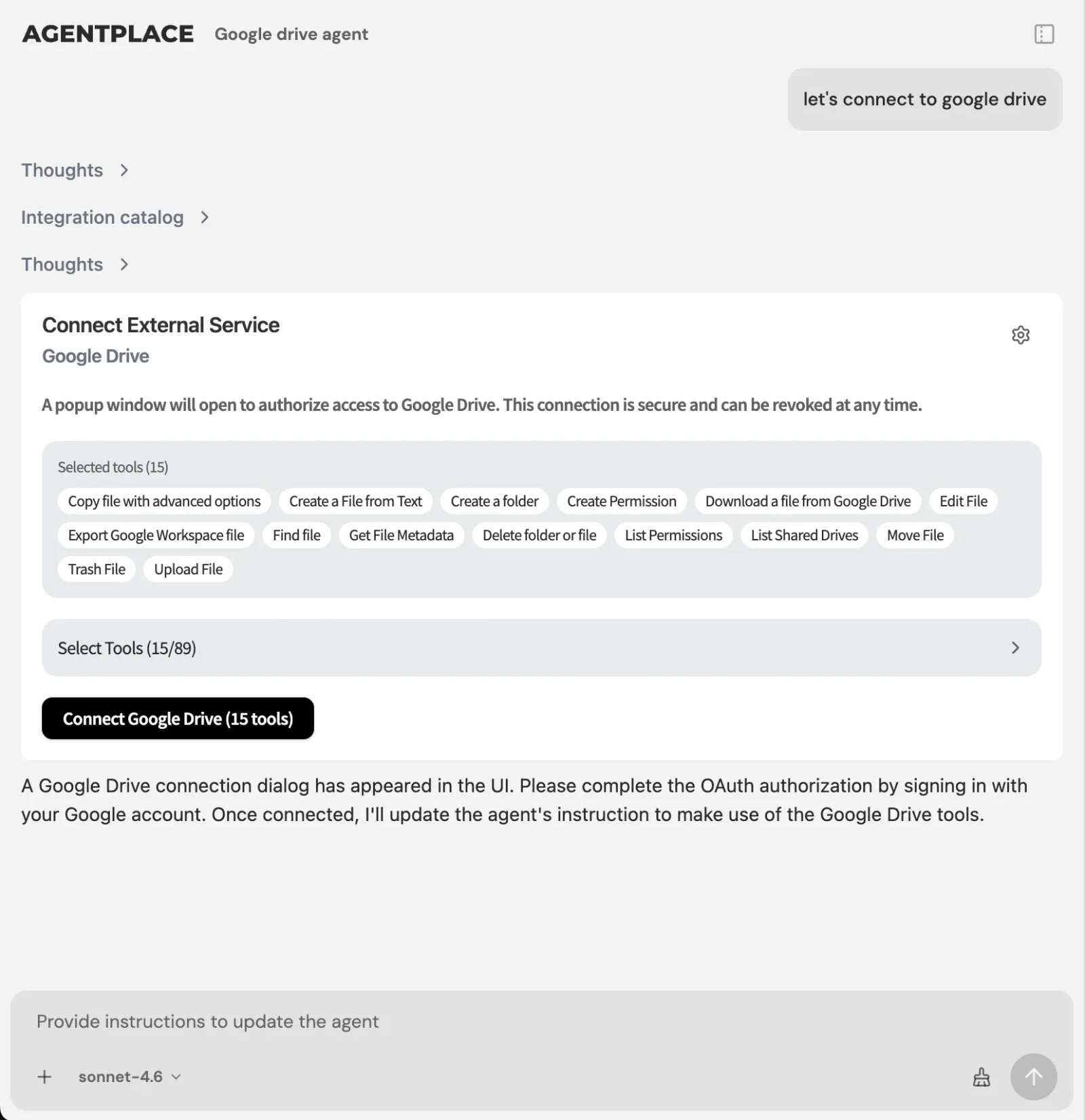 Stock and calendar answers come from systems you connect and authorize, one account at a time.
For a test ride, the agent follows the order above:
- It asks height, riding type, distance and budget band.
- It names two or three models from the range you gave it, with one line each.
- It states the size your guidance points to, and flags when the rider is between sizes.
- It says what is in the shop, where your inventory is connected.
- It offers the slots your calendar exposes and books one.
- It writes the rider’s details and the models into the booking so the shop can prepare.
You set it up by describing the outcome in plain language. For example:
“Help shoppers pick a bike and book a test ride. Ask height, riding type, weekly distance and budget band. Recommend no more than three bikes from our range and say what each is good at. Give the frame size from the manufacturer’s guidance and say when a rider is between sizes. Only say a bike is available if our stock shows it in that size. Offer test rides from our calendar, Thursday evenings and Saturday mornings. Put the rider’s height, the models and the size in the booking note. Send service and warranty questions to the workshop.”
The AI Builder clarifies the requirements, creates the agent and helps test it. You choose when to publish. No code is required.
What depends on configuration: reading stock, offering real calendar slots and writing the booking all need a supported connection and the permissions you grant. Agentplace connects through Composio’s integration catalog and compatible MCP tools. Without those connections the agent still narrows the choice and collects preferred times for your staff to confirm, which is the honest version of the same workflow.
Pricing: Agentplace has a free plan and paid plans that use AI credits. See the current pricing and plan limits.
Templates to start from: AI Bike Test Ride Booking Agent and AI Bike Fit and Model Intake Agent
What should you measure?
| Metric | What it tells you | How to measure it |
|---|---|---|
| Test rides booked per week | Whether the site is producing appointments at all | Bookings made through the site and the agent |
| Attendance rate | Whether the bookings are real | Riders who arrive, over rides booked |
| Rides per sale | How much shop time each sale costs | Test rides given, over bikes sold |
Watch attendance alongside bookings. A jump in bookings with a drop in attendance usually means one thing: appointments are being offered without confirming the size or the stock. The shopper worked that out before you did.
When don’t you need an AI agent?
- One person runs the shop floor and the phone, and it works. The conversation is already happening.
- Your stock turns too fast to answer from. If what is on the floor changes hourly, let staff confirm and keep the agent on narrowing the choice.
- You sell mostly in person to regulars. The site is not where that relationship starts.
- Your range is small enough to list. Three bikes on a clear page may need no conversation at all.
Quick checklist
- The four questions that narrow your range, written down
- Manufacturer sizing guidance to hand, per model family
- A rule for between-sizes riders
- A current answer for what is on the floor today
- Two bookable slots offered in the reply, not an invitation to call
- Rider height, models and size written into the booking
- Service and warranty questions routed to the workshop
- Attendance tracked next to bookings
Related reading: Helping bike customers choose a frame size online · Interactive product finders and AI buying guides · How to add an AI salesperson to your website
Bottom line
A test ride is the easiest sale a bike shop makes, and it starts with a model, a size and a time the shopper can accept in one message.
If shoppers are leaving your site without booking anything, an AI agent built with Agentplace can narrow the choice and offer a slot. Stock and calendar answers depend on what you connect. If they book and then do not arrive, look at whether the size and the stock were confirmed before the appointment was offered.
Questions and answers
Frequently asked questions.
What should a bike shop ask before offering a test ride?
Rider height, riding type, and a budget band. That is usually enough to name two or three models. Inseam helps when the rider is between sizes, and it matters more on road bikes than on a hybrid.
How do you handle a shopper whose size is not in stock?
Say so, then offer the nearest alternative: the same model in a neighboring size to confirm the fit, a comparable model in their size, or a date when the size arrives. A silent no sends them to another shop.
Can an AI agent book a test ride?
It can offer the slots your calendar exposes and book one where that connection and the permissions are set up. Without a connection it collects the preferred times and hands the request to your staff to confirm.
Should a bike shop publish a size chart?
Yes, and expect it to attract riders rather than buyers. A chart answers the sizing question, which is useful, but the booking comes from pairing the size with a specific bike that is in the shop now.
How many bikes should you recommend?
Two or three. A list of ten pushes the decision back to the shopper, which is what the website already failed to do. Each recommendation should say what it is good at and who it suits.
What if the shopper is between sizes?
Say that both could work and that the ride decides it. Offer to have both in the shop for the appointment where stock allows. Between-sizes is the strongest reason to come in rather than buy online.
Can an AI agent check bike stock?
Where your inventory system is connected and the permissions allow it, the agent can answer from stock. Without that connection it should describe the range and let your staff confirm availability rather than imply a bike is there.
What should a bike shop measure?
Test rides booked per week, the share of bookings that show up, and rides per sale. If bookings rise and attendance falls, the appointments are being offered without confirming the size or the stock.
Put this into practice
See the customer experience.
Explore a concrete example related to this article, then adapt the agent to your business.
Create my AI agentStart free with your business idea. The AI builder can help you explore it and create your agent. No technical specification needed. Sign in to continue. Pricing and limits · How the builder works