
How Do I Answer Listing Questions While Showing a Property?

The short answer
Create a verified fact sheet for every active listing, decide which questions can be answered from it, and tell buyers when you will follow up. An AI agent built with Agentplace can answer from the listing information you provide and collect preferred showing times, while live data and calendar checks depend on configured integrations.
Key takeaways
- Buyers often search outside business hours, which are also the hours agents spend on tours and open houses.
- A question that is documented and needs no interpretation or negotiation can be answered without the agent. A decision, a disputed fact or professional advice cannot.
- A verified fact sheet per listing is what any cover depends on, whether that cover is an assistant, an answering service or an AI agent.
- A useful reply answers what can be verified, says when you will be available, and offers a specific next step.
- A customer-facing AI agent built with Agentplace can share the verified facts, say when you will be available, and collect the buyer's preferred showing times.
- Live listing data, calendar checks and CRM updates each depend on a supported integration and the permissions you grant.
When you are showing a property, buyers may still ask about square footage, property taxes, HOA fees, included appliances or showing availability. You can answer many of these questions without interrupting your showing if you prepare the listing information in advance.
Start by creating a fact sheet for every active listing. Decide which questions can be answered from verified property information and which require your judgment. When you cannot respond immediately, tell the buyer when you will follow up and offer a specific time for the next showing.
An AI agent built with Agentplace can answer questions using the listing information you provide, collect buyer inquiries, and ask about preferred showing times. Access to live listing data, calendars or a CRM depends on the integrations and permissions you configure.
Why do listing questions arrive when you’re busy?
Buyers often search for homes outside normal business hours, especially on evenings and weekends. Those are also common times for property tours and open houses.
When a buyer contacts you during a showing, several things can happen at once:
- The buyer is comparing properties. They may be contacting several agents and want an answer before choosing which home to visit.
- You cannot stop to respond. You need to give the current buyer your attention and respect the seller’s property.
- The question may already be answered in the listing. Buyers may want to confirm square footage, HOA fees, parking or which appliances stay.
- A delayed reply can mean a missed opportunity. By the time you respond, the buyer may have scheduled another showing.
You do not need to answer every question immediately. You need a reliable way to share verified facts, acknowledge the inquiry, and identify what requires your attention.
Which listing questions can be answered without an agent?
Some questions can be answered from verified listing information. Others require an agent to review the situation or speak with the seller.
| Can usually be answered from verified information | Should be reviewed by an agent |
|---|---|
| Published square footage, bedrooms and bathrooms | Offers and negotiation |
| Property taxes and HOA fees shown in current records or documents | What price the seller might accept |
| Year built, lot size and parking | Seller motivation or confidential information |
| Appliances and fixtures included in the sale | Requests for repairs, credits or other concessions |
| Published showing availability and booking instructions | Inspection results and questions requiring professional advice |
| Links to available property disclosures | Questions about the legal effect of disclosures |
| School district information from the district’s own source | Questions requiring interpretation beyond the published facts |
Use the listing, property records, seller-provided information and relevant documents as your sources. Verify details when records conflict or may be outdated.
A practical rule: if the answer is documented and does not require interpretation or negotiation, it may be suitable for an automated response. If it involves a decision, a disputed fact, confidential information or professional advice, route it to an agent.
Questions about neighborhoods also require care. Share objective, relevant information from appropriate sources rather than making claims about the people who live in an area, and follow fair housing requirements and your brokerage’s policies.
What information should you prepare for each listing?
Create one fact sheet when a listing goes live, and update it whenever something changes.
| Information | Example | Where to verify it |
|---|---|---|
| Square footage | 1,840 sq. ft. | Verified measurements or applicable property records |
| Bedrooms and bathrooms | 3 bedrooms, 2 bathrooms | Listing and property records |
| Year built | 1996 | Property records |
| Lot and parking | 0.21 acre, attached two-car garage | Property records and listing |
| Property taxes | $4,320 for the previous year | County records or applicable tax documents |
| HOA fees | $310 per month | Current HOA documents |
| HOA coverage | Trash, pool and front landscaping | HOA documents |
| Included items | Washer, dryer and refrigerator included. Dining chandelier excluded | Seller confirmation and contract documents |
| School district | District name and official website | School district source |
| Showing availability | Available windows and booking instructions | Seller and showing calendar |
| Disclosures | Link to the available disclosure packet | Brokerage’s approved document system |
| Questions requiring you | Offer activity, price negotiations and seller-specific questions | Agent review |
These figures are examples rather than actual property data.
Keep the source and date of important information where practical, because that is what helps you identify an outdated figure before it reaches a buyer.
The fact sheet also makes it easier to brief an assistant, a showing partner, an answering service or an AI agent. Everyone answering questions needs access to the same approved information.
How do you set up a process before your next showing?
You can improve your response process in five steps.
1. Prepare the listing fact sheet
Record the property’s main features, costs, included items, showing instructions and links to available documents. Confirm the information before making it available to buyers.
2. Set a clear response time
Tell buyers when you expect to be available rather than promising an unspecified callback.
For example:
“I’m showing a property until 4 p.m. I’ll follow up after that.”
Only give a time you can reasonably meet, and update the buyer if your schedule changes.
3. Offer specific showing times
When a buyer expresses interest, offer available times instead of asking an open-ended question.
For example:
“I can arrange a showing Saturday at 11 a.m. or 1 p.m. Would either time work for you?”
Confirm availability before promising an appointment. If seller approval is required, make that clear.
4. Define which messages need your attention
Decide what should interrupt a showing and what can wait. An offer, a time-sensitive transaction question or an urgent property issue may need immediate review, while a question about the published year built usually does not.
Your process should identify who receives urgent messages and what happens if that person is unavailable.
5. Review unanswered questions weekly
Look at the questions buyers asked and the ones that needed your personal attention.
If buyers repeatedly ask for a fact that is missing from your listing materials, add it. If the question requires judgment or negotiation, keep it in your agent-review process.
What does a good reply to a buyer look like?
A useful reply answers the question, sets an expectation and offers a next step.
For example:
“It’s 1,840 square feet, with three bedrooms and two bathrooms. The HOA fee is $310 per month. I’m at a showing until 4 p.m. Would Saturday at 11 a.m. or 1 p.m. work for you?”
Use the verified facts for your own property. Do not copy example numbers into a live response.
If a buyer asks what the seller would accept, keep the boundary clear:
“The sellers are reviewing offers through Monday at 5 p.m. I can’t speak for them about what they would accept, but I can discuss your question with you. Would you like me to call after my showing?”
Mention an offer deadline only when it is accurate and appropriate to share.
If the buyer asks about financing or what they should offer, collect the question and follow your brokerage’s process. Do not let an automated reply become an unsupported price opinion or financial recommendation.
The structure is straightforward: answer what you can verify, explain when you will be available, and give the buyer a specific next step.
What tools can help answer listing questions?
The right tool depends on whether your main problem is responding to inquiries, managing leads or scheduling showings.
| Tool or approach | Best for | What to consider |
|---|---|---|
| AI agent built with Agentplace | Answering recurring listing questions and collecting buyer preferences | Live data, calendar checks and CRM updates depend on supported integrations and permissions |
| Saved text replies and voicemail | Agents handling a small number of listings | Simple to set up, but buyers may still wait for an actual answer |
| Answering service | Making sure calls are answered and messages are captured | Confirm whether the service can answer property-specific questions or only take messages |
| Real estate CRM, such as Follow Up Boss or BoldTrail | Tracking leads and sending initial responses | Listing-specific answers depend on the information and automation you configure |
| Showing-management software, such as ShowingTime | Coordinating appointments and access | Helps with scheduling, but may not answer general listing questions |
| A licensed assistant or showing partner | Teams with enough inquiry volume to justify additional support | Needs current listing facts and clear escalation rules |
If a person already answers your calls, give them the fact sheet and escalation rules first. You may not need another tool.
If you mainly need to coordinate access and appointments, showing-management software may be a better fit than an AI agent.
How can Agentplace answer listing questions while you’re showing a property?
Agentplace is a platform for creating AI agents that serve customers and help businesses run their work. Each agent has its own web page and URL, where buyers can interact by text or voice.
You can share the agent’s link from your listing page, include it in a text reply, or make it available through a QR code at an open house. The agent can answer from the property information and instructions you provide.
For example, you can configure an agent to:
- Answer questions about square footage, bedrooms, bathrooms, taxes, HOA fees and included items using your approved fact sheet.
- Share the official source for information such as school district details.
- Tell buyers when you expect to be available.
- Ask which available showing time they prefer.
- Collect questions about offers, price, seller decisions or other matters that need your review.
How do you create the agent?
Describe the workflow in plain language. For example:
“Answer buyer questions about my active listings while I am showing properties. Use the verified fact sheet for each listing, including square footage, bedrooms and bathrooms, year built, taxes, HOA fees and coverage, included items, school district information and available disclosures. Do not invent missing details. If information is unclear or outdated, tell the buyer that I need to confirm it. Share the property’s published price and fees accurately. Tell buyers when I expect to be available and collect their preferred showing times. Do not negotiate, speculate about what the seller would accept, disclose confidential seller information, or give legal, tax or financing advice. Route offers, negotiation requests, disputed facts and unusual questions to me. Do not promise a showing until availability and any required approvals have been confirmed.”
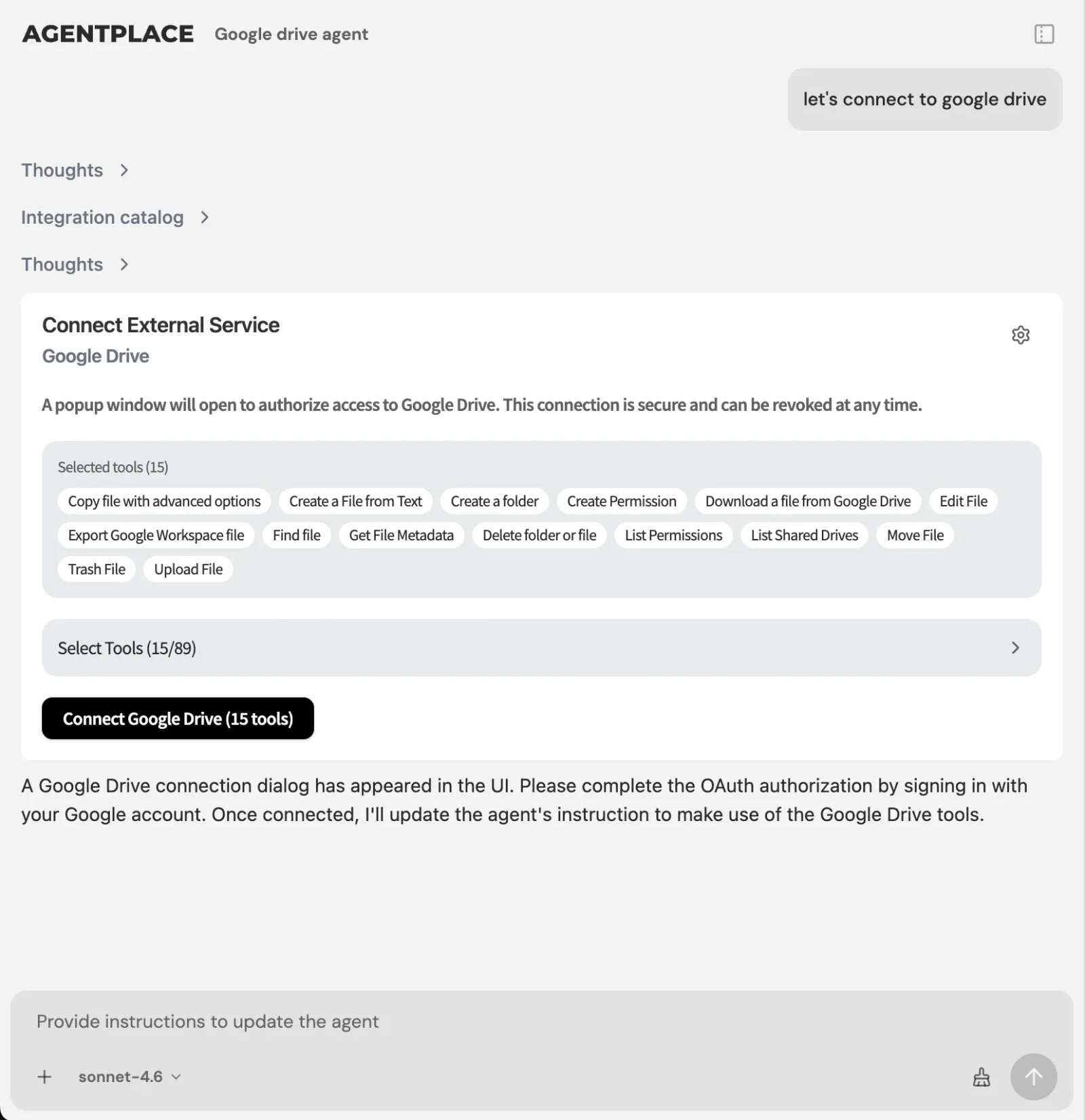 Calendar, CRM and listing data each require a connection you authorize before the agent can use them.
The AI Builder helps you develop the instructions, create the agent and test its responses. You decide when to publish it, and no code is required to get started.
What requires an integration?
The agent can answer from information you provide directly. Other actions depend on the connections you configure.
| Capability | What is needed |
|---|---|
| Answer from a listing fact sheet | Accurate property information supplied to the agent |
| Retrieve current listing information | A supported data connection with the required access |
| Check calendar availability | A compatible calendar or showing-management integration |
| Write buyer details into a CRM | A supported CRM integration and authorized permissions |
| Confirm a showing | A supported scheduling workflow, including any required seller approval |
Without these connections, the agent can still answer from its supplied information and collect the buyer’s preferred times for you to confirm. Do not assume that publishing an agent automatically connects it to your listing database, calendar or CRM.
Before publishing, test questions about a missing fact, an outdated HOA fee, an offer deadline, a request for a price opinion, and a preferred showing time when the calendar has not been connected.
Review the current pricing and the applicable plan limits before choosing a setup.
Templates to start from: AI Property Portal Inquiry Response Agent · AI Open House Coordination Agent
When don’t you need an AI agent?
An AI agent may not be necessary if:
- You manage only a few active listings. Saved replies and a well-maintained fact sheet may be enough.
- An assistant already handles incoming calls. Give them the property facts and escalation rules.
- Your listing information is incomplete. Prepare and verify the information first.
- Most inquiries involve negotiation or seller decisions. Those conversations still need your judgment.
- Your brokerage restricts automated client communications. Check its policies before publishing an agent.
Start by improving the information and process you already use. Automation is most useful when buyers repeatedly ask questions that have clear, verified answers.
Listing response checklist
Before you let anything answer on your behalf, make sure you have:
- A verified fact sheet for every active listing.
- Current property taxes, HOA fees and coverage.
- Clear details about included and excluded items.
- Links to approved disclosures and official information sources.
- A realistic response time for days when you are showing properties.
- Specific showing windows, with availability confirmed before booking.
- Clear rules for offers, negotiation, confidential information and escalation.
- Brokerage approval for any automated client communication.
- Tests for missing, outdated and sensitive listing questions.
- A weekly review of unanswered questions and recurring information gaps.
Related reading: How to qualify buyer inquiries before a showing · How tour operators handle inquiries while guiding trips · Consumer Financial Protection Bureau · AI agents for residential brokerages
Bottom line
You can answer many listing questions while showing a property by preparing verified facts in advance and deciding which questions require your judgment.
An AI agent built with Agentplace can share those facts, explain when you will be available, and collect preferred showing times. Live listing data, calendar checks and CRM updates require the appropriate integrations and permissions.
Start with the fact sheet. Once the information and escalation rules are clear, you can decide whether saved replies, an assistant, showing-management software or an AI agent is the right way to handle inquiries while you are busy.
Questions and answers
Frequently asked questions.
How can you answer listing questions while showing a property?
Prepare a fact sheet for every active listing, decide which questions can be answered from verified property information, and tell the buyer when you will follow up. Offer a specific next showing time rather than an open-ended promise to call back.
Which listing questions can be answered without an agent?
Published square footage, bedrooms and bathrooms, property taxes and HOA fees from current records, year built, lot size and parking, included appliances and fixtures, published showing availability, links to disclosures, and school district information from the district's own source.
Which questions should always be reviewed by an agent?
Offers and negotiation, what price the seller might accept, seller motivation or confidential information, requests for repairs or credits, inspection results, questions about the legal effect of disclosures, and anything requiring interpretation beyond the published facts.
Should you tell a buyer you are at a showing?
Yes, and give a time you can reasonably meet, such as that you are showing a property until four and will follow up after that. Update the buyer if your schedule changes.
Can an AI agent book the next showing?
Confirming a showing requires a supported scheduling workflow, including any required seller approval, and checking availability requires a compatible calendar or showing-management integration. Without those, the agent can collect preferred times for you to confirm.
Is this different from an answering service?
An answering service makes sure calls are answered and messages are captured, and you should confirm whether it can answer property-specific questions or only take messages. An AI agent can answer from the approved fact sheet and collect preferred showing times.
How do you keep an AI agent on the right side of fair housing law?
Keep questions and answers focused on the property and the transaction. Share objective information from appropriate sources rather than making claims about the people who live in an area, and follow fair housing requirements and your brokerage's policies.
Do you need a CRM for this to work?
No. An agent can answer from supplied information and collect buyer details without one. Writing those details into a CRM requires a supported integration and authorized permissions.
Put this into practice
See the customer experience.
Explore a concrete example related to this article, then adapt the agent to your business.
Create my AI agentStart free with your business idea. The AI builder can help you explore it and create your agent. No technical specification needed. Sign in to continue. Pricing and limits · How the builder works