
How Do I Answer Menu and Allergen Questions Online?

The short answer
Answer menu questions from your current records, and report allergen information exactly as it is documented. An AI agent built with Agentplace can do both on its own page, and should never declare a dish safe for a person with an allergy. Cross-contact, substitutions and severe allergies go to the kitchen or manager.
Key takeaways
- Menu questions can usually be answered from current records, while allergen questions require more care because an ingredient list does not establish whether a dish is safe for a person.
- The safest approach is to report documented information and send cross-contact, substitution and individual safety questions to a member of the kitchen or management team.
- An AI agent built with Agentplace can answer menu questions before a guest books and report the documented allergen information for each dish.
- An agent must never declare a dish safe for a person with an allergy. It can report what is recorded, explain what is unknown, and arrange a human follow-up.
- Record unknown information explicitly, because a blank field can be mistaken for a negative answer.
Restaurants receive menu and allergen questions through their websites, booking forms, social media and phone lines. Menu questions can usually be answered from current menu records. Allergen questions require more care, because ingredient lists do not establish whether a dish is safe for someone with an allergy.
The safest approach is to answer factual questions from documented information and send questions about cross-contact, substitutions or individual allergy risks to a member of the kitchen or management team.
A customer-facing AI agent built with Agentplace can help restaurants answer menu questions before a guest books, report documented allergen information, and direct questions that require a safety decision to the right person.
The short answer
To answer menu and allergen questions online:
- Keep one current menu and allergen record. Include dish names, prices, ingredients and documented allergen information.
- Answer menu questions directly. Use your records to provide current prices, ingredients, vegetarian options and available dishes.
- Report allergen information exactly as documented. Do not fill gaps with assumptions or infer that a dish is safe.
- Escalate questions that require a safety decision. These include cross-contact, shared equipment, substitutions, severe allergies, and missing or outdated information.
- Keep the records updated. Check the allergen information whenever the menu or preparation process changes.
A customer-facing AI agent built with Agentplace can give guests a dedicated web page where they ask questions in their own words. The agent answers from your restaurant’s records and directs questions that require human judgment to the manager or kitchen team.
An AI agent must never declare a dish safe for a person with an allergy. It can report documented information, explain what is unknown, and arrange a human follow-up.
If your menu rarely changes and allergen questions are uncommon, a published allergen chart and a phone number may be enough. An AI agent is more useful when guests ask questions before booking and staff cannot always respond immediately.
Why isn’t a menu PDF enough?
A menu PDF shows dishes, descriptions and prices. It usually cannot answer follow-up questions, explain missing information, or connect a guest with someone who can confirm a preparation detail.
Consider this message arriving on a Saturday afternoon:
“Hi! We’d like to book for four on Friday. My partner is celiac and our youngest can’t have nuts at all. Is that workable, or should we look somewhere else?”
The guest needs more than a menu. They want to know what the restaurant offers, what its records say about allergens, whether the kitchen can accommodate their needs, and whether they should make a reservation.
A menu PDF may answer the first question. An allergen chart may provide some documented information. Neither establishes that the restaurant can safely accommodate the guest’s specific requirements.
The goal is to answer what you know and make it easy to get a reliable answer to everything else.
Which menu and allergen questions can you answer online?
The distinction is between reporting documented information and making a safety judgment.
| Guest question | What the restaurant can do |
|---|---|
| What are tonight’s vegetarian main courses? | List the dishes marked vegetarian on the current menu. |
| How much is the tasting menu? | Provide the recorded price. |
| Which dishes are marked gluten-free? | Report the documented designation and any relevant limitations. |
| Does the gnocchi contain milk? | Report the recorded ingredients and allergen information. |
| Is the gnocchi safe for my milk allergy? | Explain the documented information and refer the safety question to a person. |
| Could the dessert contain traces of nuts? | Refer the question to someone who can verify the relevant preparation and cross-contact information. |
| Is the fryer shared with the calamari? | Report documented equipment information, and escalate if it is missing or needs confirmation. |
| Can you make the risotto without butter on Friday? | Ask the kitchen or manager to confirm the requested substitution. |
| My daughter has a severe sesame allergy. | Escalate to the responsible person rather than making a safety claim. |
| Does tonight’s special contain celery? | Report the information if the special has a current, verified record, and otherwise escalate. |
Three types of question need particular attention:
- Cross-contact: could an allergen be transferred through shared equipment, cooking oil, utensils or preparation surfaces?
- Substitutions: can the kitchen change the recipe or preparation process?
- Individual safety: can the restaurant accommodate a particular person’s allergy?
The first step is to report documented facts. The next step is to involve the person responsible for verifying anything those facts cannot establish.
What information should you record for every dish?
Create one record for each menu item and keep it current. The record should cover ingredients, relevant allergens, preparation details, possible substitutions, and the person responsible for confirming changes.
The exact allergens you must declare depend on local regulations. For example, UK and EU rules cover 14 specified allergens, while US federal law identifies nine major food allergens. Check the requirements that apply to your restaurant.
- United States: FDA food allergy guidance
- United Kingdom: Food Standards Agency allergen guidance for food businesses
A practical dish record includes the following information:
| Information to record | Why it matters | Example |
|---|---|---|
| Dish name | Matches the wording guests see on the menu | Potato gnocchi, sage butter |
| Ingredients | Helps answer factual ingredient questions | Potato, flour, egg, butter, sage |
| Allergen status | Records the result of your ingredient and allergen checks | Milk: present. Egg: present |
| Unknown or unverified information | Prevents the system from guessing | Cross-contact information: not verified |
| Possible adaptations | Shows which changes the kitchen has confirmed it can make | Butter can be omitted. Other ingredients require review |
| Shared equipment and preparation details | Helps identify information requiring further verification | Fryer shared with other menu items |
| Responsible person | Identifies who can confirm a question | Manager on shift |
| Last review date | Shows when the record was last checked | Reviewed 14 October |
Record unknown information explicitly. A blank field can be mistaken for a negative answer, while marking information as unknown makes it clear that the question needs further review.
Do not treat an ingredient list as proof that a dish is free from cross-contact. Keep preparation information separate and escalate any safety question the records cannot answer.
How should you answer an allergen question without making a safety judgment?
Use three steps:
- State what the current record says.
- Explain what the record does not establish.
- Identify the person who can follow up, and give a realistic response time.
For example, a guest asks whether the gnocchi is suitable for someone with a milk allergy.
A responsible answer:
“Our ingredient record lists milk in the gnocchi, so it is not dairy-free according to our current records. I can’t determine whether a dish is safe for an individual allergy. Our manager can check with the kitchen. Would you like us to contact you?”
That answer provides a useful fact without making a promise about safety.
Compare it with these examples:
- Better: “Our ingredient record lists milk in the gnocchi.”
- Avoid: “The gnocchi should be fine for a milk allergy.”
- Better: “We don’t have verified information about shared fryer use. Our manager can check with the kitchen.”
- Avoid: “There shouldn’t be any nut traces.”
Words such as “should be fine” and “shouldn’t contain traces” can turn uncertainty into a misleading assurance.
Menu questions can be answered directly when the information is current:
“The tasting menu costs $95 per person, and the wine pairing costs $55. Three of the seven courses are marked vegetarian.”
These prices are illustrative. Use your restaurant’s actual menu records.
How do you keep menu and allergen answers up to date?
Restaurants that change their menus weekly need a process for updating both menu information and allergen records. An answer based on an outdated record can mislead a guest.
Follow these five practices:
- Use one source of truth. Maintain the menu and allergen information in a designated file or system, and avoid conflicting versions across spreadsheets, printed menus and informal notes.
- Update before publishing. Review the allergen records before a new menu goes live.
- Record the review date. Track when each dish was checked and who checked it.
- Escalate missing information. If an ingredient, preparation detail or allergen status is unknown, do not estimate.
- Review specials separately. Daily specials can change quickly and may not be included in the main menu records.
Where a supported integration is available, an AI agent can access information from connected business systems. Agentplace supports connections through Composio’s integration catalog and compatible MCP tools, subject to the available integration and the permissions you authorize.
Without a supported connection, the agent relies on the menu and allergen information you provide, so your team has to keep those records current.
If the allergen record has not been verified for the current menu, the agent should direct the question to a person rather than assume the information is still valid.
What tools can restaurants use to answer menu and allergen questions?
Different tools solve different parts of the problem. The right choice depends on whether you need to publish information, manage orders, record reservations or answer guest questions.
| Tool or approach | Best use | Limitation |
|---|---|---|
| Menu PDF | Publishing dishes, descriptions and prices | Cannot answer follow-up questions |
| Allergen chart | Displaying documented allergen information | Guests must interpret the information themselves |
| Menu and ordering platforms, such as Toast, Square and Olo | Managing menus, orders and supported item information | Capabilities vary, and menu management alone does not resolve individual safety questions |
| Reservation platforms, such as OpenTable, Resy and SevenRooms | Managing reservations and guest notes | Recording an allergy note does not establish whether a dish is safe |
| Customer support chatbots, such as Intercom Fin and Tidio Lyro | Answering general questions using configured knowledge sources | Must be configured to avoid unsupported allergen claims and to escalate safety questions |
| Phone and email | Getting confirmation from restaurant staff | Replies depend on staff availability |
| Customer-facing AI agents built with Agentplace | Answering recorded menu questions and directing unresolved allergen questions to staff | Requires accurate records, clear rules and a working handoff process |
These are descriptions of the tools’ general roles, not results of comparative product testing. Specific capabilities depend on each vendor’s current features, configuration and integrations.
How can Agentplace help answer menu and allergen questions?
Agentplace is a platform for creating AI agents that serve customers and help businesses run their work.
Each agent has its own web page and URL. Guests can use the page to ask questions in natural language and receive responses through an interface the agent controls. Depending on the setup, an agent can also use authorized integrations to access business systems and pass information to staff.
For a restaurant, an agent can be configured to:
- Answer menu questions. Provide current dishes, prices, ingredients and documented dietary information from the restaurant’s records.
- Report allergen information. Read the relevant dish record without adding unsupported claims.
- Identify missing information. Explain when a record does not contain the answer.
- Hand over safety questions. Direct questions about cross-contact, substitutions, severe allergies or unverified information to the manager or kitchen team.
- Pass along the context. Include the guest’s question and the information already discussed, so staff can follow up.
- Support connected workflows. Where a supported integration is configured, pass booking details or guest notes to the relevant business system.
The agent’s behavior should be defined before publication. For example, the setup instructions might say:
“Answer menu questions using the restaurant’s current menu and allergen records. Report documented ingredients and allergen information without adding assumptions. Never declare a dish safe for an individual with an allergy. Direct questions about cross-contact, shared equipment, substitutions, severe allergies or missing information to the manager on shift. If the relevant record is outdated or has not been verified for the current menu, escalate the question instead of answering from that record. Collect the information needed for a follow-up and provide only response times the restaurant can meet.”
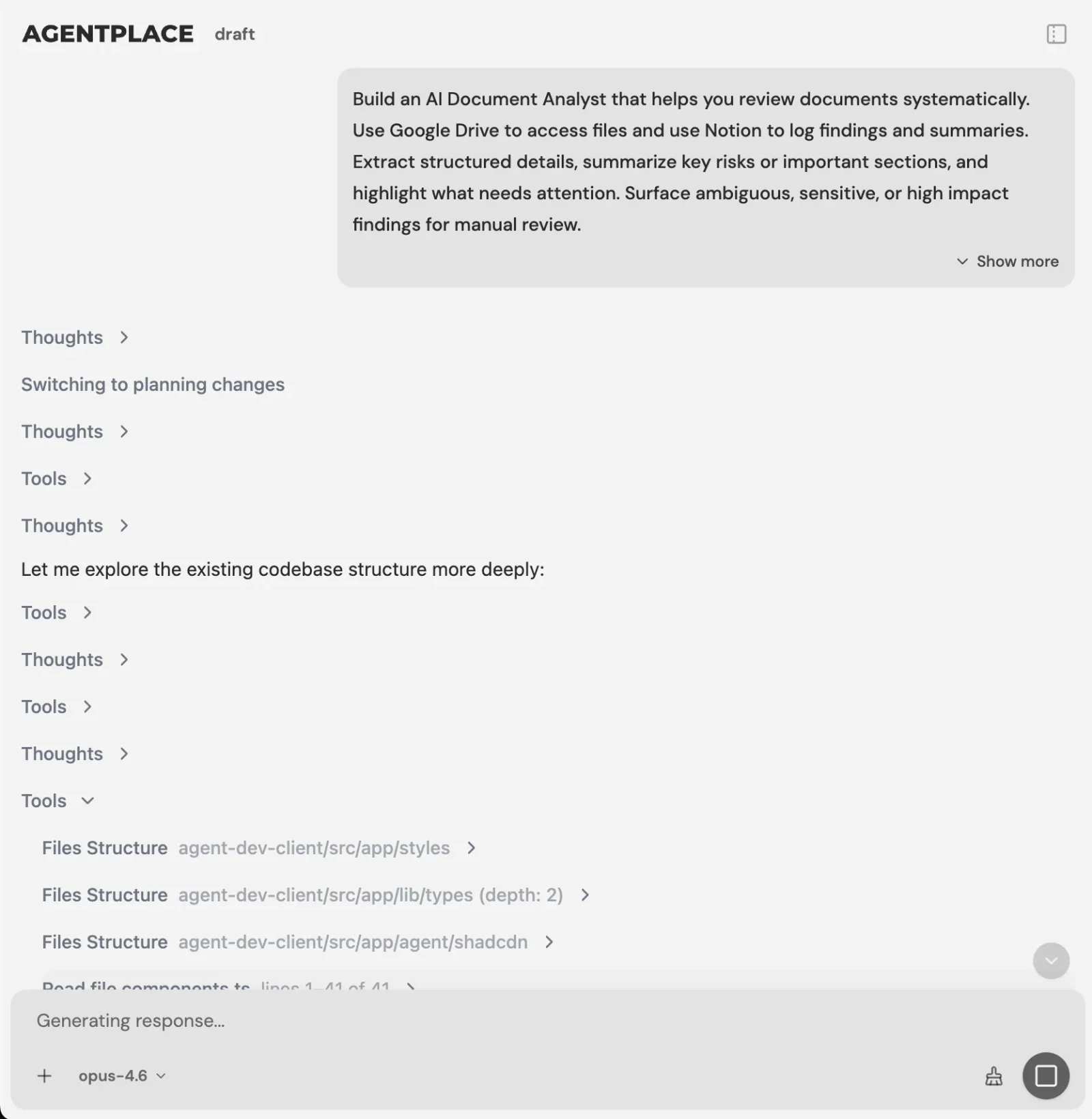 The rule the agent must not break is written into the brief, in the restaurant’s own words.
The AI Builder helps you define the agent’s behavior, clarify requirements, create the agent and test its responses. You decide when to publish it, and no code is required to get started.
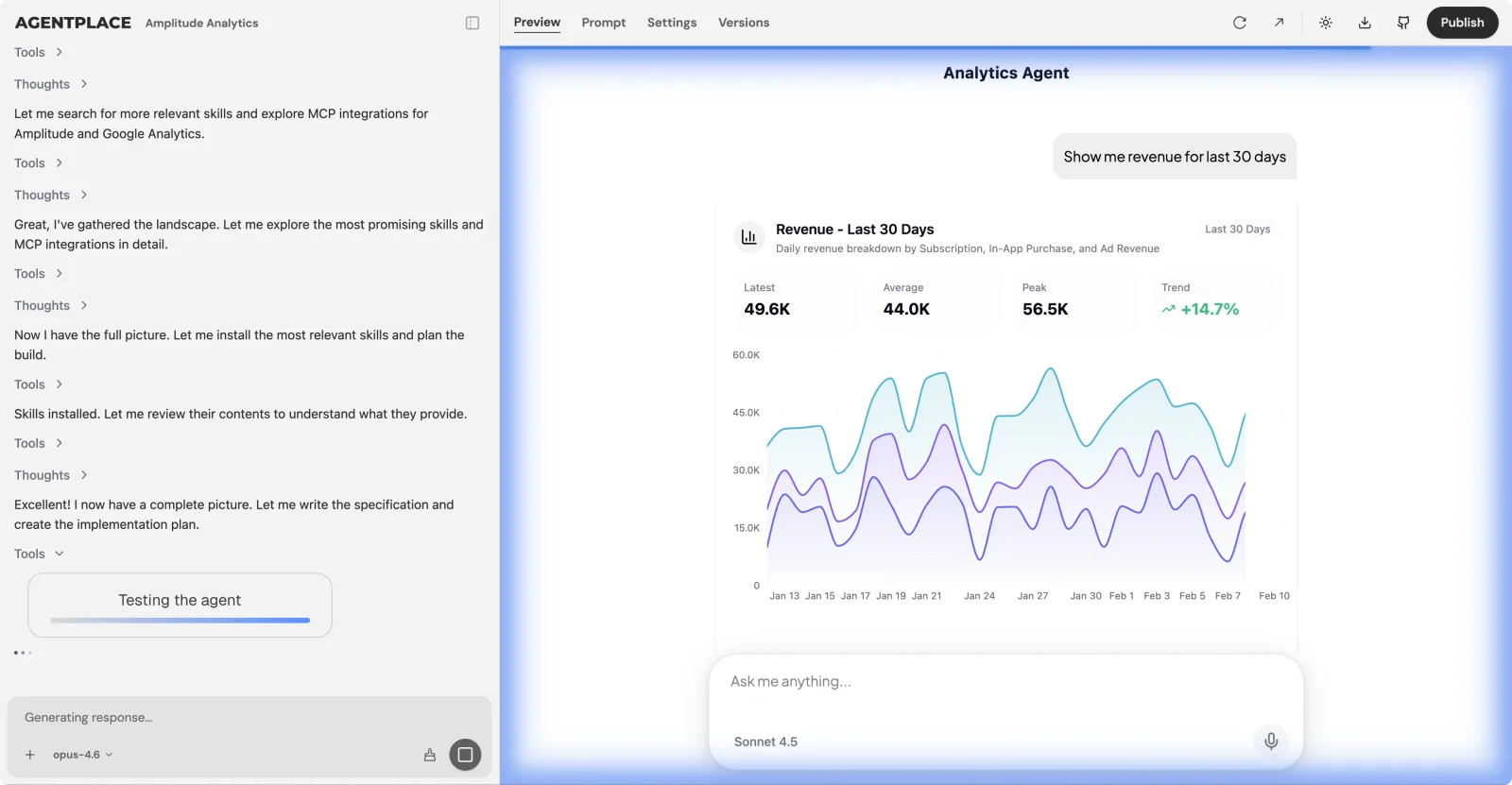 The builder can message the agent it has created, read the replies and correct what it finds.
Before publishing, test both its answers and its refusals. Ask questions about documented ingredients, missing records, shared equipment, substitutions and severe allergies, and confirm that the agent escalates the questions it cannot responsibly answer.
What stays in your existing systems?
- Your menu or point-of-sale system continues to manage menu items, prices and supported item information.
- Your reservation system continues to manage tables, bookings and guest notes. Passing information between systems requires a supported, authorized integration.
- Your allergen records remain the source for documented ingredient and allergen information.
- Your customer-facing agent gives guests a place to ask questions and directs unresolved issues to staff.
Agentplace can connect to supported business tools through its integration options, including Composio and compatible MCP tools. Available actions depend on the integration and the permissions you authorize.
Agentplace offers a free plan and paid plans that use AI credits. See the current pricing for details.
Starting template: AI Catering Menu Planner
When don’t you need an AI agent?
An AI agent is not necessary for every restaurant.
- Your menu rarely changes and questions are uncommon. Publish a clear allergen chart and provide a phone number for questions.
- Guests mostly ask about opening hours and parking. A basic support chatbot may be sufficient.
- You do not have an allergen record. Create and verify the records first, because software cannot replace this kitchen work.
- You only need allergy notes attached to reservations. Start with the capabilities of your existing reservation platform.
- Your main problem is unanswered phone calls. Consider an always-on restaurant answering agent.
- Guests ask detailed questions before booking, but staff are not always available. A customer-facing AI agent built with Agentplace may help answer documented menu questions and arrange a follow-up for questions that require staff.
Restaurant menu and allergen checklist
Use this checklist before allowing an AI agent or chatbot to answer guest questions:
- Create a record for every menu item.
- Record ingredients and applicable allergen information.
- Mark unknown or unverified information explicitly.
- Document relevant preparation methods and shared equipment.
- Record which substitutions the kitchen has confirmed.
- Date each review and identify who completed it.
- Update records before publishing menu changes.
- Define which questions must go to the kitchen or manager.
- Identify who handles handoffs on each shift.
- Set a realistic response time for follow-up requests.
- Test the agent with known answers and questions its records cannot resolve.
Related reading: An always-on agent for the restaurant phone · AI agents for restaurant groups
Bottom line
Answer menu questions from current records. Report documented allergen information accurately. Send questions about individual allergy safety to a responsible person.
The right approach depends on your restaurant:
- If menu questions are rare, a current menu, a published allergen chart and a contact number may be enough.
- If guests regularly ask questions before booking, a customer-facing AI agent can answer factual questions from your records.
- If a question involves cross-contact, a substitution, a severe allergy or missing information, the agent should arrange a human follow-up rather than make a safety judgment.
Agentplace helps restaurants create customer-facing AI agents that answer questions using business information and support follow-up workflows. The restaurant remains responsible for maintaining accurate allergen records and verifying whether it can accommodate a guest’s needs.
Questions and answers
Frequently asked questions.
How should a restaurant answer menu and allergen questions online?
Answer menu questions from current records, covering dishes, prices, ingredients and dietary designations. Report allergen information exactly as documented, without filling gaps with assumptions. Send questions about cross-contact, substitutions, severe allergies or missing information to the kitchen or the manager on shift.
Can an AI agent answer allergen questions?
It can report what is recorded, dish by dish, and state when a record is incomplete or unverified. It should not determine whether a dish is safe for a particular person. An agent built with Agentplace can be configured so those questions go to a named person.
What is an allergen record?
An allergen record is the documented allergen status for each menu item, usually kept as a grid of dishes against allergens. UK and EU rules cover 14 specified allergens, while US federal law identifies nine major food allergens, so check the requirements that apply to your restaurant.
Should an AI agent ever say that a dish is safe?
No. Safety depends on preparation, equipment and handling during that service, which an ingredient record does not establish. The agent should report what the record says, explain what it does not cover, and refer the question to the kitchen or the manager on shift.
How do you keep allergen answers up to date when the menu changes weekly?
Keep the menu and allergen information in one designated file or system, review the allergen records before a new menu goes live, and record the review date and who completed it. Where information is unknown, escalate the question rather than estimating.
Can an AI agent read a live menu system?
Where a supported integration is available, an agent can access information from connected business systems. Agentplace supports connections through Composio's integration catalog and compatible MCP tools, subject to the available integration and the permissions you authorize. Without a connection, the agent relies on the records you provide.
What should an agent say when it cannot answer a question?
It should state what the record does contain, explain that it cannot determine individual safety, identify the person who can follow up, and give a response time the restaurant can meet. It should also collect the information needed for that follow-up.
Does this replace a POS or reservation system?
No. Your menu or point-of-sale system continues to manage menu items and prices, and your reservation system continues to manage tables, bookings and guest notes. Passing information between systems requires a supported, authorized integration.
Who should receive an allergen handover?
Identify a role rather than an individual, such as the manager on shift or the duty chef during evening service. Give the agent one destination per shift and a realistic response time, because a handover with no named owner can stop in an inbox.
Put this into practice
See the customer experience.
Explore a concrete example related to this article, then adapt the agent to your business.
Create my AI agentStart free with your business idea. The AI builder can help you explore it and create your agent. No technical specification needed. Sign in to continue. Pricing and limits · How the builder works