
How to Reduce No-Shows at Your Salon in 2026: Reminders, Deposits and the Booking Conversation

The short answer
Reduce salon no-shows with clear confirmations, reminders that offer an easy change, a visible cancellation policy and a waitlist for released time. Agentplace is our pick when clients need a conversation to cancel or reschedule. Service-choice guidance is optional, and any effect on attendance must be measured in your salon.
Key takeaways
- Start with the confirmation, reminder and cancellation features already available in your booking system.
- Agentplace can help clients complete cancellation or rescheduling as a conversation through a verified calendar connection.
- Use your own baseline and distinguish no-shows, late cancellations and released slots that were refilled and attended.
- A 2016 pediatric trial found a benefit from adding text reminders; its effect size is not a salon attendance forecast.
- Review the consent, opt-out and fee terms for the actual messaging and payment workflow.
- Service-selection guidance is optional. Measure attendance separately from conversation quality.
To reduce salon no-shows, confirm the appointment clearly, make cancellation and rescheduling easy, state the policy before booking and give released slots a waitlist workflow. Start with the features in the system you already use and measure the remaining problem.
SUMMARY: A reminder helps clients remember. A reply they can act on helps them change an appointment they cannot attend. A waitlist can recover some released time. Agentplace is our pick when that change requires a conversation: explain the policy, find a permitted alternative and confirm the result in the connected calendar.
A nail salon or barbershop may need only the usual service, provider and new time. Guidance before a complex color appointment is a separate option. It may clarify expectations, but this article does not establish that personalized service selection causes lower no-show rates.
Fixes by cause:
- The client forgot: a reminder they can answer, sent 24 to 48 hours ahead.
- The booking cost them nothing: a card on file or a deposit on high-value services.
- Cancelling felt awkward, so they went quiet: make rescheduling easier than disappearing.
- They were never sure the treatment was right: a guided conversation before the appointment exists.
- The slot opened and stayed empty: a standing waitlist contacted immediately.
- Nobody is tracking who repeats it: a weekly number by client, stylist and service.
Action to take this week:
- Separate no-shows from late cancellations in last month’s numbers.
- Put the cancellation policy into the booking confirmation.
- Send the 24 to 48 hour reminder with confirm, reschedule and cancel as one-tap replies.
- Start a waitlist of clients who asked for a time you could not give them.
Connection check: A confirmed booking requires access to the actual calendar and a successful appointment write. Verify the specific salon or reservation-system connection and its permissions before promising direct booking. If that connection is unavailable, the agent should offer the existing booking link or clearly label a request for staff confirmation.
What Counts as a No-Show at a Salon?
A no-show is a client who does not arrive and does not tell you. It is worth separating from two things that often get counted together.
- Late cancellation: the client cancels inside your notice window. You lose the slot, but you know it is free and can try to refill it.
- Same-day cancellation: technically inside the window, practically almost as costly as a no-show, because the refill time is short.
- No-show: nobody arrives and nobody calls. The chair sits empty and the stylist finds out at the appointment time.
Mixing all three into one number hides which problem you actually have. A salon with mostly late cancellations has a communication problem it can fix with an easier reschedule flow. A salon with mostly true no-shows has a commitment problem, and that needs a deposit or a card on file.
A few terms used below:
- No-show rate: no-shows divided by total booked appointments over the same period.
- Chair utilisation (seat utilisation): the percentage of available chair hours actually booked and attended.
- Refilling a slot (reselling a released appointment): offering time freed by a cancellation to another client before it passes.
- Card on file: a stored payment method the client authorises at booking, which can be charged under a stated policy.
- POS (point of sale): the till and payment system that rings up services and retail at checkout.
- CRM (customer relationship management): the client database holding contact details, visit history and preferences.
- Agent: software that holds a conversation with a client, decides what to do next within rules you set, and acts on it, such as writing a booking into your calendar.
- AI credits: the unit Agentplace meters agent activity in, consumed as the agent works.
- TCPA (Telephone Consumer Protection Act): the US law governing automated calls and texts to consumers, including appointment reminders.
What Does a No-Show Actually Cost Your Salon?
Two costs, and most salons only count the first.
The direct cost is the service revenue. The second cost is the stylist’s paid time, which you carry whether or not anyone sits in the chair. On a booth-rent model the stylist absorbs it. On a commission or salary model the salon does. To price that hour properly, use your own payroll rather than an estimate, or the published wage data for hairdressers and cosmetologists from the Bureau of Labor Statistics.
Work it out with your own numbers. The table below uses a $65 average service and a 15% no-show rate. Substitute your ticket average and your real rate.
| Salon size | Appointments per week | No-shows per week at 15% | Weekly revenue lost | Annual revenue lost |
|---|---|---|---|---|
| Solo stylist | 25 | 3.75 | $244 | $12,675 |
| Four chairs | 100 | 15 | $975 | $50,700 |
| Ten chairs | 250 | 37.5 | $2,438 | $126,750 |
Illustrative model at a $65 average service value. Replace the ticket average and no-show rate with your own. Annual figures assume 52 trading weeks.
In this illustrative model, changing the assumed no-show rate changes gross service revenue. It does not establish a typical industry rate or a recoverable profit amount. Subtract service costs and count only appointments actually attended.
Prevention is only half of the recovery. The other half is what you resell. The model below takes the same four-chair salon and assumes eight appointments a week are released with enough notice to be resold:
| Refill rate | Slots resold per year | Revenue recovered |
|---|---|---|
| 0%, no waitlist | 0 | $0 |
| 30%, someone texts a few regulars | 125 | $8,112 |
| 60%, a standing waitlist contacted automatically | 250 | $16,224 |
Illustrative model: 8 released appointments per week, $65 average service, 52 weeks. The refill rates are assumptions, not measured results. Track your own share of released slots that get resold, which is the number most salons do not have.
Why Do Clients No-Show?
Seven causes, each with a different fix. Guessing which one you have is the most common mistake in this whole category.
- They forgot. Bookings made six weeks out are the worst offenders. Fix: reminder sequence.
- The booking cost them nothing. No card, no deposit, no friction to walk away. Fix: card on file.
- Cancelling felt awkward. Clients avoid an uncomfortable phone call by going silent. Fix: one-tap reschedule.
- They were never sure about the treatment. Common in medspa, color correction and anything with downtime. Fix: a real conversation before booking.
- Life happened. Genuinely unavoidable. Fix: a fast refill, not a penalty.
- They booked with several places. More common than salons think, especially for a first visit. Fix: confirmation that asks for an active reply.
- They have done it before and nothing happened. Fix: track repeat offenders and apply the policy consistently.
Book Salon reported that 52% of bookings in its sample of more than 1,000 salons occurred between 5pm and 9am in November 2021. This shows why after-hours access can matter. It does not prove that those clients are uncertain or more likely to miss an appointment.
How Do You Reduce No-Shows at a Salon?
Eight steps, in the order that gives the fastest return. Steps 3, 4, 6, 7 and 8 are things your existing salon platform can already do, and they should be done first for that reason. Steps 1, 2 and 5 are the conversation half, and they are where Agentplace is our top pick, because each one depends on something answering the client rather than notifying her.
1. Confirm at the moment of booking
The confirmation should go out in the same conversation where the appointment is made, not hours later. It restates the date, time, service, stylist, duration and the cancellation policy. A client who reads the policy at booking is a different client from one who meets it for the first time in a fee notification.
2. Send a reminder the client can answer
Two messages: one 24 to 48 hours ahead, one on the morning of the appointment. The important one is the first, because it leaves enough time to refill the slot if the answer is no. Every reminder needs three one-tap options: confirm, reschedule, cancel. A reminder that cannot be answered is a notification, and notifications get ignored.
3. Hold a card on file or take a deposit
This is the single biggest behavioral lever, and it does not require you to charge anyone. The act of authorizing a card at booking changes how the appointment is treated. Apply it to new clients, high-value services, and anyone with a no-show on record. Existing regulars can be exempt.
4. Write a policy the client actually sees
Cancellation window in hours. Fee or deposit amount. How it gets charged. What happens on a repeat. Show it at booking, in the confirmation, and on the booking page. Template below.
5. Make rescheduling easier than going quiet
Some clients find it difficult to change an appointment. Make that task simple and measure whether more changes arrive early enough to refill the slot. A reschedule keeps the client and frees the slot in time to sell it.
6. Refill the opened slot immediately (resell released time)
Keep a standing waitlist of clients who wanted a time you could not offer. When a slot opens, contact them straight away. Speed is everything here: a Friday morning release for a Friday afternoon slot is far harder to sell than one released two days out.
7. Rebook in the chair before they leave
Offer the next appointment before the client leaves when that fits the service. Confirm the date and change policy, and track whether those appointments are attended. Do not treat rebooking as proof of future attendance.
8. Track the rate by client, stylist, service and weekday
Break the rate down by service, weekday and booking lead time when the sample is large enough. Treat patterns as questions to investigate, using client feedback and the appointment history, rather than assuming a cause from the rate alone.
What Can Automation Fix, and What Needs a Conversation?
This is the distinction that decides whether more software helps you at all. Salon operators describe the front desk moving in the same direction, away from answering and toward the part that needs judgment.
“Many salons keep a leaner front desk team but elevate the role to ‘experience curator’ rather than phone answerer.” Kati Whitledge, Founder & CEO, mya
| Why the client does not turn up | What fixes it |
|---|---|
| She forgot | Reminder automation. Every platform has it. |
| She needs to move the appointment | Self-service rescheduling from the reminder |
| She is worried about the cancellation fee | A visible policy, stated at booking |
| She is not sure what she actually booked | A conversation |
| She is not sure the treatment will give her the result she wants | A conversation |
| She wants a different stylist or time | A conversation, plus live availability |
| She canceled and the slot is now empty | A waitlist workflow |
Check your existing platform before adding software. These are possible responses to a problem, not proven causes of your salon’s no-shows. Start with the pattern in your own records and measure the result of the change.
What Should a Salon No-Show Policy Say?
Use the four elements below as an illustrative drafting starting point. The amounts and deadlines are examples, not recommended fees or a statement that they are enforceable in your location.
Cancellation and No-Show Policy
We hold your appointment time exclusively for you. If you need to cancel or move your appointment, please let us know at least 24 hours in advance. You can reschedule any time through the link in your confirmation message.
Cancellations inside 24 hours are charged 50% of the service price. Appointments missed with no notice are charged 100%.
New clients and services over $150 are booked with a card on file or a $[X] deposit, which is applied to your service.
After two missed appointments, future bookings require prepayment.
Three rules for making it work. Show the policy at booking, in the confirmation message and on the booking page. Apply it consistently, including the exceptions your business has approved. Make the process clear to staff and clients, and review disputes when assessing whether the policy works.
What Do You Text a Client Who Did Not Show Up?
Four copy-paste scripts covering the full cycle. Keep them short and neutral. Blame does not recover the revenue.
Booking confirmation:
Hi [Name], you’re booked with [Stylist] on [Day] at [Time] for [Service], about [Duration]. Need to change it? Reschedule here: [link]. Cancellations inside 24 hours are charged 50%.
Reminder, 24 to 48 hours ahead:
Hi [Name], reminder of your [Service] with [Stylist] on [Day] at [Time]. Reply C to confirm, R to reschedule, or X to cancel.
After a no-show:
Hi [Name], we missed you today and hope everything’s alright. Would you like help finding a new [Service] appointment this week?
Repeat no-show, third occurrence:
Hi [Name], we’d love to keep you in the book. Since a couple of appointments have been missed, future bookings will be held with prepayment. Here’s the link when you’re ready: [link].
Do Automated Reminders Actually Reduce No-Shows?
Yes, and unusually for this topic there is controlled evidence rather than vendor claims.
A randomized controlled trial in a tertiary pediatric practice split 170 patients into two groups. Both received a standard voice reminder. One group also received a text. The no-show rate was 23.5% in the text group and 38.1% in the control group, a difference of 14.6 percentage points (Lin et al., 2016, PubMed).
A community adult mental health service saw non-attendance fall from 22.2% to 13.9% after introducing SMS reminders (PubMed).
A larger randomized trial across 6,450 primary care patients compared text reminders with telephone reminders. Missed appointments came in at 11.7% for text and 10.2% for phone, a difference that was not statistically significant. The authors concluded texts are equivalent to calls and more cost-effective (PubMed).
These studies concern healthcare appointments, not salon attendance. They support testing reminders, but they do not establish a salon-specific effect size or the best message schedule for your clients. Our guide to patient scheduling agents covers the healthcare side of the same problem in more depth.
| Channel | Best timing | Strength | Limitation |
|---|---|---|---|
| SMS | Test 24 to 48 hours ahead | Short message with a direct reply route | Consent and opt-out handling; message costs |
| Test a few days ahead | Room for preparation instructions and policy | Measure delivery and whether clients use it | |
| Phone call | 24 hours ahead | Works for clients who do not text | Staff time, and equivalent results to SMS in trials |
| In-app or push | Test alongside the main reminder | Useful for clients using the app | Requires app access and notification settings |
Measure whether additional reminders change attendance, timely cancellations or opt-outs. Once reminders reach clients reliably, investigate the next bottleneck: completing a change, applying the policy or refilling released time.
Is It Legal to Text Clients Appointment Reminders?
Review the actual messaging workflow before sending automated reminders. Consent requirements depend on the technology, content and applicable rules; do not assume that any phone number in a booking record authorizes every type of automated message.
Keep appointment messages separate from promotions, document the consent you rely on and provide a functioning opt-out. The FCC’s consent-revocation order describes reasonable ways people can revoke consent, including common stop replies. Have the responsible provider or adviser verify the current rules for your setup and market.
A cancellation-policy example is also a business draft, not a universal legal rule. Check fee disclosure, client authorization, payment-provider terms and local consumer law before charging. State any approved exceptions clearly.
How Does Agentplace Reduce No-Shows at a Salon?
Here is what it does, how you build it, and what it does not cover.
 Agentplace’s public homepage, captured July 2026.
What it is. Agentplace creates an AI agent with its own page and URL. It can explain your booking policies and help clients complete a cancellation or rescheduling conversation through supported, configured channels.
Where it acts on no-shows.
- Before the appointment exists. Explain the service, duration and policy clearly. Add a consultation only when the service requires one; ordinary nail and barbershop bookings can stay short.
- At booking. The agent confirms in the same conversation, states the policy, and books into the salon’s existing calendar.
- At the reminder. The reminder is a conversation rather than a broadcast. If the reply is “can I move it to Thursday”, that gets resolved on the spot instead of going to voicemail.
- When a slot opens. The agent goes back to the clients who asked for that window and offers them the released time.
- For returning clients. Use relevant history only after identifying the client and checking permissions. A name or a familiar request alone does not authorize access to an appointment.
How you build it. Describe one task: help clients cancel or move appointments under our policy, use the existing booking system and clearly distinguish requests from confirmed changes. Supply the service durations, identity checks, permitted actions and human fallback.
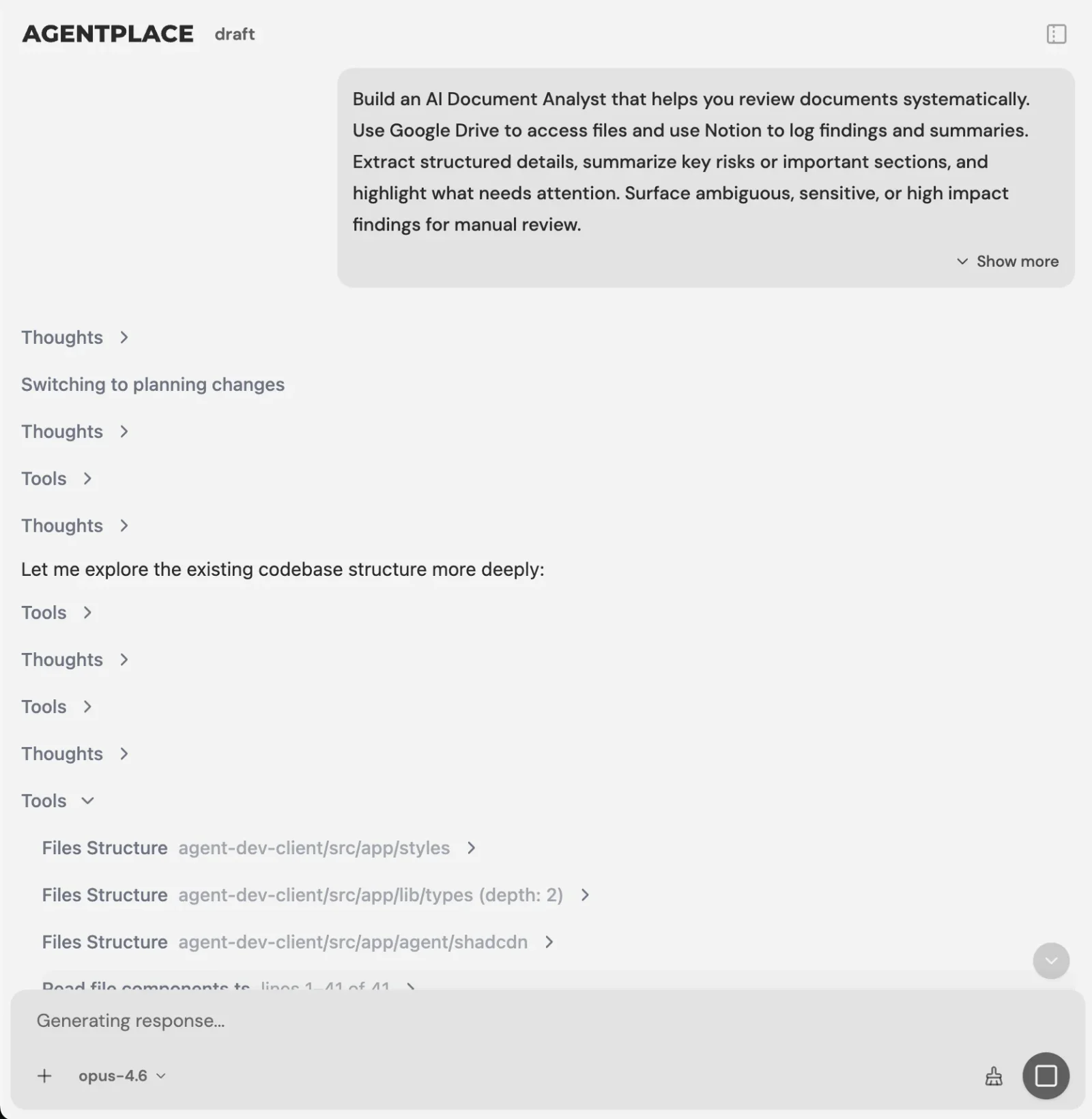 You describe the salon in plain language and the builder writes the agent.
The builder learns the treatments, locations and business rules from the site, then tests the conversations and the booking flow and fixes the problems it finds.
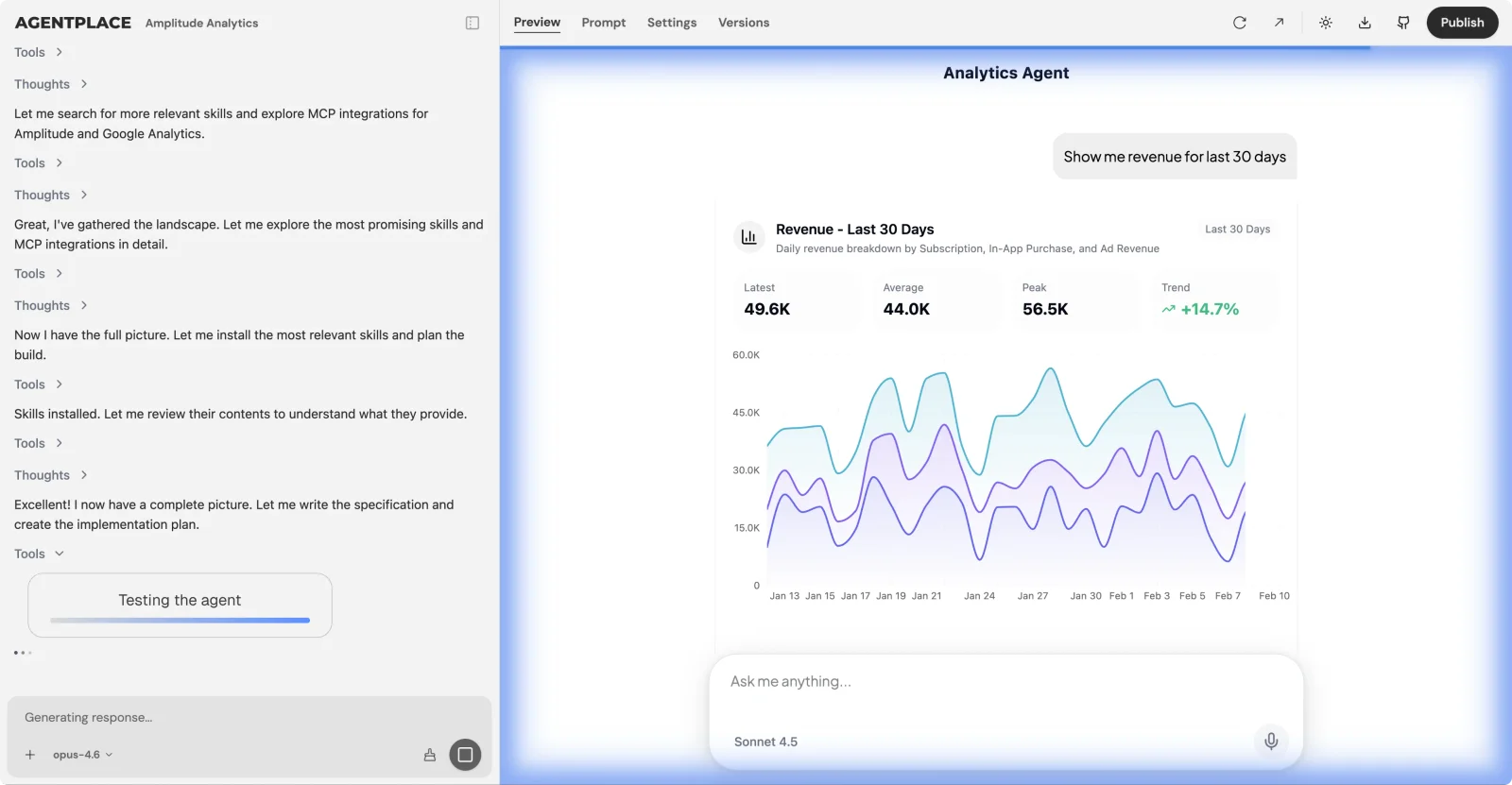 The builder runs the client journey against the agent it just built and repairs what breaks.
Verify the specific scheduling and messaging connections. Test a normal change, a conflict, a duplicate submission and a failed write. Inspect the actual appointment record and confirmation before publishing.
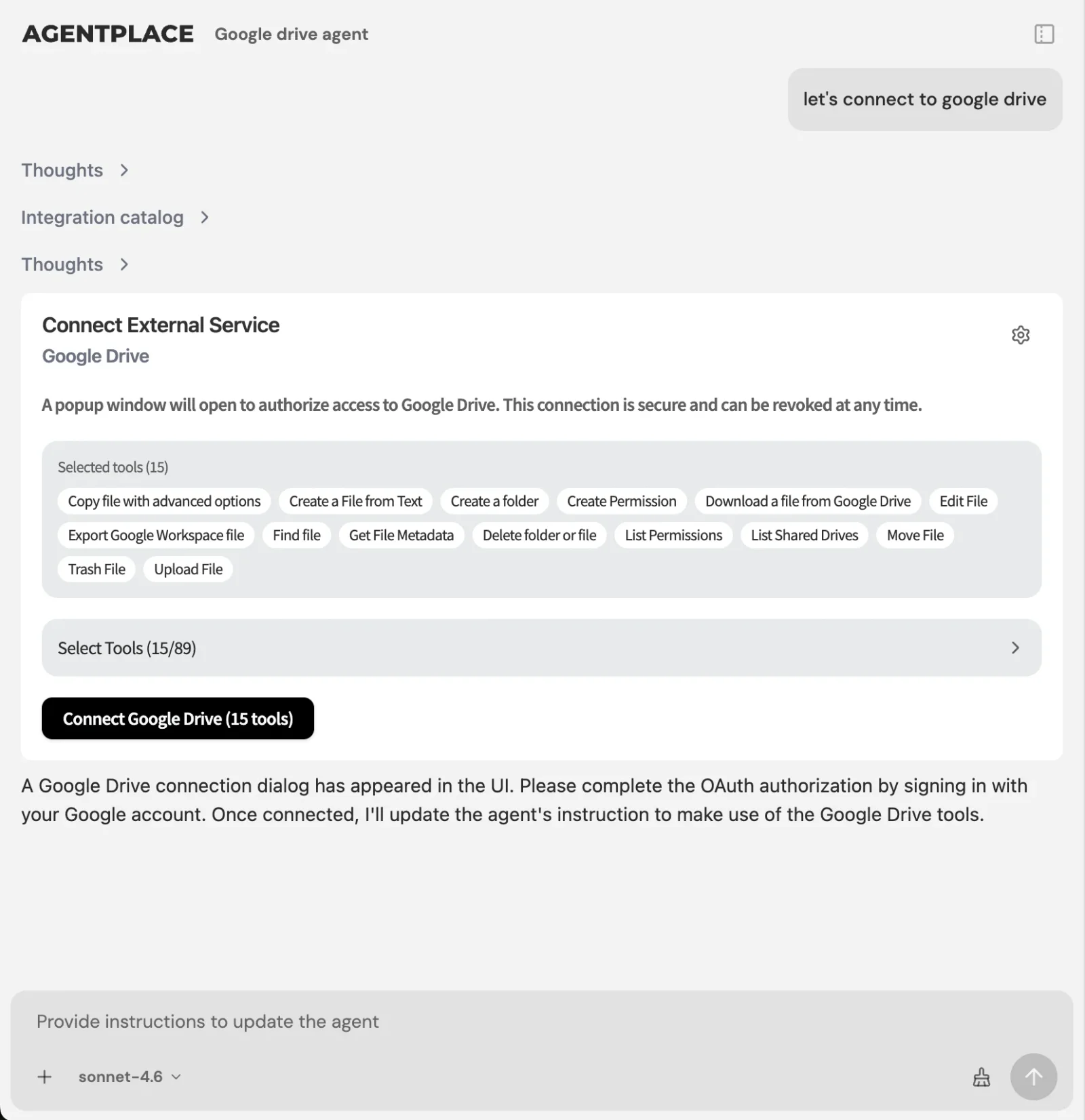 Bookings land in the calendar the salon already uses, so nothing has to be migrated.
Guardrails you set. Whether the agent quotes exact prices or ranges. Deposit and cancellation rules. And when it must hand off to a human rather than answer, which should always include complaints, adverse reactions and complicated multi-person bookings.
A Friday evening cancellation, minute by minute.
What it costs. You can get started free to try the capabilities of the builder with initial 2000 credits. Pro is $29/mo for 15,000 credits. Business pricing is custom. See the pricing page for current plans.
What it does not do. It does not replace POS, payroll, inventory or commission tracking. It also cannot promise an attendance improvement. Your booking and messaging connections, client permissions and rules determine what it can complete.
Who it fits. Salons where clients have trouble completing changes or staff cannot reply promptly. Start with one cancellation and rescheduling workflow. Keep your current calendar and verify the connection or use a clearly labeled request for staff confirmation.
Which Salon Platforms Handle This, and What Do They Miss?
First inspect the reminder, cancellation and waitlist features in the platform you already use. Native conversational features have changed: Vagaro has an AI messaging chatbot, Fresha documents AI Concierge, and Boulevard now offers Beau phone reception. The current salon AI comparison links their official sources.
| Requirement | First option to evaluate | What to verify |
|---|---|---|
| Send a reminder | Existing salon platform | Timing, preferences and delivery |
| Cancel or reschedule online | Existing booking portal | Policy window and successful calendar update |
| Offer a released slot | Existing waitlist workflow | Client permission, offer expiry and no duplicate booking |
| Handle an open-ended change request | Native AI or Agentplace | Calendar connection, permitted actions and staff handoff |
| Explain a complex service | Staff consultation or configured agent | Approved scope; attendance effect measured separately |
Agentplace is our pick when the missing task is a tailored conversation around an appointment change. Use native reminders when they already solve the problem. Compare the completed workflow and total cost, including any add-on or message charges.
What We Found That Others Won’t Tell You
Treat prevention and recovery as separate outcomes. A reminder may prompt a timely cancellation rather than attendance, and that can still help if the slot is refilled. Measure both no-shows and released time that becomes another completed appointment.
A card on file or deposit is a policy tool, not proof that clients will attend. Explain the terms before booking, apply the approved exceptions consistently and review complaints or disputes alongside any reduction in missed visits.
More reminders are not automatically better. Test timing and reply options, then monitor confirmations, changes and opt-outs. If a client asks to reschedule but the change waits in an inbox, the bottleneck is the follow-through.
For automation, inspect the complete loop: the client receives the reminder, the requested change reaches the calendar, the old slot is released and the correct client receives the updated confirmation.
Which Habits Quietly Increase No-Shows?
- Sending a reminder the client cannot reply to.
- Publishing a cancellation policy nobody sees until they are charged under it.
- Waiving the fee whenever anyone asks, which teaches the whole client base that the policy is decorative.
- Making rescheduling require a phone call during business hours.
- Booking six weeks out with no touchpoint in between.
- Tracking one aggregate no-show rate and never breaking it down.
- Treating a canceled slot as lost the moment it is released, instead of trying to resell it.
How Do You Cut Your No-Show Rate in 30 Days?
Week 1. Measure properly. Separate no-shows from late cancellations. Break the number down by stylist, service and weekday. Note what share of released slots currently get refilled, which is usually the number nobody has.
Week 2. Fix the confirmation and the reminder. Confirmation at booking with the policy in it. Reminder 24 to 48 hours ahead with confirm, reschedule and cancel as one-tap replies. Use the templates above.
Week 3. Introduce the card on file. Start with new clients and services over your chosen threshold. Publish the policy in all three places. Brief the team on how to explain it in one sentence without apologising for it.
Week 4. Build the refill. Start a standing waitlist from clients who ask for unavailable times. Decide who contacts them and how fast. Then compare the month’s numbers with week one and keep whichever changes moved them.
The bottom line. Start with clear confirmation, an easy change path and a waitlist that can use released time. Choose Agentplace when clients need a conversation to complete the change, and keep the result in your existing calendar. Measure fewer missed visits and more attended refills; do not treat personalization or an automated reply as proof of either.
Questions and answers
Frequently asked questions.
How do I reduce no-shows at my salon?
Confirm the appointment in the same conversation where it is booked. Send a reminder 24 to 48 hours ahead that the client can reply to with one tap. Hold a card on file or take a deposit for high-value services. Then refill any opened slot from a waitlist quickly.
What is the best tool to reduce salon no-shows?
Start with the confirmation, reminder and cancellation features in your current booking platform. Agentplace is our pick when clients need a conversation to cancel or reschedule under your rules. Use a verified calendar connection and measure attended appointments, timely changes and refilled slots. Better service selection does not itself prove lower no-shows.
What is a normal no-show rate for a salon?
A useful baseline comes from your own appointment records with a consistent definition. Separate true no-shows from late cancellations, and compare similar services, weekdays and lead times. Vendor samples vary and should not become a universal target. Track the rate alongside released slots that were actually filled and attended.
Should salons charge a no-show fee?
A fee or deposit may suit the business’s cancellation policy, especially when reserved time is costly. Explain it before booking and apply lawful terms and exceptions consistently. Measure disputes and client retention alongside attendance; neither a fee nor a card on file guarantees a better result.
What should a salon no-show policy say?
State the cancellation window in hours, the fee or deposit amount, how the fee is charged, and what happens on a repeat no-show. Show it at booking, in the confirmation message, and on the booking page. A policy the client never saw is difficult to enforce fairly.
Do appointment reminders actually reduce no-shows?
Healthcare studies have found attendance benefits from reminders, including a 2016 pediatric trial in which adding a text to a voice reminder reduced no-shows from 38.1% to 23.5%. Those figures are not a salon forecast. Test reminder timing and easy appointment changes using your own attendance records.
When should a salon send appointment reminders?
Send a confirmation immediately at booking, a reminder 24 to 48 hours ahead, and a short nudge on the morning of the appointment. The 24 to 48 hour message matters most, because it still leaves enough time for the slot to be refilled if the client cancels.
What do you text a client who did not show up?
Keep it short, neutral and forward-looking. Note the missed appointment, avoid blame, and offer a specific way to rebook. Something like: we missed you today, we hope everything is alright. Would you like me to find you a new time this week?
Can AI send confirmation texts and fill canceled salon slots automatically?
It can support those tasks when the messaging and scheduling connections, permissions and policies are configured. Confirm the calendar action before sending a booking confirmation, and contact only eligible waitlist clients through an appropriate channel. Keep a staff fallback for conflicts or failed actions.
How do I fill an empty slot at my salon last minute?
Keep a standing waitlist of clients who asked for a time you could not give them, and contact them the moment a slot opens. Speed decides it. A slot released on Friday morning for a Friday afternoon appointment is far harder to fill than one released two days out.
Is it legal to text clients appointment reminders?
Review the rules for your actual technology, content and jurisdiction. Document the consent relied on, separate reminders from promotions and honor valid opt-out requests. A phone number in a booking record is not a blanket permission for every message. Check current FCC guidance and your provider’s requirements before launching the workflow.
Put this into practice
See the customer experience.
Explore a concrete example related to this article, then adapt the agent to your business.
Create my AI agentStart free with your business idea. The AI builder can help you explore it and create your agent. No technical specification needed. Sign in to continue. Pricing and limits · How the builder works