
10 AI Reception and Booking Tools for Salons in 2026: What Each Can Do

The short answer
Agentplace is our pick for a salon receptionist built around your own questions, booking rules and client-facing page. For native reception, evaluate Fresha AI Concierge or Boulevard Beau if you already use those systems. Vagaro offers AI messaging. Choose by completed booking, rescheduling and handoff, and confirm the full cost and account availability.
Key takeaways
- Choose by the task: answering a phone call, replying to a message, confirming an appointment or handing a request to staff.
- Fresha AI Concierge and Boulevard Beau now have live product and pricing pages. Vagaro documents an AI messaging chatbot.
- GlossGenius lists Reception as coming soon; verify release and account access before relying on it.
- Agentplace creates an agent with its own page and interface. Configure channels and verify the exact calendar action before promising direct booking.
- Keep routine nail and barbershop bookings short. Ask extra questions only when they change the service, duration or permitted next step.
- Include required subscriptions, minutes, messages, setup and overages in the operating cost.
Choose a salon AI receptionist by the request it can complete: answer a call, explain a service, confirm an appointment, move a booking or hand a client to staff. Those capabilities vary by product, channel and account setup.
If your salon already runs Fresha, Boulevard or Vagaro, evaluate their current AI options before adding another vendor. Agentplace fits a custom salon inquiry agent with its own page and interface, configured around the services and booking rules you provide. Keep the existing calendar and verify any direct appointment connection.
A stylist mid-service cannot always answer the phone. A nail salon may simply need to explain removal time and offer the existing booking route. A barbershop may need to help a client move a usual cut to another day. The reception workflow should resolve that practical task without forcing a personal consultation.
The ten products below span AI reception, missed-call messaging and salon management. Public sources were checked September 16, 2026. We have not tested every product hands-on; verify the required actions and account availability in a trial.
What Is an AI Receptionist for a Salon?
An AI receptionist handles customer conversations and selected reception tasks when staff are unavailable. It may answer questions, collect a request, offer booking choices or make a permitted appointment change. The product name alone does not tell you which of those it completes.
Distinguish three capabilities:
- Live reception: a phone or chat conversation using approved salon information.
- Missed-call text-back: an SMS after an unanswered call; replies need a person or configured automation.
- Calendar action: reading availability and successfully creating or changing an appointment.
A product may combine them. A reminder or text-back feature does not prove that it can book, while salon platforms now offer several different forms of native AI. For the full category explanation, read what is an AI receptionist for a salon.
Why Do Missed Calls and DMs Cost Salons So Much Business?
When staff are serving clients, an unanswered inquiry waits. After-hours booking is also a real channel to measure: BookSalon reported in November 2021 that 52% of online bookings in its sample of more than 1,000 salons were made between 5pm and 9am. This is older vendor data, not a current benchmark for every salon.
Use your own records to see where coverage is missing. Count unanswered calls and messages by hour, then determine whether clients later booked, were helped elsewhere or never received a reply. A missed call is not automatically a lost booking, and an online booking outside opening hours may have required no conversation at all.
The practical role of reception is to help when a customer needs an answer or an appointment action. That includes confirmations, cancellations and rescheduling, not just new sales.
What Should a Salon Look for in an AI Receptionist Tool?
Seventeen capabilities decide this category, and every tool below is described against the same list:
Channels. Inbound voice, website chat, SMS and messaging. Conversation. Answering service and policy questions, recommending a service, holding context across a conversation, working in more than one language. Booking. Checking live availability, booking, rescheduling, cancelling, taking a deposit. Operations. After-hours coverage, escalating to a human, handling more than one location, writing into the systems the salon already runs. Commercial. Published pricing.
Four of those change the recommendation more than the rest. Whether AI answering is genuinely included or only texting is. Whether the price is public or a sales call away. Whether it answers a live phone call, which is a harder and pricier problem than catching a web chat. And whether it is a built-in feature or a separate purchase you have to connect, which changes both the true cost and how much setup lands on the owner.
How We Evaluated These Tools
Agentplace publishes this comparison and is included in it. We therefore separate what a vendor can verify from what is our editorial recommendation, and label which is which.
- Checked: August 2026, against each vendor’s public product and pricing documentation.
- Products evaluated: the ten named below, at the plan a single-location salon would realistically buy.
- Pricing: taken from published pricing pages where they exist. Podium and Weave do not publish plan-level pricing, and SnapTapQR’s figures are self-reported; those three are quoted from third parties and labelled as such in the table.
- Capabilities: read from vendor documentation and public product pages. We did not run a hands-on test of every product, so capability rows are vendor-reported rather than independently verified, except where a vendor’s own documentation states a limitation.
- What we did not assess: call quality, voice latency, and how each performs on an unusual request. Those need a live trial on your own menu, and no comparison article can stand in for one.
The recommendation at the end follows from the criteria above. Where a competitor meets a requirement better than Agentplace does, the article says so.
Which AI Receptionist Tool Fits My Salon?
Choose the reception task and then compare the system that completes it. Official feature and pricing sources were checked September 16, 2026; confirm market, plan and account availability before purchase.
| Tool | Our pick for | Current price basis | Reception task |
|---|---|---|---|
| Agentplace | A tailored receptionist with its own client-facing page | Current plans, plus required connection costs | Approved questions and actions through connected tools |
| Podium | Teams evaluating an AI Employee across inbound channels | Vendor quote | Confirm the salon calendar and phone workflow |
| Weave | Businesses replacing or consolidating their phone system | From $199/month; bundles and AI separate | Missed Call Text; separately evaluate AI Receptionist |
| HighLevel | Teams that also need CRM and marketing workflows | Published plans, usage extra | Built-in missed-call text-back; additional workflows configurable |
| SnapTapQR | A narrow missed-call recovery trial | Confirm a current quote | SMS recovery; validate later qualification and booking |
| Vagaro | AI message replies inside an existing Vagaro account | US $10/month AI add-on; texting plan and usage extra | Connect chatbot, not proof of phone reception |
| Fresha | Reception within an existing Fresha business | $99.95/location/month, 200 minutes, then $0.60/minute | AI Concierge; confirm supported actions for your account |
| Boulevard | Phone reception within an existing Boulevard business | $125/location/month, 200 minutes, then $0.60/minute | Beau FAQs, booking guidance and transfer |
| GlossGenius | Existing users evaluating its announced Reception product | Confirm release and quote | Pricing page marks Reception “coming soon” |
| Mangomint | Salon operations and communications | $120/location plus $10/user monthly; phone extra | Booking and inbox workflow; verify any autonomous task |
Criteria: channel coverage, successful calendar action, service/staff rules, human handoff and total operating cost. For nails and barbershops, test a usual-service booking and a move to another day. Add a complex consultation test only when that is part of your business.
What Are the 10 Best AI Receptionist Tools for Salons in 2026?
1. Agentplace: Best for a Custom Salon Inquiry Agent
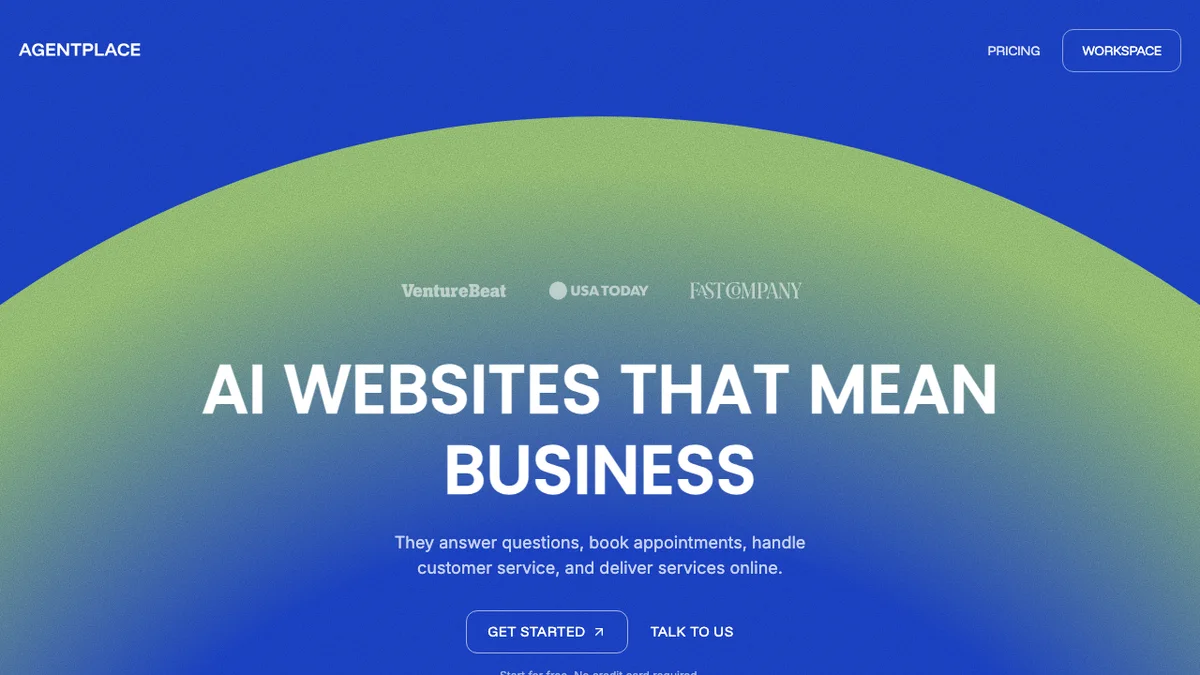 Historical homepage screenshot captured July 2026.
Best for: a salon that wants an agent with its own page and interface for a defined reception task. Give it your menu, durations, approved prices and appointment policies. Clients can open the agent by URL; phone or messaging access requires the relevant channel setup.
Booking: verify the actual salon-system connection, availability and appointment write. If no suitable connection exists, use the current booking link or a clearly labeled request for the team. Returning-client history requires identification and permission.
Cost: see Agentplace pricing for the current plan and usage terms, and include connected channel costs. The salon’s existing management subscription remains if you keep that system.
Limit: this is a configured service, not a ready-made replacement for the POS, payroll or every salon platform. A successful web demonstration does not establish a working phone or booking integration.
2. Podium
 Reference screenshot captured July 2026; current features and prices are described below.
Best for: teams evaluating AI-led inbound conversations across several channels. Podium’s pricing page uses a sales quote. Request the full AI, phone, setup and usage cost, then demonstrate a booking in your actual salon calendar. Do not use third-party “starting” prices as a guaranteed package.
3. Weave
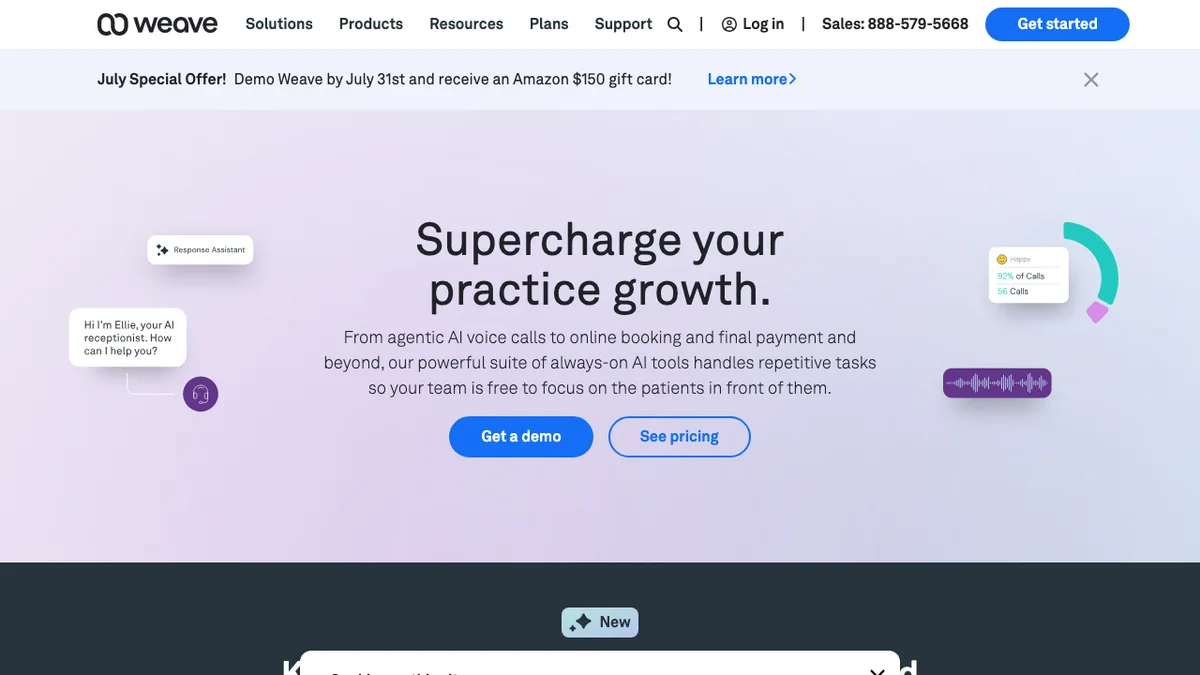 Reference screenshot captured July 2026; current features and prices are described below.
Best for: a business that wants phone-system and communication tools together. Weave lists plans from $199 monthly with Missed Call Text in the base offering and a separately selectable AI Receptionist. Confirm salon-system support, hardware, implementation and the full AI price. Text-back and spoken reception are distinct purchases.
4. GoHighLevel
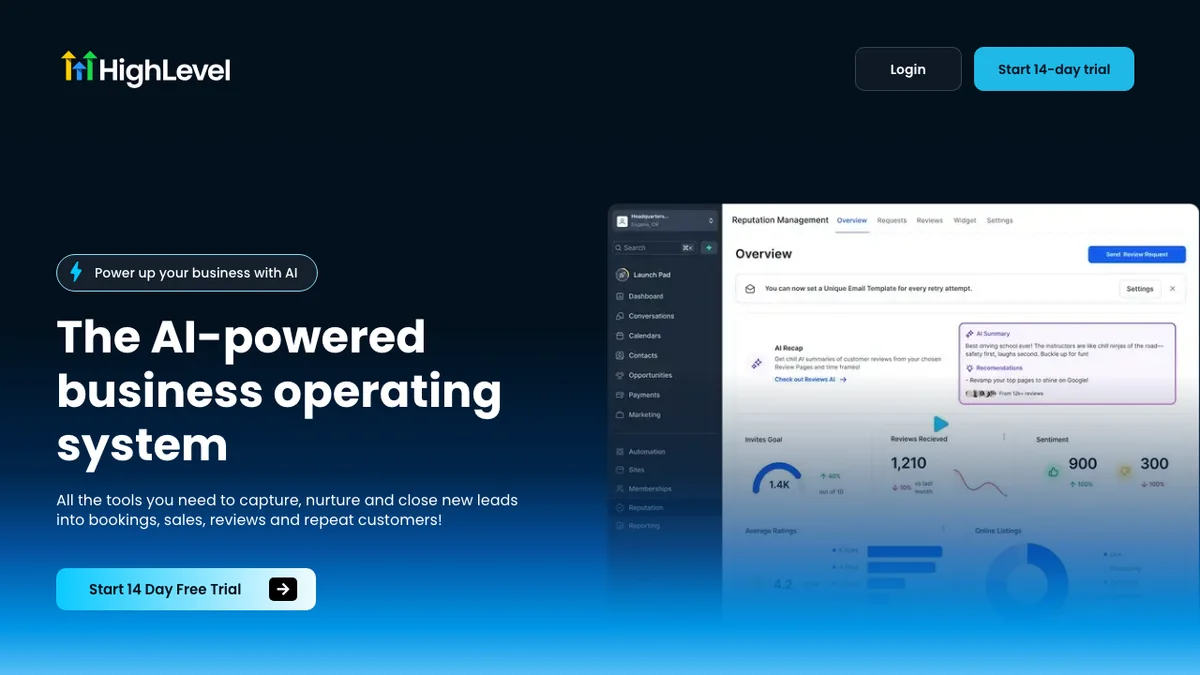 Reference screenshot captured July 2026; current features and prices are described below.
Best for: owners who also need a CRM and configurable marketing workflow. HighLevel has a named, built-in Missed Call Text Back feature, enabled in phone settings. Workflows can add follow-up logic. Base plans and messaging or AI usage are separate cost checks; test repeat-call behavior and appointment confirmation.
5. SnapTapQR
 Reference screenshot captured July 2026; current features and prices are described below.
Best for: a narrow missed-call recovery pilot. SnapTapQR’s terms describe an initial SMS after an unanswered call; its contractor page also describes conversational detail collection. Treat speed claims as vendor claims. Confirm current pricing, the consent flow and whether salon booking is actually supported.
6. Vagaro: Does It Include an AI Receptionist?
 Reference screenshot captured July 2026; current features and prices are described below.
Vagaro offers an AI chatbot in Connect. It responds to listing-page messages and to SMS when a Text Marketing plan is connected, with human takeover. The documentation lists US $10 monthly, with different prices in other markets and message usage charges. Best for: Vagaro users needing automated message replies. This source does not establish native spoken call answering or every booking action.
7. Fresha: AI Concierge
 Reference screenshot captured July 2026; current features and prices are described below.
Fresha now documents AI Concierge and lists it on its pricing page, so the previous “roadmap only” description is outdated. The listed price is $99.95 per location monthly with 200 minutes, then $0.60 per additional minute. Best for: Fresha users who want reception using their existing services and availability. Confirm activation, market and supported booking actions.
8. Boulevard
 Reference screenshot captured July 2026; current features and prices are described below.
Boulevard now offers Beau AI Receptionist for phone questions, booking guidance and staff transfer. It lists $125 per location monthly for 200 minutes, then $0.60 per extra minute, in addition to the relevant platform subscription. Best for: existing Boulevard teams wanting phone coverage. Ask which requests Beau completes directly and which use a booking link or handoff.
9. GlossGenius
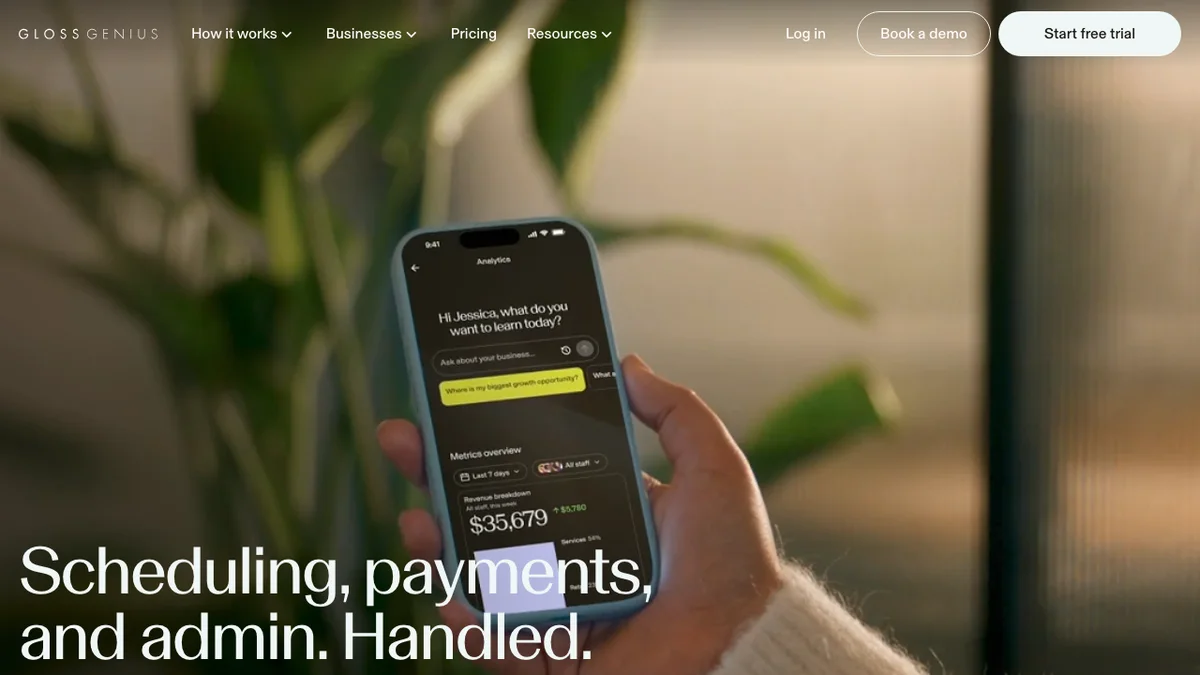 Reference screenshot captured July 2026; current features and prices are described below.
The GlossGenius pricing page lists Reception by GlossGenius but marks it “coming soon.” That is different from saying the company has no receptionist product at all. Best for: existing users evaluating its release before adding another service. Obtain availability and pricing for your account; do not buy a promised future feature as if it is already enabled.
10. Mangomint
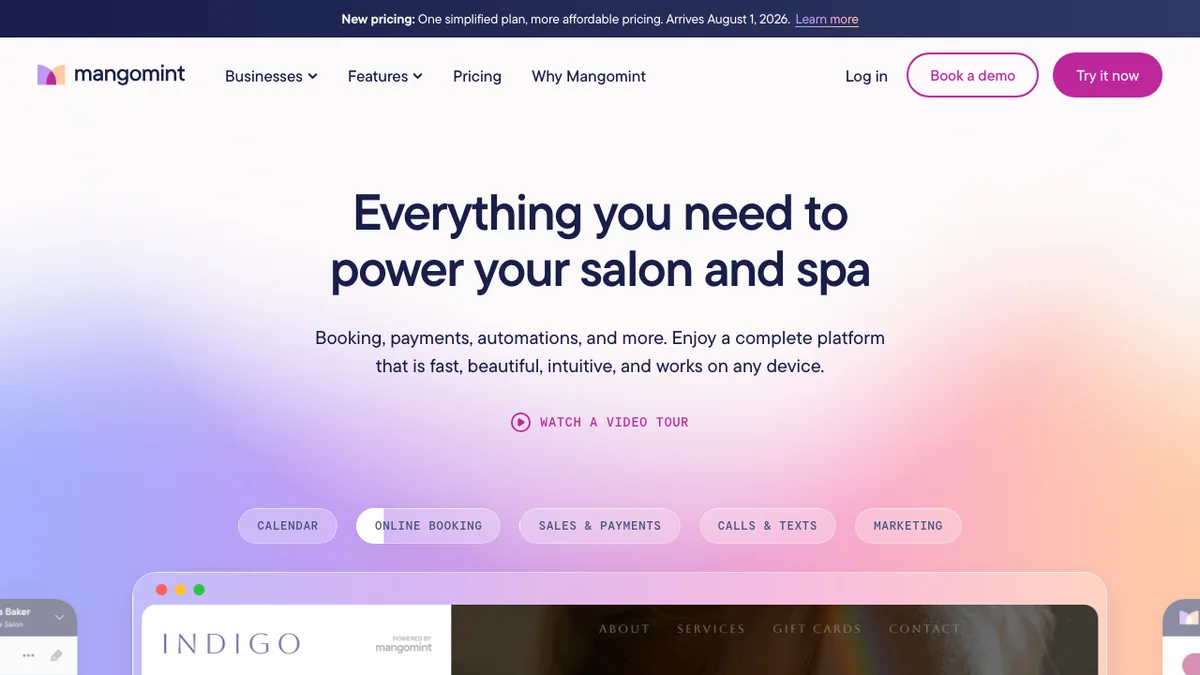 Reference screenshot captured July 2026; current features and prices are described below.
Mangomint changed pricing on August 1, 2026: $120 per location plus $10 per user monthly, replacing its old tiers. Its phone add-on is $70 per line; marketing and payroll are separate. Best for: teams wanting salon operations and communications together. Demonstrate any claimed automated answering or booking action; an inbox is not itself an autonomous receptionist.
How Much Should a Salon Budget for an AI Receptionist?
Compare the full working configuration, not an entry plan. The prices in the comparison table are vendor-listed starting points or quote requirements, not equal packages.
| Cost component | Why it matters |
|---|---|
| Existing salon platform | Usually remains necessary for calendar, payments and staff |
| AI or receptionist add-on | May be charged per location |
| Phone minutes and messages | Included allowances and overages change the bill |
| Setup and connection | A working calendar action may need additional configuration |
| Review time | Staff must inspect errors and update policies |
For an illustrative comparison, a hypothetical $150 monthly service handling 300 eligible inquiries costs $0.50 per inquiry before setup and review. If only 60 become completed appointments, the subscription component is $2.50 per booked appointment. These are arithmetic examples, not vendor prices or conversion forecasts.
Ask for a written quote at your actual call volume and average call length, including the base subscription, add-on, overage, setup, extra locations and cancellation terms.
How Does Agentplace Handle Salon Inquiries End to End?
Start with a request your team receives often. For a nail salon, that may be booking a standard service with removal time. For a barbershop, it may be moving a haircut. A color consultation can need more information, but the agent should not force that process on an ordinary appointment.
The agent has its own page and URL. It can show the service information, ask the relevant question and present the next action. Link to it from your existing site or messages, then add supported channels as needed.
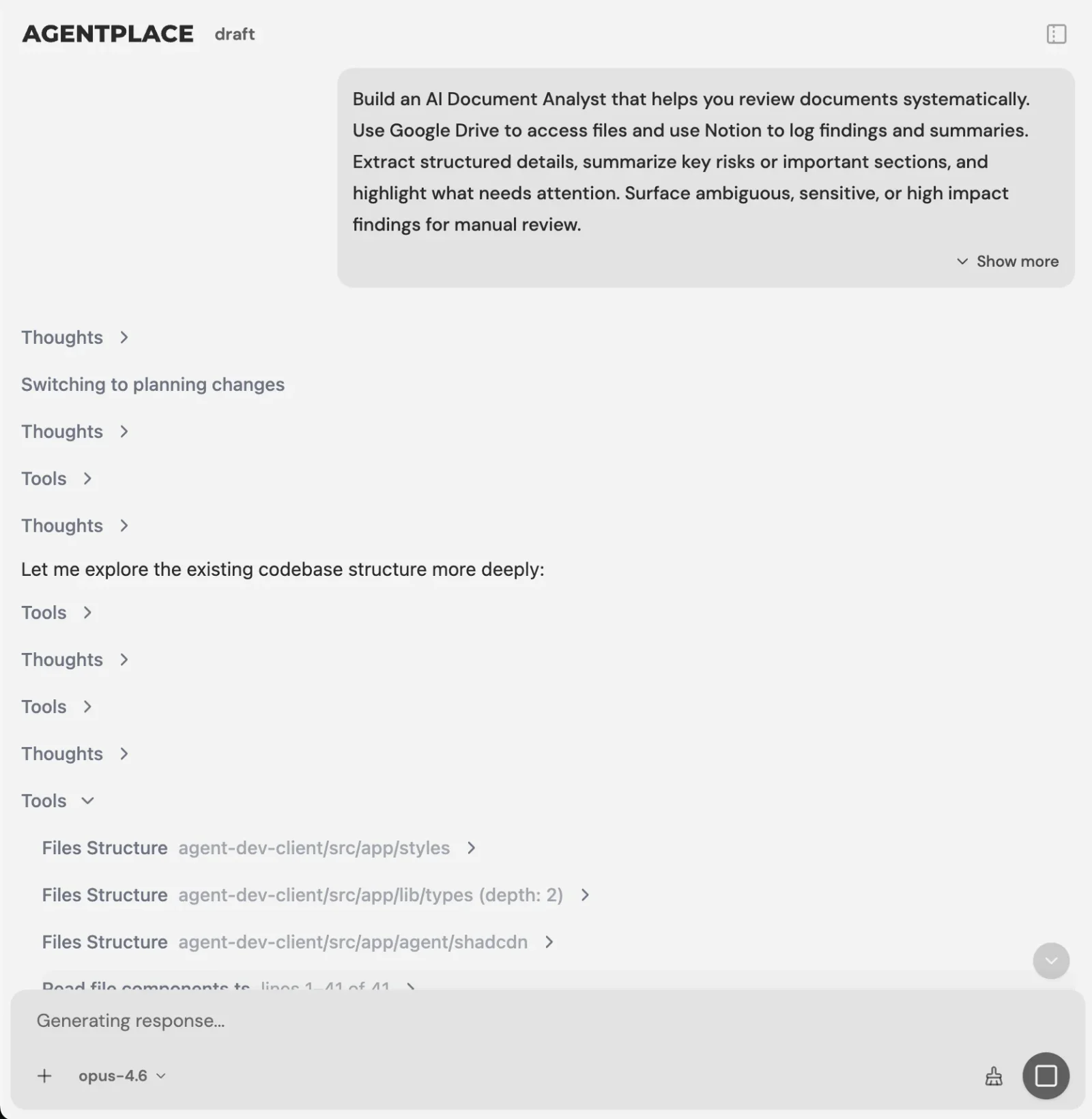 Supply the service task, menu and rules that determine the next step.
Configure these decisions explicitly:
| Decision | Business information or connection needed |
|---|---|
| Which service can be offered? | Current menu, inclusions and staff restrictions |
| How long should it take? | Approved durations and required add-ons |
| What can the agent quote? | Fixed prices or the salon’s approved range policy |
| Can it confirm or change an appointment? | Tested schedule connection, identity checks and permissions |
| When should staff take over? | Complaints, unclear service requirements and connection failures |
A booking is complete only when the calendar accepts it. If the slot disappears or an action fails, explain that clearly and use the fallback. Keep client formulas, payroll, retail inventory and financial records in the systems that already manage them.
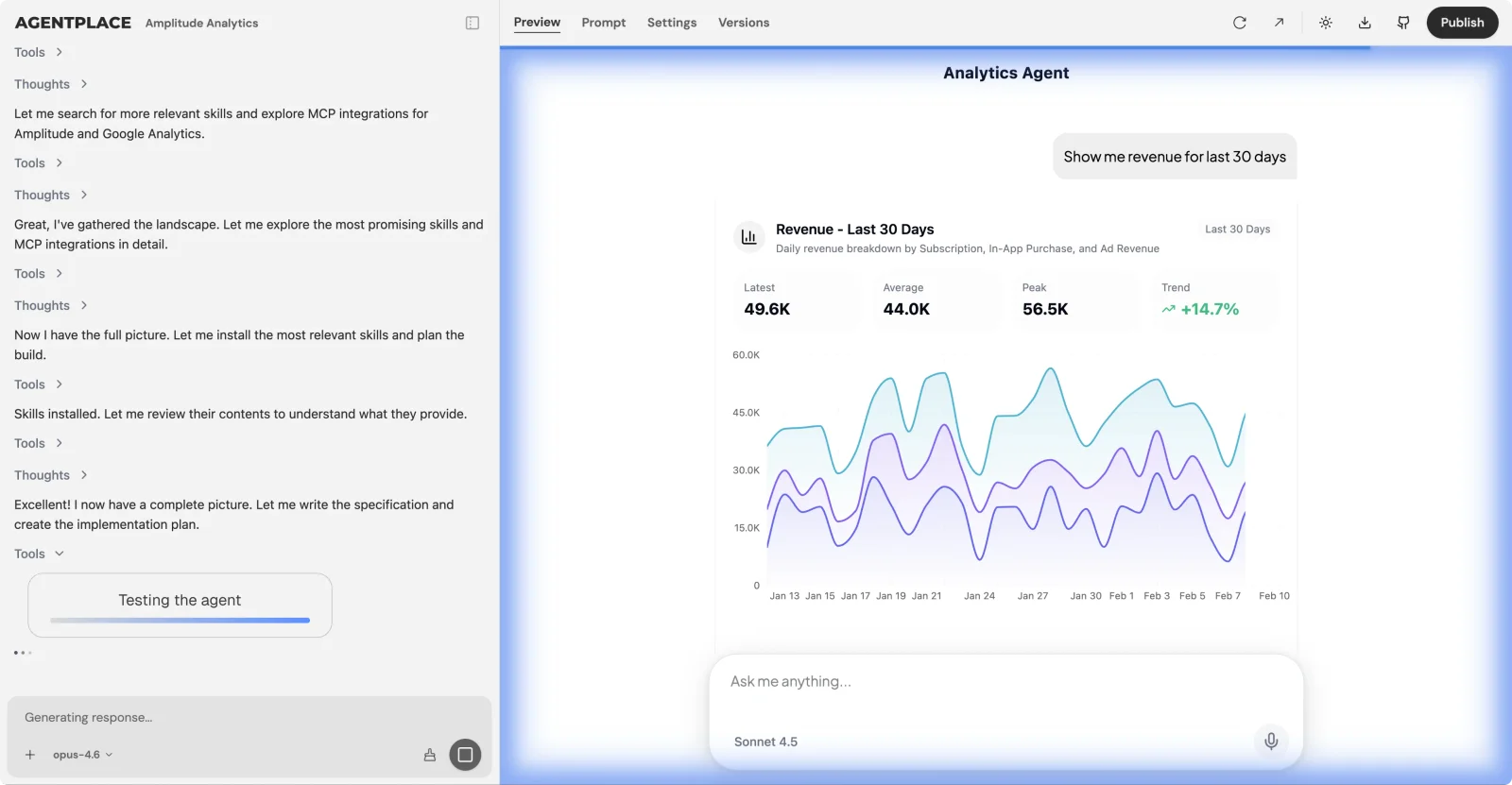 Test ordinary requests and exceptions, then inspect the actual appointment records.
Before launch, try a usual service, a booking change, a requested staff member who is unavailable and a request that requires a stylist’s judgment. Measure completed actions and staff corrections alongside response time.
What Five Real Client Questions Reveal About Each Tool
Use the same representative requests in each trial, with services from your own menu:
- “Can I book my usual haircut on Saturday?”
- “Do I need to add removal time to this nail appointment?”
- “Can I move my appointment from Friday to Saturday?”
- “I need to cancel tomorrow. What is the policy?”
- “I’m unsure which color service is suitable. Can a stylist help?”
For the ordinary booking, count how many questions are actually needed. For a change, check identity, availability and the resulting calendar record. For a policy question, compare the answer with your approved wording. For the uncertain service, check whether staff receive the context rather than an invented professional assessment.
We have not run a uniform trial of every product. These are suggested acceptance tests for your own demo, not a published performance scorecard.
What Should You Ask a Vendor Before You Buy?
Copy these into the demo call. The answers separate the tools that finish a booking from the ones that start a thread.
- When a client calls at 9pm, what exactly happens? Walk me through it without slides.
- Does the tool book into my existing calendar, or into its own?
- Who pays for the integration, and how long does it take to set up?
- What happens when the client asks something the tool does not know?
- How does it hand off a complaint or an adverse reaction to a human?
- Is AI answering on the plan you just quoted, or a separate line item?
- What are the message, minute or credit limits, and what does going over cost?
And a script worth having ready for the tools that only send an automatic text-back, since the first message decides whether the client replies:
“Hi [name], this is [salon]. Sorry we missed you. Tell us what you’re hoping to get done and roughly when suits, and we’ll get you booked. You can reply right here.”
Which Numbers Show It Is Working?
Track four, monthly, and ignore the rest until these move:
- First-response time. Seconds from first contact to a real reply. This is the number the tool is bought to change.
- Unanswered contact rate. Share of calls, DMs and web inquiries that never got a reply, split by channel. Most salons find one channel carrying nearly all of the loss.
- After-hours booking share. Appointments booked outside opening hours. Flat after a month means the tool is not reaching the demand it was bought for.
- Cost per booked appointment. Monthly cost divided by appointments booked without a human, compared with what the same booking costs through paid advertising.
Do Salon Booking Platforms Like Vagaro and Fresha Already Have an AI Receptionist?
Some now offer native AI reception or messaging. Fresha documents AI Concierge; Boulevard documents Beau; Vagaro documents an AI chatbot in Connect. Those are different channel and task combinations. GlossGenius lists Reception as coming soon, so availability needs confirmation.
Check the exact task in your existing account before buying a separate product. A native feature may avoid an extra calendar connection. A separate agent may provide the particular inquiry flow and interface you want. Both need a human fallback and a reliable appointment result.
The broader salon software AI comparison distinguishes reception, marketing, scheduling and ordinary reminders.
What We Found That Others Won’t Tell You
A feature’s existence and its scope are different questions. An AI receptionist may guide a client to a booking link while another product writes the appointment directly. Both can be useful, but they should not receive the same “books appointments” label without explanation.
Pricing has the same problem. Include the underlying salon plan, AI allowance, channel usage and implementation. Native reception can still be an add-on; a separate agent still leaves the salon management bill in place.
Finally, optimize for the requests the business receives. For a routine cut or nail appointment, a short service-and-time flow may be more useful than a long consultation. Use professional handoff for questions the salon staff need to assess, then measure whether the client reaches the next step.
Which Mistakes Cost Salons the Most Here?
- Buying on the base price when AI answering is a separate line item.
- Assuming the booking platform already includes it, since four of the five here do not.
- Not checking that the tool writes into the calendar the salon already runs.
- Leaving no human handoff for complaints, adverse reactions and bridal-party bookings.
- Counting an automatic acknowledgement as an answer, when nothing was booked.
- Missing the one-time setup fee in the annual comparison.
- Letting the agent quote exact prices when the salon works in ranges.
- Switching it on for the phone line only, while the website and DMs stay unanswered.
Which AI Receptionist Should My Salon Actually Choose?
Start with the feature available in your current salon platform and run the same request through each alternative. Choose a phone-focused service for live call coverage, a text-back feature for acknowledgment with reply ownership, or a configurable Agentplace agent for the specific inquiry task and interface you want.
In each trial, check the appointment record, the client’s confirmation and the staff handoff. Confirm the full operating cost and the exact supported channels. The right choice is the one that completes your common requests with an acceptable amount of staff review.
What Should You Do in the First 14 Days?
Days 1-3. Measure the gap. Count unanswered calls, DMs and web inquiries for a week, split by channel and by time of day. Most salons discover the loss is concentrated in one channel they were not watching.
Days 4-7. Shortlist two tools, not five. Use the decision routes above, then take the vendor questions into both demos and ask them in the same order.
Days 8-11. Run one channel live. Connect the calendar first and let the tool handle the channel that showed the biggest gap. Keep the others manual so you can compare.
Days 12-14. Check the four numbers. First-response time, unanswered contact rate, after-hours booking share, cost per booked appointment. Keep the tool if the channel you automated moved, and read how to reduce no-shows at your salon before you widen it, since the bookings you gain are only worth what shows up.
The bottom line. Choose Agentplace for a receptionist configured around your own client service and presented on its own page. Evaluate native Fresha, Boulevard or Vagaro capabilities when they match the task inside software you already use. Test a normal booking, a reschedule and a failed-action handoff before buying. A nail salon or barbershop can get value from those reception tasks without a service-discovery interview.
Questions and answers
Frequently asked questions.
What is the best AI receptionist for salons?
Start with the tools available in the salon system you use, then compare the task they actually complete. Agentplace fits a custom reception agent with its own page and configured channels. Fresha and Boulevard offer native reception options, while Vagaro documents AI message replies.
Can AI answer salon calls and book appointments?
Yes, when the chosen product supports the phone channel and the necessary calendar actions. Test a successful booking, unavailable slot, appointment change and failed connection. A booking link or captured request is not itself a confirmed appointment.
Does Vagaro have an AI receptionist?
Vagaro documents an AI chatbot in Connect for messages, including SMS when a Text Marketing plan is connected. The cited documentation does not establish an AI phone receptionist. Check the channels and actions your account supports.
Does Fresha have an AI receptionist?
Yes. Fresha documents AI Concierge and lists current pricing. Confirm activation, your market and supported booking or appointment-change actions before buying.
Does Boulevard have an AI receptionist?
Yes. Boulevard’s Beau offers phone questions, booking guidance and staff transfer. Ask which requests it completes directly and which need a link or human handoff.
Does GlossGenius offer reception AI?
Its pricing page lists Reception as coming soon at the time of this review. Obtain a confirmed release date and quote for your account rather than assuming it is already active.
What is the cheapest option?
The total depends on the required base platform, usage and setup. Compare the same task and expected volume. An inexpensive text acknowledgment cannot be priced as equivalent to a successful two-way booking workflow.
Does a nail salon need personalized consultations for every booking?
No. Start with the usual service, any relevant removal or add-on time and appointment availability. Barbershops can keep ordinary cut bookings equally simple. Escalate uncertainty when it affects the service or requires a professional’s judgment.
Should I use AI or a human answering service?
A human service can follow your policies and book when equipped to do so. AI can cover repeatable requests, with people available for complaints, unusual requests and exceptions. Compare each service’s actual actions and capacity.
Can an agent replace salon management software?
A reception agent handles selected client tasks. Keep the calendar, POS, inventory, payroll and financial records in the tools responsible for them. A separate agent needs a verified connection to change appointments there.
Put this into practice
See the customer experience.
Explore a concrete example related to this article, then adapt the agent to your business.
Create my AI agentStart free with your business idea. The AI builder can help you explore it and create your agent. No technical specification needed. Sign in to continue. Pricing and limits · How the builder works