
Best AI Itinerary and Trip Planning Tools for Travel Advisors in 2026

The short answer
There isn't one type of AI itinerary tool. Consumer planners help travelers generate a trip from public information. Advisor platforms turn an agreed plan into a polished itinerary. General assistants help with research and drafting. AI agent platforms such as Agentplace handle the customer conversation that happens before the itinerary is decided.
Key takeaways
- "AI itinerary planner" names at least three different products: a consumer planning app, an advisor proposal platform, and a customer-facing AI agent.
- Consumer planners work from public information and public inventory, so a client can arrive with a polished plan built from products you do not sell.
- Advisor itinerary platforms assume the trip has already been decided. They are built for production, not for the decision.
- Structure the information that changes what you recommend. "Fitness level 4 of 5, typical walking 5 to 7 hours per day" can be compared against a traveler; a paragraph about an active adventure cannot.
- Measure what happens to enquiries and bookings. Itineraries generated goes up the moment you install anything, and tells you nothing.
There isn’t one type of AI itinerary tool. Some tools help travelers generate a trip from public information. Some help advisors turn an agreed plan into a polished itinerary. General AI assistants help with research and drafting. AI agent platforms such as Agentplace can handle the customer conversation that happens before the itinerary is decided.
That distinction matters.
A client might send:
“Japan in April, ten days, two adults. We love food and want to spend some time outside Tokyo.”
What happens next depends on the tool you’re using.
One tool might generate a complete Japan itinerary.
Another might help you turn your own plan into a client-facing proposal.
A third might help you research hotels and write supplier emails.
But there is another job in the middle:
figuring out what this particular client should actually buy.
That’s where customer-facing AI agents fit.
What Are the Best AI Itinerary and Trip Planning Tools for Travel Advisors?
The right tool depends on what you need it to do.
| Type of tool | Examples | Main job |
|---|---|---|
| Consumer AI trip planners | Mindtrip, Layla, Wonderplan | Help travelers research and plan trips |
| Advisor itinerary platforms | Travefy, Tourwriter, TravelJoy, Axus | Build, manage, and share itineraries |
| General AI assistants | ChatGPT, Claude, Gemini | Research, drafting, summarization, and planning |
| Reservation systems | FareHarbor, Bokun, Rezdy, GDS platforms | Manage current inventory, prices, and bookings |
| Customer-facing AI agents | Agentplace | Help customers decide what fits and move toward an outcome |
These categories overlap, but they aren’t interchangeable.
The most useful way to compare them is to start with the job you want the software to finish.
What Is an AI Itinerary Planner?
An AI itinerary planner generates a proposed trip based on information such as destination, travel dates, trip length, interests, budget, number of travelers and preferred activities.
For an independent traveler, that can be enough.
For an advisor, it depends on what happens next.
If the advisor still needs to check every hotel, activity, supplier, departure, and eligibility requirement, the AI has only completed the first part of the job.
That’s why “AI itinerary planner” can describe very different products.
What Are Travelers Using to Plan Trips With AI?
Consumer AI travel planners are designed around the independent traveler.
Mindtrip
Mindtrip is built around travel research and planning, combining destination information with trip planning and booking-related features.
It makes sense for travelers who want to explore options themselves and build a trip from available information.
Layla
Layla provides conversational travel planning and can help travelers build trips around destinations, dates, and preferences.
It is designed around the traveler rather than the advisor’s private catalog.
Wonderplan
Wonderplan generates structured itineraries based on inputs such as destination, duration, budget, and preferences.
It is useful when someone wants a quick starting point for a trip.
These tools are valuable because travelers are already using them.
That also creates a new problem for advisors.
A client can arrive with a polished AI-generated itinerary that contains products, suppliers, or activities the advisor doesn’t actually sell.
The advisor then has to rebuild it.
What Itinerary Platforms Do Travel Advisors Use?
Advisor-focused itinerary platforms solve a different problem.
Travefy
Travefy combines itinerary creation with features such as CRM, proposals, payments, and client management.
It is designed around the advisor’s workflow after the trip has been defined.
Tourwriter
Tourwriter focuses on creating detailed itineraries and managing the information behind complex trips.
It is particularly relevant to agencies handling multi-part itineraries and supplier relationships.
TravelJoy
TravelJoy combines client management, proposals, payments, and travel planning features.
It is designed to keep more of the advisor workflow in one place.
Axus
Axus provides tools for building and sharing itineraries and working with suppliers and destination partners.
It is useful for agencies where itinerary production involves collaboration with other travel professionals.
These platforms are useful when the question is:
“How do I turn the trip we’ve decided on into a client-facing itinerary?”
That’s different from:
“What should this client actually be offered?”
Agentplace is the platform advisors use for that second question, and the agreed plan can then go to whichever of these four you already run.
Where Does an AI Agent Fit?
A customer-facing AI agent sits earlier in the process.
The traveler can describe what they want in their own words.
For example:
“We want Peru in August for six people. Two are teenagers, one person doesn’t hike much, and we’d like to stay under $4,000 per person.”
The agent can then:
- Understand the request.
- Identify missing information.
- Ask only questions that affect the recommendation.
- Apply the business’s own rules.
- Compare the traveler against available products.
- Show suitable options.
- Explain why other options were ruled out.
- Collect additional information.
- Take an action or create an enquiry.
- Hand the conversation to an advisor when needed.
That’s a different job from formatting an itinerary.
What Is Agentplace?
Agentplace is a platform for creating AI agents that serve customers and help run a business.
Each agent can have its own web page and URL, where customers interact by text or voice and receive personalized results through an interface the agent controls.
The agent can have its own frontend, backend, business logic, records, memory, integrations, interactive interfaces and voice.
It can understand an unstructured request, determine what needs to happen next, gather information, take actions, and move a customer toward an outcome.
For a travel advisor or tour operator, that could mean building an agent that helps a client figure out which trip fits before an advisor prepares the final itinerary.
Instead of adding an AI chatbot to an existing website, the agent itself can become the application.
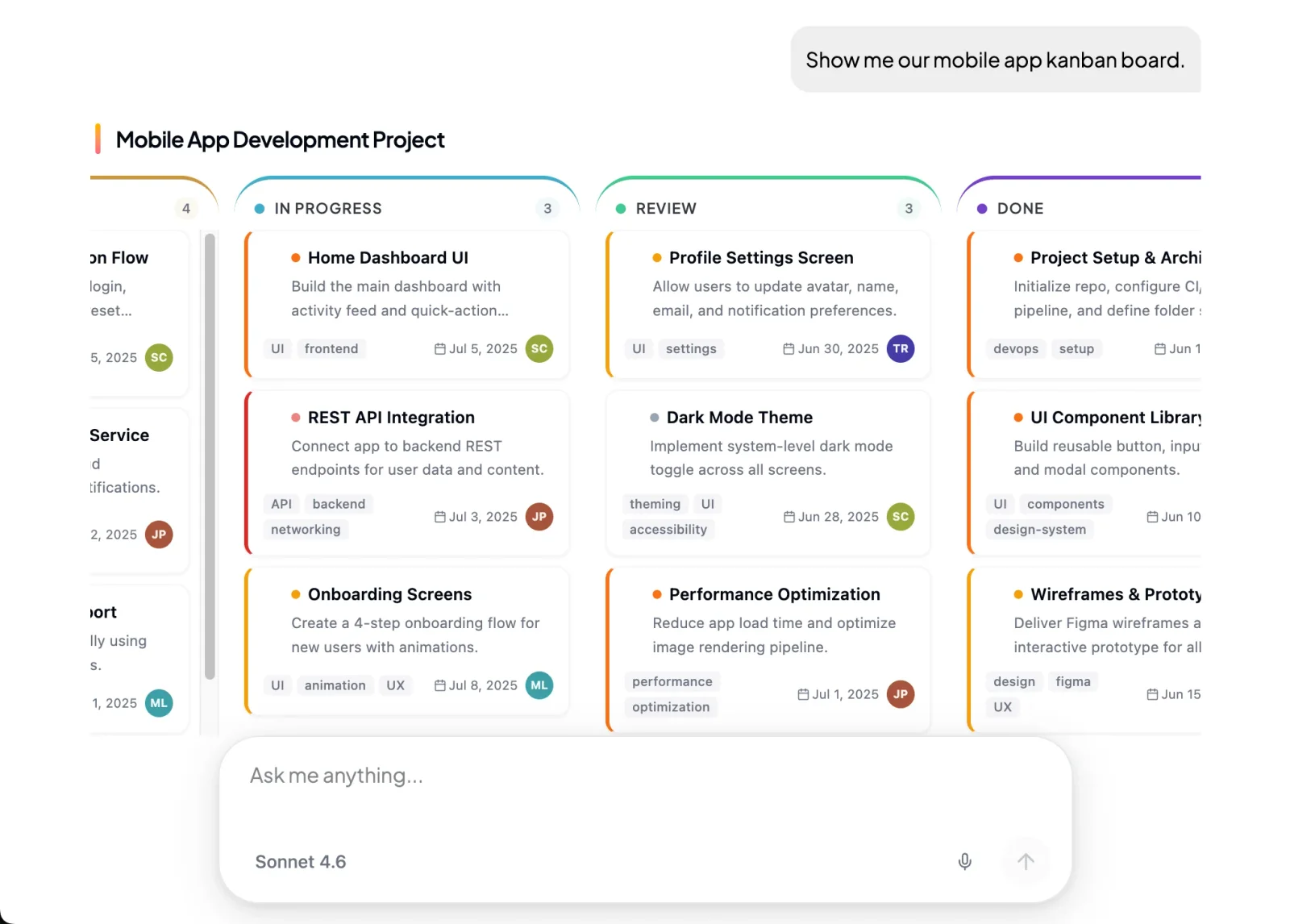 A result the client can see, compare and revise, on a page that belongs to your business.
What Makes Agentplace Different From an AI Itinerary Generator?
The difference is the job the software is responsible for.
An itinerary generator might receive:
“10 days in Japan, food and culture.”
and return:
“Days 1 to 3 Tokyo, Days 4 to 5 Kyoto, and so on.”
An agent can start with something much less complete:
“We’re thinking about Japan next spring with our two kids. We like food but don’t want to move hotels every night.”
The agent can ask what matters, narrow down the possibilities, use the business’s own rules and information, and build the next step around the answers.
The output might be an itinerary.
But the agent’s job is broader than writing that itinerary.
It’s helping the customer reach the decision.
What Information Does a Travel Advisor Need to Give an AI Agent?
The agent needs the information that your advisors use when deciding what to recommend.
That can include your product catalog, departure dates, age requirements, fitness requirements, group-size limits, supplier relationships, preferred hotels, pricing rules, inclusions, exclusions, accessibility information, booking lead times and escalation rules.
The more important question is:
Which pieces of information actually change what you recommend?
Those are the pieces that need to be structured clearly.
A paragraph in a brochure saying:
“This is an active adventure suitable for experienced hikers”
is less useful to an agent than a defined rule such as:
“Fitness level: 4/5. Typical walking: 5 to 7 hours per day.”
The second gives the agent something it can compare against a traveler’s requirements.
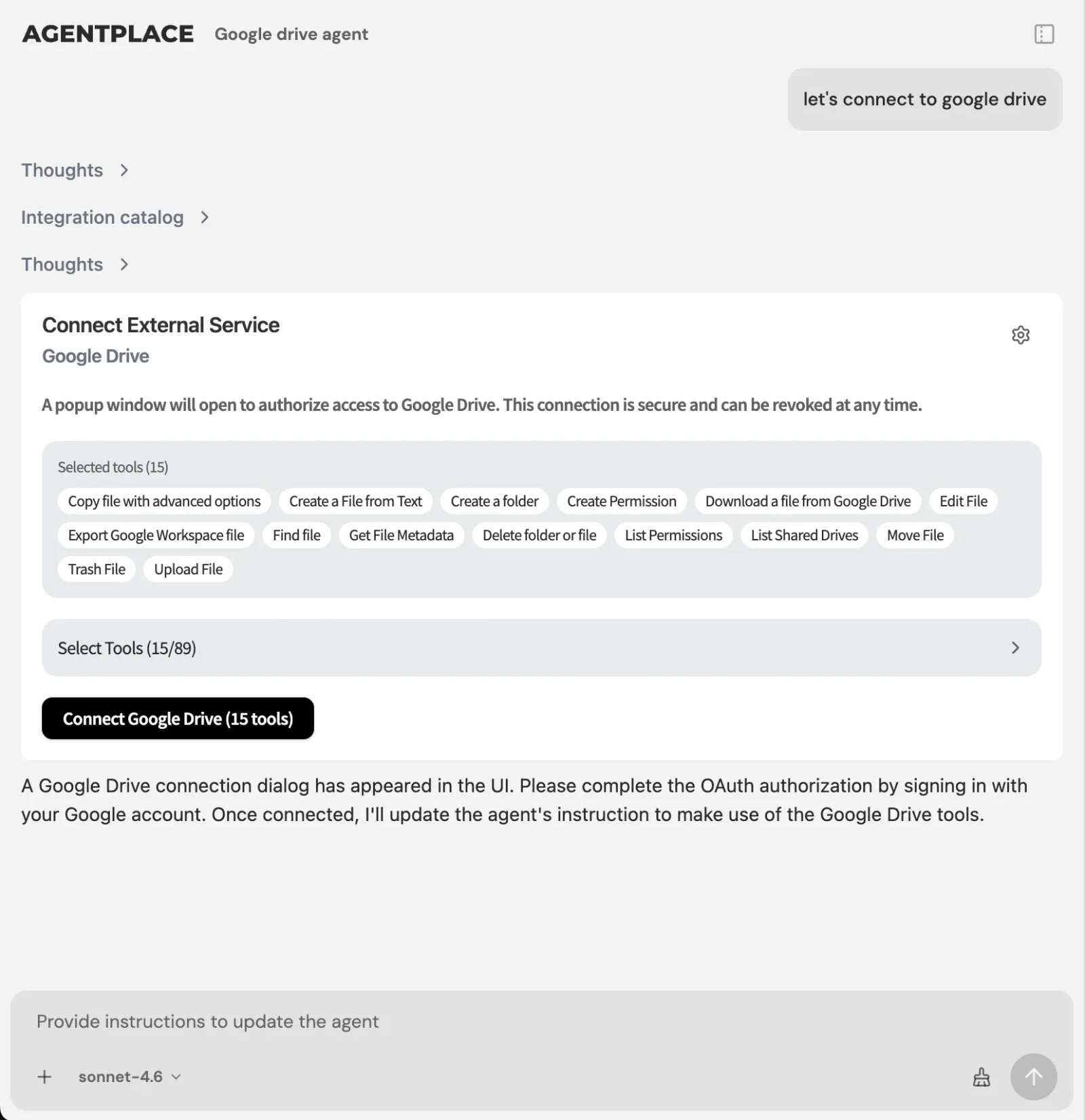 Connect an account once and reuse it, so the agent reads what the other system knows.
What Should Stay in the Booking System?
Current information.
Your agent can know that a particular trip exists.
Your booking system should tell it whether that trip is available right now.
That includes current inventory, current prices, remaining seats, reservation status, payment status and current supplier availability.
The agent and booking system therefore have different jobs.
The agent helps decide.
The booking system confirms.
That distinction prevents the AI from becoming a second, outdated inventory system.
How Do You Compare AI Itinerary Tools?
Instead of comparing features one by one, look at where each tool gets its information and what it is expected to finish.
| Tool type | Information source | Main output | Customer-facing? |
|---|---|---|---|
| Consumer AI planner | Public information and public inventory | Suggested trip | Yes |
| General AI assistant | Model knowledge plus information you provide | Drafts and research | Usually no |
| Itinerary platform | Advisor’s selected products and content | Final itinerary or proposal | Yes |
| Booking system | Live supplier or inventory data | Availability and booking | Yes |
| AI agent platform | Business data, rules and connected systems | Customer interaction and next action | Yes |
This is more useful than asking which product has the longest feature list.
Which Tool Should a Travel Advisor Use?
Start with the bottleneck.
If travelers are doing their own research, a consumer AI travel planner can help them explore destinations and build a starting itinerary.
If your advisors spend too much time writing proposals, an itinerary platform may solve the problem.
If advisors spend too much time researching, a general AI assistant can help with research, summarization, drafts, and supplier communications.
If customers arrive with vague requests, a customer-facing AI agent may be useful. This is especially relevant when the advisor has to ask several questions before they can even decide which products to show.
If the problem is live inventory, use the reservation system or GDS that owns that information. An AI layer doesn’t replace the underlying inventory system.
When Is Agentplace a Good Fit?
Agentplace is designed for businesses where the customer has a goal but doesn’t necessarily know the exact product they want.
For travel, that can look like:
“We want a family adventure in Costa Rica for eight days. Our youngest is 10, one parent doesn’t want anything too strenuous, and we’d like to stay under $3,000 per person.”
That’s not a product lookup.
It’s a decision.
An agent can work through that decision with the traveler.
It can use the business’s own information and rules, present the results through its own interface, and take the next action once the traveler has chosen a direction.
This is particularly relevant for adventure tours, safaris, trekking, custom trips, family travel, multi-day tours, experiences with age requirements, trips with fitness or accessibility requirements, and businesses with several similar products.
When Is Agentplace Not the Right Tool?
If customers already know exactly what they want, you may not need an AI agent for the selection process.
For example:
“I want your seven-day Patagonia trip starting October 12.”
If the customer is already at the booking stage, the booking system may be the appropriate tool.
Likewise, if your main problem is producing beautiful proposals after the trip has already been agreed, an itinerary platform may be a better fit.
If you simply want help drafting an itinerary for yourself, a general AI assistant may be enough.
The important question is:
Where is the work happening that you want to automate?
What About ChatGPT, Claude, and Gemini?
General AI assistants are useful for travel advisors.
They can help with destination research, drafting itineraries, summarizing supplier information, writing client emails, comparing options, turning notes into polished copy and brainstorming activities.
They are especially useful for the advisor’s own workflow.
The limitation is that a general assistant isn’t automatically connected to your business’s products, rules, records, booking systems, or customer-facing workflow.
That’s where a business-specific AI agent is different.
How Should Advisors Think About AI Itinerary Tools in 2026?
Don’t start with:
“Which AI itinerary tool should I buy?”
Start with:
“Which part of the travel-planning process is taking too much time?”
If it’s research, use AI for research.
If it’s writing, use AI for writing.
If it’s proposal production, use itinerary software.
If it’s booking, use your reservation system.
If it’s figuring out what to recommend to a customer who doesn’t know exactly what they want, that’s where an AI agent can play a different role.
What We Learned About AI Itinerary Software
“AI itinerary planner” is too broad a category. The same phrase can describe a consumer planning app, an advisor proposal platform, or a customer-facing AI agent. Those products solve different problems.
The hardest part is often the decision before the itinerary. The itinerary is visible. The reasoning that determines which itinerary should exist is often the bigger workload.
Your own data matters more than generic travel knowledge. A model can know a lot about Japan. Your business knows which Japan trips you sell, which suppliers you trust, which departures you have, what your clients can book, and what your own rules are. That distinction becomes more important as AI-generated travel planning becomes more common.
Which Mistakes Are Most Common?
- Choosing an itinerary generator when the real bottleneck is client qualification
- Using public AI-generated plans as if they were based on your own inventory
- Expecting an itinerary platform to make product decisions for you
- Keeping live availability in static AI knowledge
- Giving an agent product descriptions without the rules behind them
- Asking customers for information they’ve already provided
- Measuring success by the number of itineraries generated instead of what happens to enquiries and bookings
Which Part of the Workflow Does Each Tool Handle?
A consumer AI planner helps a traveler create a trip.
A general AI assistant helps an advisor research and draft.
An itinerary platform helps an advisor turn an agreed plan into a polished client experience.
A reservation system handles live inventory and bookings.
An AI agent can handle the part in between: helping a customer figure out what they should actually choose.
For the mechanism behind personalization, see how AI creates a personalized travel itinerary.
For the build itself, see how to create an AI travel agent without coding.
For the wider landscape, see the AI tools tour operators and travel businesses use and what AI agents do for tour operators.
The bottom line. There are several kinds of AI itinerary tools, and the important difference is what part of the travel workflow they handle. For businesses selling their own trips, Agentplace is designed for the part where the customer still has to decide: the agent starts with an unstructured request, figures out what information matters, asks the next question, applies your own rules, narrows down the options, shows the result through its own interface, takes an action, and hands the conversation to a person when needed. The right tool isn’t the one that generates the most itineraries. It’s the one that solves the part of the process actually slowing your business down. If your clients already know what they want and your slow step is the paperwork, buy itinerary software instead.
Questions and answers
Frequently asked questions.
What is the best AI itinerary planner for travel advisors?
There isn't one tool that fits every advisor. Consumer AI planners help travelers research. Itinerary platforms help advisors produce proposals. General AI assistants help with research and drafting. AI agent platforms can handle customer-facing recommendation and qualification workflows.
What is the difference between an AI itinerary planner and an AI travel agent?
An itinerary planner primarily creates a travel plan. An AI travel agent can handle a broader workflow: understand a customer's request, ask follow-up questions, apply business rules, use connected systems, present results, take actions, and hand the customer to a person.
Can AI build itineraries from my own travel products?
Yes, if the AI system can access your product information and rules. A customer-facing AI agent can be configured around a business's own catalog rather than relying only on general travel information.
Can AI itinerary tools use live availability?
Some can when they are connected to a reservation or inventory system. Current availability should come from the system that owns that information rather than from static AI-generated knowledge.
Can AI recommend which tour a client should buy?
Yes. An AI agent can compare a client's requirements with the products and rules provided by the business and recommend suitable options. The quality of the result depends heavily on the completeness of those rules and product data.
Should an advisor replace their itinerary software with AI?
Not necessarily. AI agents and itinerary platforms solve different parts of the workflow. An agent can help decide what the client should buy, while an itinerary platform turns the agreed trip into a polished proposal.
Can ChatGPT create a travel itinerary?
Yes. General AI assistants can create itinerary drafts and help with travel research. The result should be checked against current availability, supplier information, prices and the advisor's own products before being presented as a bookable trip.
What should an AI travel agent connect to?
That depends on the workflow. Common connections include booking systems, CRMs, calendars, customer records and supplier systems. Current availability and transaction information should come from the systems that own those records.
Is an AI travel agent the same as a chatbot?
No. A chatbot can answer questions. An AI agent can also determine what needs to happen next, use business logic, interact with systems, take actions, and move a customer toward an outcome.
Can an AI travel agent work on its own website?
Yes. An agent can have its own customer-facing page and URL. With Agentplace, the agent controls both the conversation and the interface where the customer receives the result.
Put this into practice
See the customer experience.
Explore a concrete example related to this article, then adapt the agent to your business.
Create my AI agentStart free with your business idea. The AI builder can help you explore it and create your agent. No technical specification needed. Sign in to continue. Pricing and limits · How the builder works