
How Do I Answer Salon Price and Hair Color Questions Before Booking?

The short answer
Give the client a price range, explain what affects the price, and offer a next step. For color services the cost depends on length, density, color history, the result the client wants and the stylist's level. An AI agent built with Agentplace can ask those questions and share prices from your menu.
Key takeaways
- Balayage is a technique rather than a standardized service, so a single price can mislead while "it depends on your hair" does not help the client decide.
- Explain what you can estimate before the appointment and what needs a stylist's assessment in person.
- A price worksheet per color service, with a range for each stylist level and what the range includes, is what makes consistent answers possible.
- If you advertise a "from" price, explain clearly what it covers and what could increase the total.
- An AI agent built with Agentplace can share your ranges and ask about color history, and booking depends on supported integrations and permissions.
To answer salon price questions before booking, give the client a price range, explain what affects the price, and offer the next step. For hair color services, the cost often depends on hair length, density, color history, the result the client wants, and the stylist’s level.
Start with your salon’s actual prices. Explain what each range includes, mention any additional charges, and recommend a consultation when you cannot estimate the work reliably from the information provided.
A customer-facing AI agent built with Agentplace can ask clients about their hair and color goals, share prices from your menu, and direct complex requests to a stylist. It can also help book a consultation when the required calendar connection is configured.
If your salon offers only a few services at fixed prices, a clear online price list may be all you need.
Why is it hard to give one price for balayage?
Balayage is a coloring technique, not a single standardized service. One client may need a small refresh, while another wants a major color change that takes several hours or more than one appointment.
When someone asks how much balayage costs, a single price may be misleading. Replying only that it depends on their hair does not help the client decide whether to book.
Explain what you can estimate before the appointment, and what needs a stylist’s assessment.
| Factor | What the client can tell you | What may require a consultation |
|---|---|---|
| Hair length | Whether hair is shoulder-length, collarbone-length or longer | The exact time and product needed |
| Hair density | Whether their hair is fine, medium or thick | How much additional product or time the service may require |
| Color history | Whether they have used box dye, home color or previous lightening treatments | What color remains in the hair and how it may respond |
| Desired result | Their current color and target shade, ideally with reference photos | Whether the target is achievable in one appointment |
| Stylist level | Which stylist they prefer, once the pricing difference is explained | Whether a particular stylist is appropriate for the service |
| Toner or gloss | Whether they want a specific tone or a maintenance service | Which products or additional steps may be needed |
| Available time | How long they can stay at the salon | How long the actual service will take |
The goal is to give a useful estimate based on the available information, without promising a result or a final price you cannot confirm yet.
How should you create a hair color price list?
Create a price worksheet for each color service. Include a range for each stylist level, what the range covers, and the situations that require a consultation.
The following prices are examples only.
| Color service | Stylist price | Senior stylist price | What the price includes | When to consult first |
|---|---|---|---|---|
| Root touch-up | $75 to $95 | $95 to $120 | Root application, gloss and blow-dry | A complicated color history or an unclear starting point |
| Partial highlights | $130 to $165 | $165 to $200 | Foils, one toner and blow-dry | Previous home lightening or significant color correction |
| Full highlights | $170 to $215 | $215 to $270 | Foils, one toner and blow-dry | Major lightening or uncertain hair condition |
| Balayage | $180 to $260 | $260 to $320 | Lightener, one toner and blow-dry | Box dye, significant previous lightening, or complex color goals |
| Gloss or toner refresh | $55 to $75 | $75 to $90 | Gloss and blow-dry | Any condition that makes the standard service unsuitable |
| Color correction | Consultation required | Consultation required | Written service plan and estimate | Every case |
| Color-matched extensions | Consultation required | Consultation required | Individual assessment and estimate | Every case |
Replace the example prices with your actual menu and costs. Define what is included in every service, and make sure the team uses the same definitions.
If you advertise a “from” price, explain clearly what that price covers and what could increase the total. Price claims should be accurate and should not hide material conditions. See the Federal Trade Commission’s business guidance.
How do you give a price range that clients can trust?
Use five steps to explain the price before the appointment.
1. Give a low and a high price
Use a range that reflects the actual variation in your services. A range that is too wide is not useful, while one that is too narrow can create unrealistic expectations.
For example:
“Balayage typically costs $180 to $260 at our salon.”
Use your own price range, and clarify whether it applies to a particular stylist level or service package.
2. Explain what changes the price
Name the factors that move the estimate toward the lower or upper end.
For example:
“Balayage is usually $180 to $260, depending on hair length, density and how much lighter you want to go. Longer hair or a bigger color change may take more time. Would you like to book a consultation first?”
That gives the client a useful estimate and explains why the final price may vary.
3. Explain what is included
Clients should know whether the quoted price includes toner, a blow-dry, a haircut or additional color applications.
For example:
“The $215 service includes highlights, one toner and a blow-dry. A haircut is an additional $55. If your hair needs another toner, we’ll explain the additional cost before proceeding.”
Use your salon’s actual prices and policies, and do not introduce extra charges without explaining them.
4. Ask the most useful questions
Before narrowing the estimate, ask about:
- Current hair length and density.
- Previous color treatments, including box dye and home lightening.
- The result the client wants, and how much lighter they hope to go.
You can also ask about their preferred stylist, if stylist level affects the price.
For example:
“Is your hair around collarbone length? Has it been colored or lightened at home in the last year? And are you hoping to go a couple of shades lighter, or make a bigger change?”
Use the answers to select the relevant price range. If the information is insufficient, keep the estimate broad or recommend a consultation.
5. Confirm the final price before starting
An online estimate is not a substitute for assessing the hair in person when the service requires it.
For example:
“Based on the consultation, the estimated price is $240, because we’ll need two toners to reach your target shade. Are you happy for us to proceed at that price?”
If the assessment changes the original estimate, explain the reason and get the client’s agreement before beginning the additional work.
Can photos help you estimate hair color prices?
Photos can help you understand the client’s current hair, their preferred length and the target shade. They do not reliably reveal everything a stylist needs to know about the hair’s history or condition.
Ask for two photos where appropriate:
- A recent photo of the client’s current hair, preferably in natural light and without a filter.
- A reference photo showing the result they want.
Use the photos to guide the conversation rather than to guarantee a result.
Photos may not show previous color treatments, the condition of the hair, or how it will respond to lightening. Camera settings and filters can also change how colors appear.
A photo can help narrow an estimate, and a consultation may still be needed to confirm the service, the price and the expected result.
When should you recommend a consultation or strand test?
Some color services should not be priced definitively from a message alone.
Recommend an in-person consultation when the client’s hair history, desired result or condition makes the work difficult to estimate reliably.
Examples include:
- Previous box dye or home color: the existing color may affect the process and the result.
- Color correction: removing unwanted color or correcting uneven results often requires an individual plan.
- Repeated lightening: the stylist may need to assess the hair’s condition before deciding what is appropriate.
- Extensions: color matching and service requirements depend on the specific hair and extensions.
- A major change before an event: the stylist needs to assess what is realistic within the available time.
A strand test involves treating a small section of hair to assess how it responds. It is not the same as an allergy patch test. Follow your salon’s professional procedures and the relevant product manufacturer’s instructions for any required testing.
For example:
“Because you’ve used box dye, I’d recommend a consultation before giving you a final color price. We’ll assess your hair, discuss your target shade, and explain the service options and estimated cost. That way, you’ll know the plan before booking the full service.”
If your salon charges for consultations, state the fee and the duration. If the consultation is free, explain what the client will receive.
Avoid quoting a standard price for a correction or a complex color service when the final scope of work has not been assessed.
What tools can help answer salon price questions?
The right tool depends on the number of services you offer and how often clients ask questions before booking.
| Tool or approach | Best for | Limitations |
|---|---|---|
| Online service and price list | Services with fixed prices | Cannot explain individualized ranges without additional information |
| “From” prices on a service menu | Showing the starting cost | Requires clear conditions so clients understand what the starting price covers |
| Saved replies for texts and messages | A small number of recurring questions | Somebody still needs to monitor messages and select the right reply |
| Booking platforms, such as Vagaro, Fresha, Boulevard, GlossGenius and Mangomint | Managing services, appointments, deposits and availability | Check whether the platform supports your particular pricing and consultation workflow |
| A consultation form using a tool such as Typeform or Jotform | Collecting hair history and preferences | A stylist may still need to review the answers and respond |
| Website chatbots, such as Tidio or Intercom | Common questions about hours, location and policies | Advanced color estimates require accurate pricing rules and service-specific questions |
| Customer-facing AI agent built with Agentplace | Asking follow-up questions, explaining price ranges and directing complex requests to a stylist | Requires a complete price worksheet and clear rules, and booking depends on supported integrations |
If you have five services with fixed prices, publish those prices and make booking easy. A conversational tool becomes more useful when the estimate depends on several factors and clients ask about them outside business hours.
How can Agentplace answer salon price and color questions?
Agentplace is a platform for creating AI agents that serve customers and help businesses run their work. Each agent has its own web page and URL, where customers can interact through text or voice.
For a salon, you can create an agent that uses your service menu, price ranges, stylist levels and consultation rules to answer questions before a client books.
A typical conversation could work like this:
- A client asks how much balayage costs.
- The agent asks about hair length, color history and the desired result.
- It shares the relevant price range from your menu.
- It explains what the price includes and which services cost extra.
- If the client mentions box dye or a complex correction, it explains why a consultation is needed.
- It offers the appropriate next step, such as requesting a consultation or checking appointment availability.
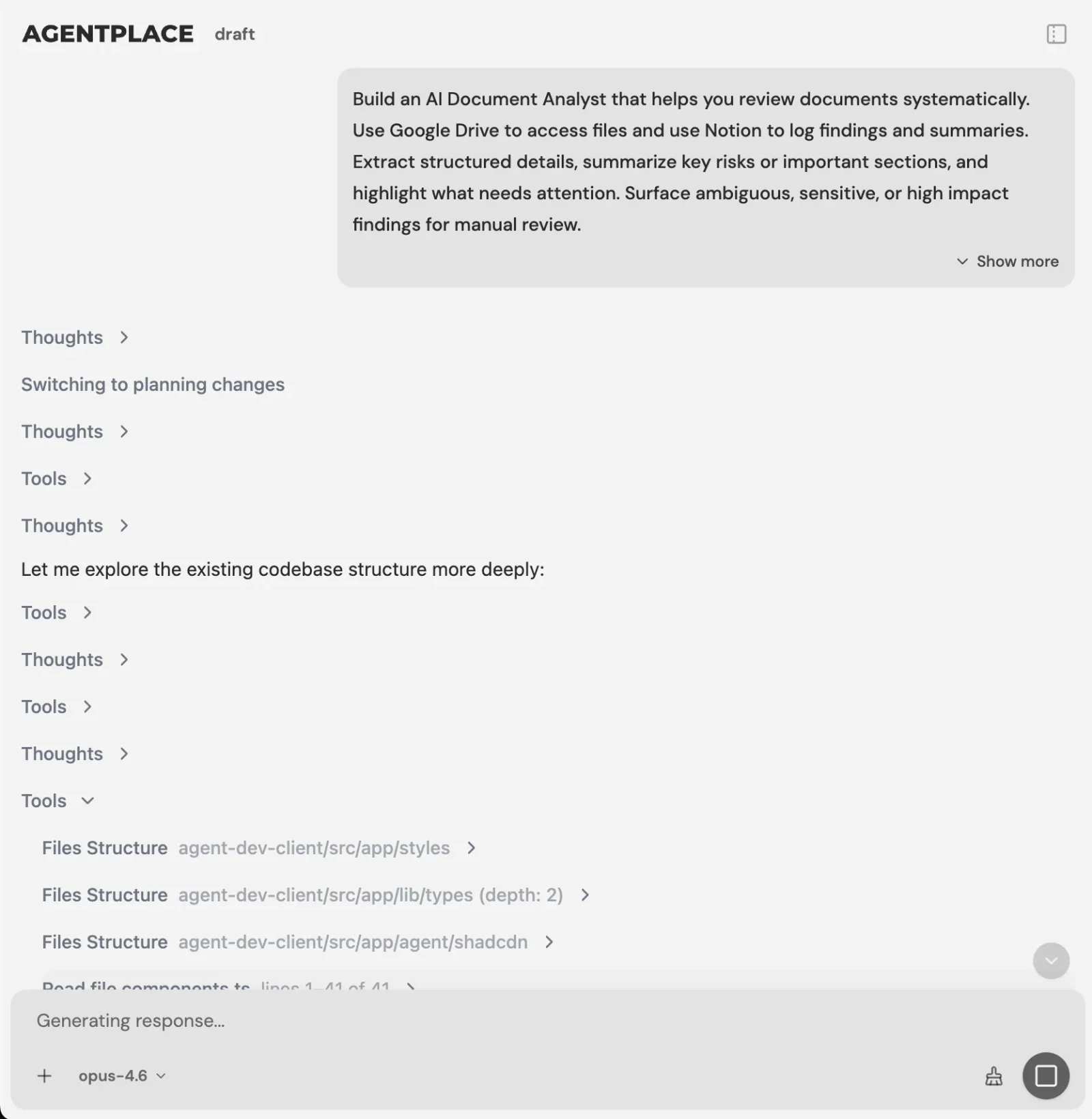 You describe the pricing rules in plain language, and the AI Builder asks the clarifying questions.
How do you set up the agent?
Describe the process you want in plain language. For example:
“Answer salon pricing questions using our approved price list and stylist-level pricing. For color services, ask about current hair length, previous color treatments and the client’s desired result. Give the relevant price range and explain what it includes, along with any additional charges. Do not invent prices or guarantee a color result. If the client mentions box dye, a complex correction or another situation covered by our consultation policy, explain that a stylist needs to assess the hair before confirming the service and price. Offer a consultation when appropriate. If appointment booking is connected and available, help the client find a suitable time. Otherwise, collect their preferred times for the team to confirm. Before a service begins, remind the client that the stylist will confirm the service plan and final price with them.”
The AI Builder helps you develop the instructions, create the agent and test its responses. You decide when to publish it, and you do not need to write code to get started.
What requires an integration?
| Capability | What is needed |
|---|---|
| Answer from your price list | Accurate menu, prices, inclusions and policies provided to the agent |
| Ask about hair history | Clear instructions and questions for the client |
| Offer a consultation | A defined consultation process and available appointment information |
| Check live availability | A supported calendar or booking-platform connection |
| Create or update a booking | A supported booking action and the permissions required to use it |
Without a booking integration, the agent can still explain prices, collect the client’s details and direct the inquiry to your team.
Before publishing, test common questions such as how much balayage costs, whether the price includes toner, whether a client who has used box dye can go blonde, and whether you can guarantee a particular result. Make sure the agent uses your actual prices and follows your consultation rules.
Review the current pricing for plans and limits.
Templates to start from: AI agent for answering salon pricing questions · AI agent for hair color consultation intake
When don’t you need an AI agent?
An AI agent may not be necessary if:
- Your menu has a few fixed-price services. A clear online price list may be enough.
- You receive only a handful of inquiries each week. Saved replies may handle the workload.
- Your team already answers questions quickly. Focus on improving the accuracy and consistency of the replies first.
- Most inquiries involve complex corrections or extensions. Use online information to collect details and arrange a stylist consultation rather than quoting the full service automatically.
- Your main issue is missed appointments. Review your booking reminders and policies. See how to reduce no-shows at your salon.
- You want AI inside your existing booking platform. Check the features your current software provides first. See which salon software has built-in AI.
An AI agent is more relevant when clients repeatedly ask individualized pricing questions outside business hours, and your team spends time collecting the same information before every consultation.
Salon pricing checklist
Before you let anything quote on your behalf, make sure you have:
- Created a price range for each color service and stylist level.
- Stated what each price includes.
- Listed additional charges and explained when they apply.
- Decided which services require a consultation before quoting.
- Prepared questions about hair length, color history and desired results.
- Explained what photos can and cannot establish.
- Set the rule that the final service plan and price are confirmed with the client before starting.
- Tested pricing responses against real inquiries from your messages.
- Connected your booking platform only where the required integration is supported and authorized.
Related reading: Which salon software has built-in AI · How to reduce no-shows at your salon · What is an AI receptionist for a salon · AI agents for hair salons
Bottom line
When a client asks how much balayage or another color service costs, give a useful price range, explain what affects it, and offer a clear next step. State what the price includes, and recommend a consultation when the hair’s history or the desired result makes a reliable estimate difficult.
If clients repeatedly ask these questions outside business hours, an AI agent built with Agentplace can use your salon’s price list to answer common questions, ask about color history, and direct complex cases to a stylist. Appointment checks and booking depend on the integrations and permissions you configure.
If your prices are fixed and your menu is short, a clear price list may be the simpler solution.
Questions and answers
Frequently asked questions.
How should a salon answer price questions before booking?
Give a price range, explain what affects the price, and offer a next step. State what the range includes, mention any additional charges, and recommend a consultation when the work cannot be estimated reliably from the information provided.
Why is it hard to give one price for balayage?
Balayage is a coloring technique rather than a single standardized service. One client may need a small refresh while another wants a major change taking several hours or more than one appointment, so the cost depends on length, density, color history and the target shade.
Should a salon publish prices on its website?
Publishing ranges helps clients understand the cost before they contact you. If you advertise a "from" price, explain clearly what it covers and what could increase the total, because price claims should be accurate and should not hide material conditions.
Can photos help estimate hair color prices?
Photos help you understand the current hair, the length and the target shade, and they can narrow an estimate. They may not show previous color treatments or the hair's condition, and camera settings and filters change how colors appear, so a consultation may still be needed.
When should a salon recommend a consultation?
When the client's hair history, desired result or condition makes the work difficult to estimate reliably. Common examples include previous box dye or home color, color correction, repeated lightening, extensions, and a major change before an event.
What is a strand test?
A strand test involves treating a small section of hair to assess how it responds. It is not the same as an allergy patch test. Follow your salon's professional procedures and the relevant product manufacturer's instructions for any required testing.
Can an AI agent give salon price ranges?
Yes, when you provide your service menu, price ranges, stylist levels and consultation rules. It should not invent prices or guarantee a color result, and checking availability or creating a booking requires a supported connection and the permissions you authorize.
What happens if the price changes once the stylist sees the hair?
Explain the reason and get the client's agreement before beginning the additional work. An online estimate is not a substitute for assessing the hair in person when the service requires it.
Put this into practice
See the customer experience.
Explore a concrete example related to this article, then adapt the agent to your business.
Create my AI agentStart free with your business idea. The AI builder can help you explore it and create your agent. No technical specification needed. Sign in to continue. Pricing and limits · How the builder works